I reckon our flight between Malta and Tunis was probably the least conveniently timed flight in the history of air travel. It departed Malta at 02:35, was in the air for an hour and arrived at… 02:35. After clearing customs and immigration, we joined several of our fellow passengers and laid down on the terminal seats for a few hours of napping until public transport got going around 06:30. On awakening we had a bit of a struggle to find the bus into town. We enquired about the bus stop location with: the tourist information office, two different guidebooks, a bus driver, a fellow bus passenger and (eventually) with the traffic policeman on the departures level. He finally pointed us to the correct spot, a bus shelter about 400m from the terminal across a parking lot and a busy four lane road.

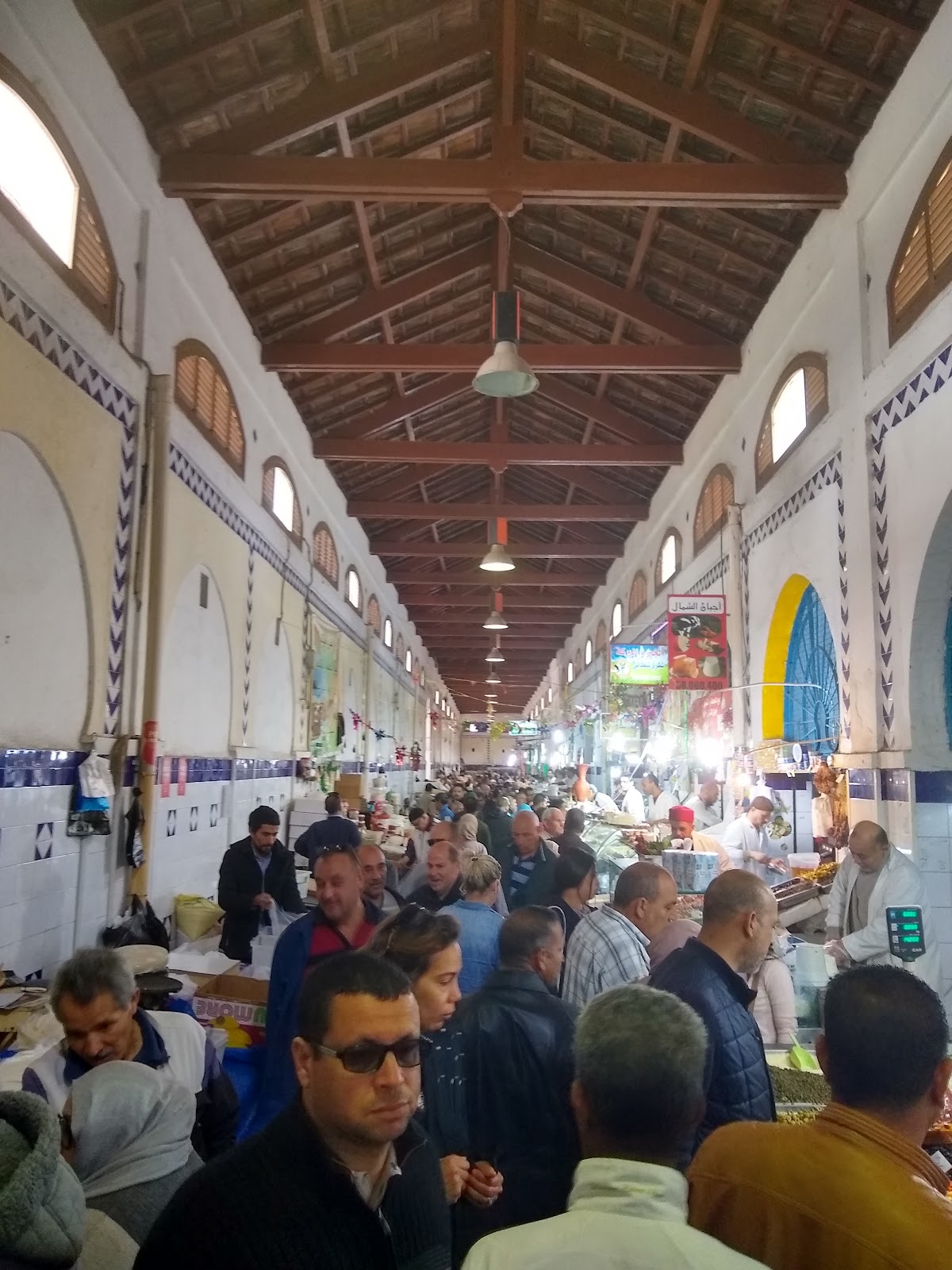
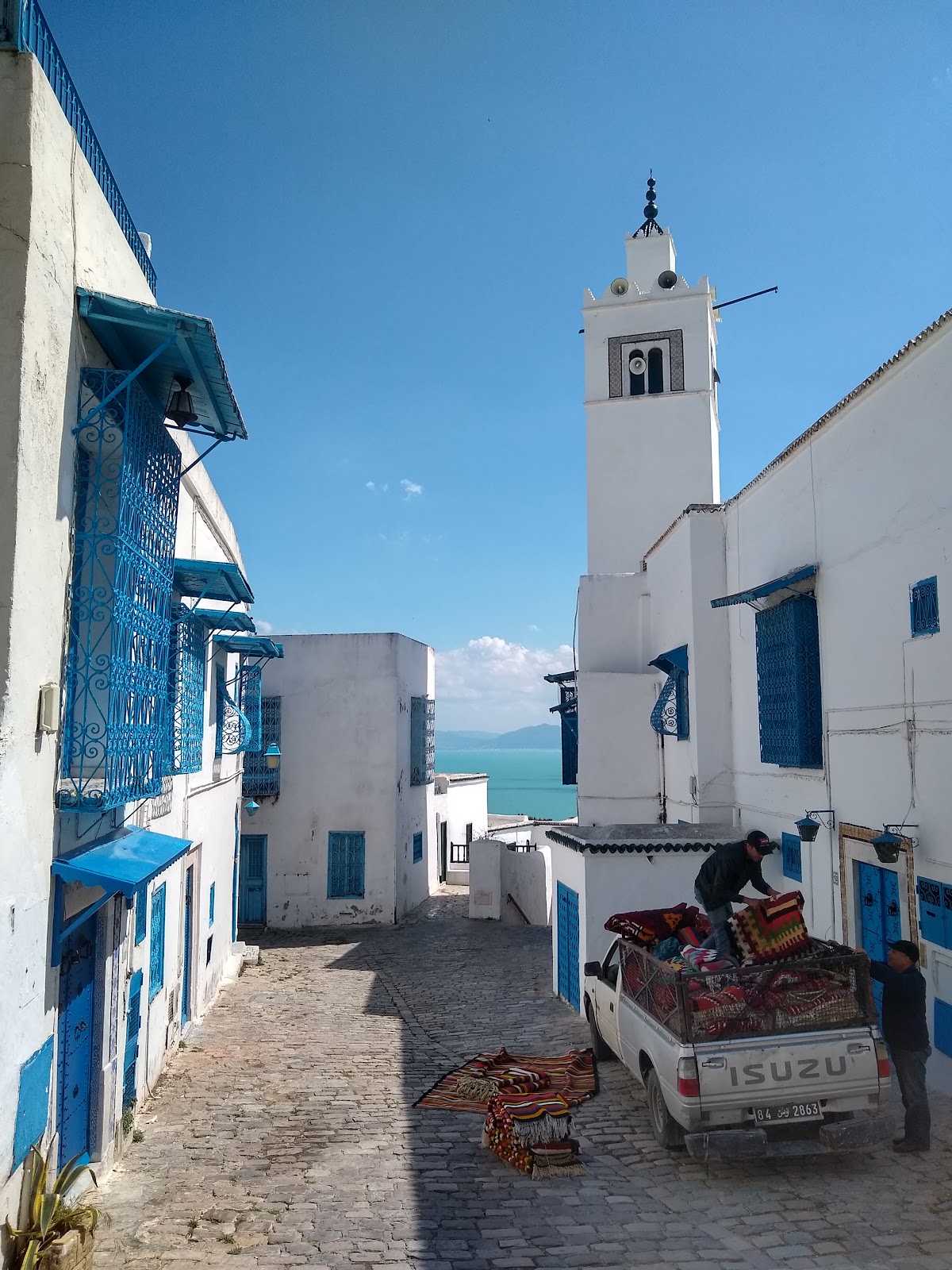
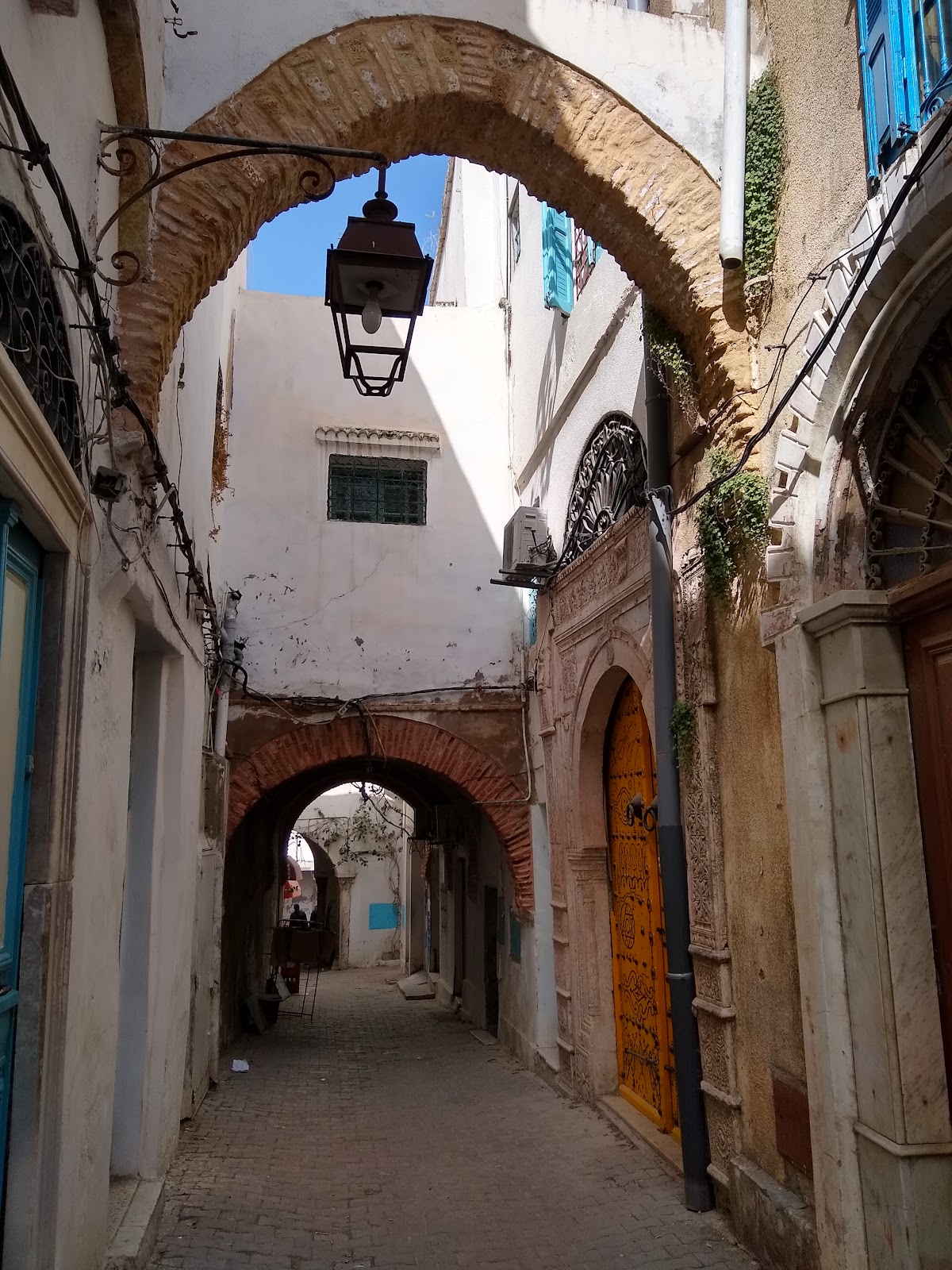
After that, everything went smoothly with our first day in Tunisia. Our Airbnb was right in the centre of the city, and after a bit of a nap we went out for a look around the Medina (mazelike old city). It clearly wasn't as ancient or as labyrinthine as those in Moroccan cities like Fes and Marakech, but it was possibly even prettier, and had only the smallest sections devoted to tourism based commerce. Lots of people greeted us with a “Salam” or “hello,” or, most commonly, a “bonjour”. As in Morocco, French is a common second language, but it's even more pervasive in Tunisia. Virtually everyone we met in Tunis (and, as we'd learn, most people in smaller towns) spoke fluent French.
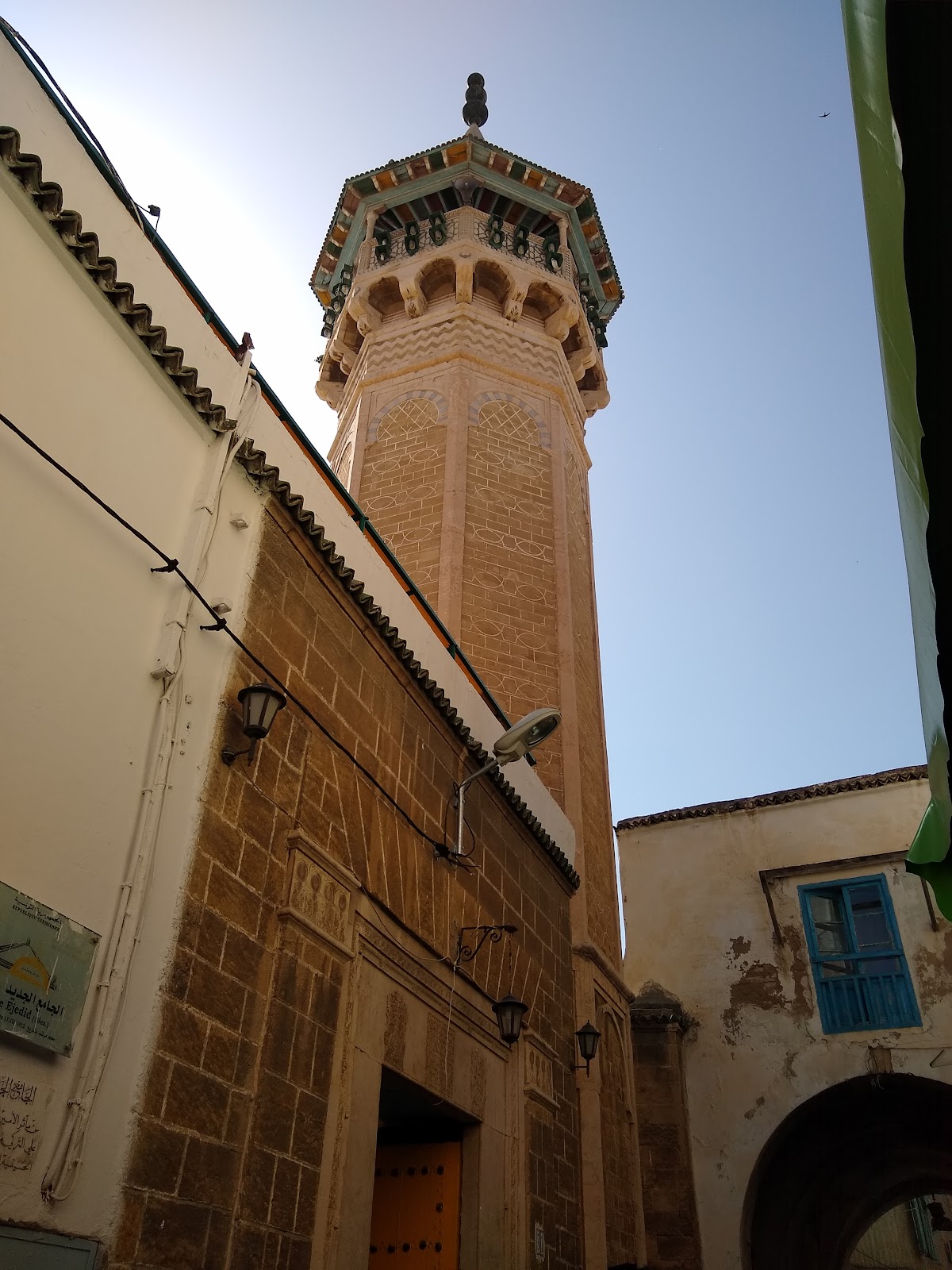
I bought a sandwich filled with grilled chicken, roasted eggplant and peppers, onion, cheese, lettuce, herbs, french fries and spicy harissa. It was huuuge and very yummy! We sat and ate it in sight of the grand mosque, and it actually proved to be a big enough meal to last till bedtime.
Before we left NZ, my friend Braydon told us that he had a brewery friend in Tunisia that we ought to visit. Our second day was spent with his mate Anis, who gave us a fabulous tour of the less-accessible interesting sites around Tunis.
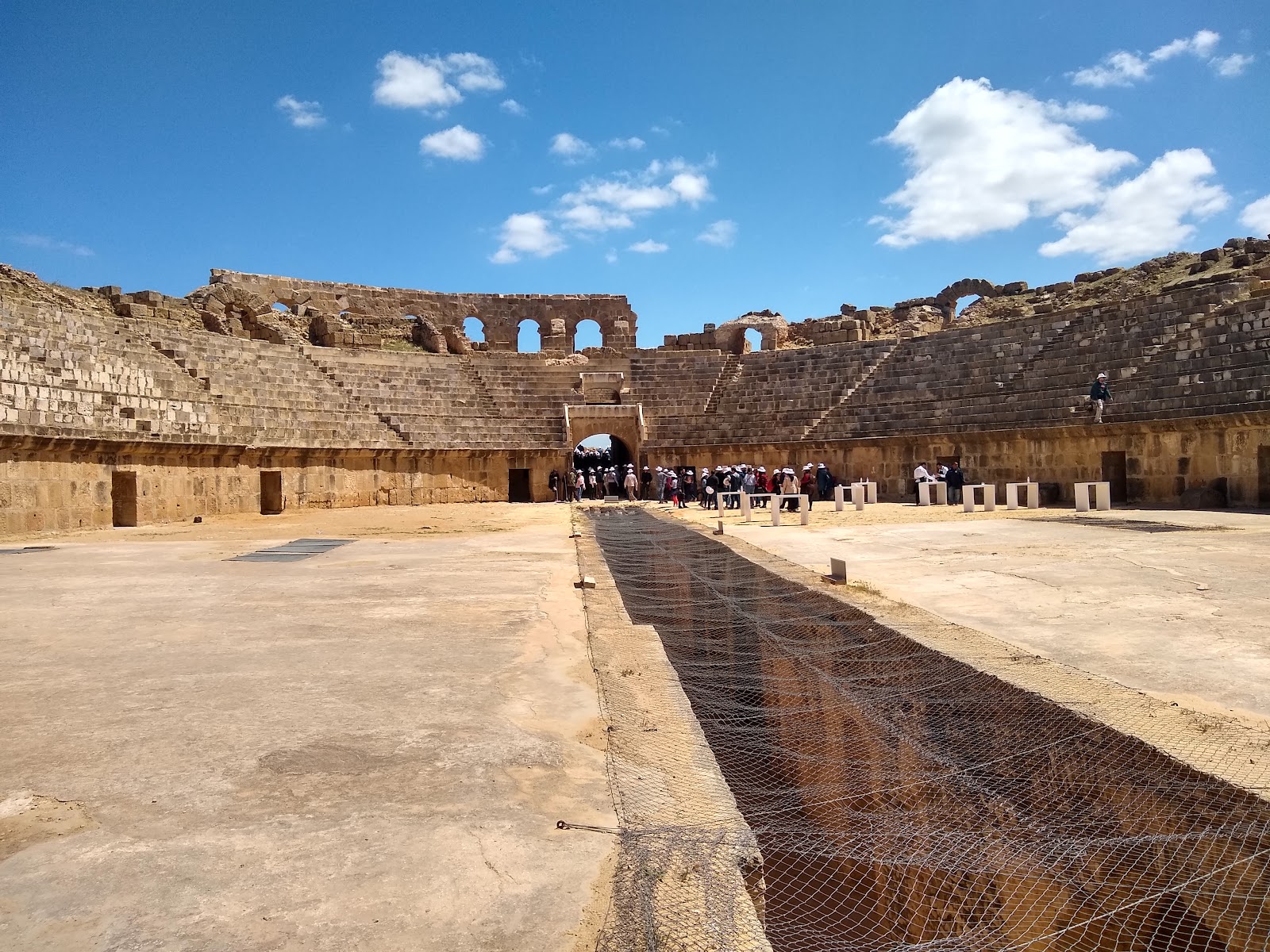
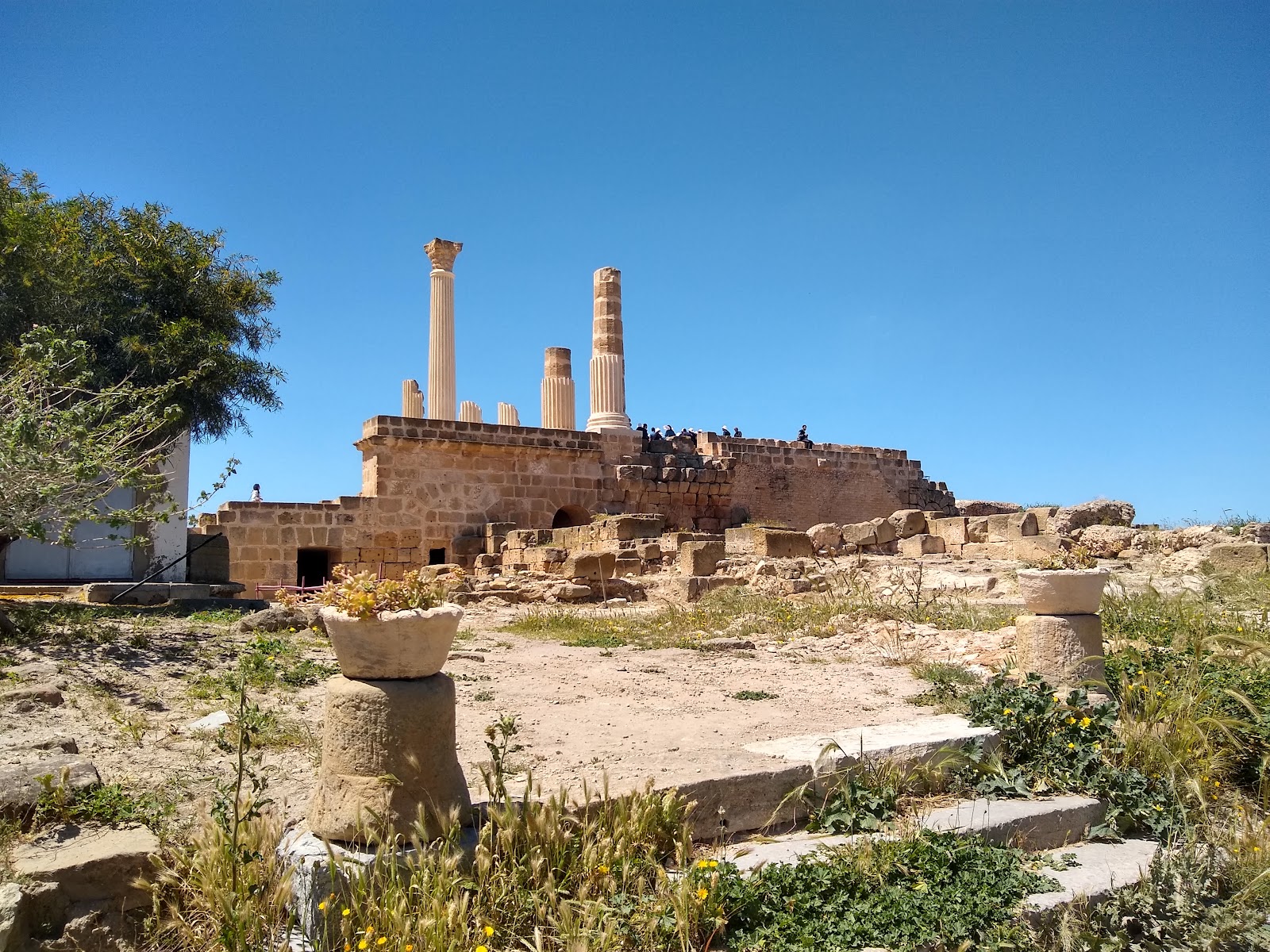
We started with a visit to Uthina, a Roman city whose excavation and restoration has barely begun. It has a pretty impressive amphitheatre, with a very intact basement, home to wild animals and gladiators alike while the place was in use. Sprawling out hundreds of metres from the amphitheatre were several complexes of baths (check out the photo of the lovely toilets below!) and the impressive capitol, where we sipped cups of sweet mint tea from a little tea shop built amongst the ruins as we wandered amongst them. Perhaps the coolest thing of all about Uthina is that, were it not for an insurance company's weekend outing, we would have been entirely alone with it.
Anis could have been a professional tour guide, as he hustled us along to the next stop, the Temple d'Eau, source of the aqueduct that fed far away Roman Carthage. It was in a cool, mountainside park with a view out over the plains below, and seemed a popular spot for local families to hang out.
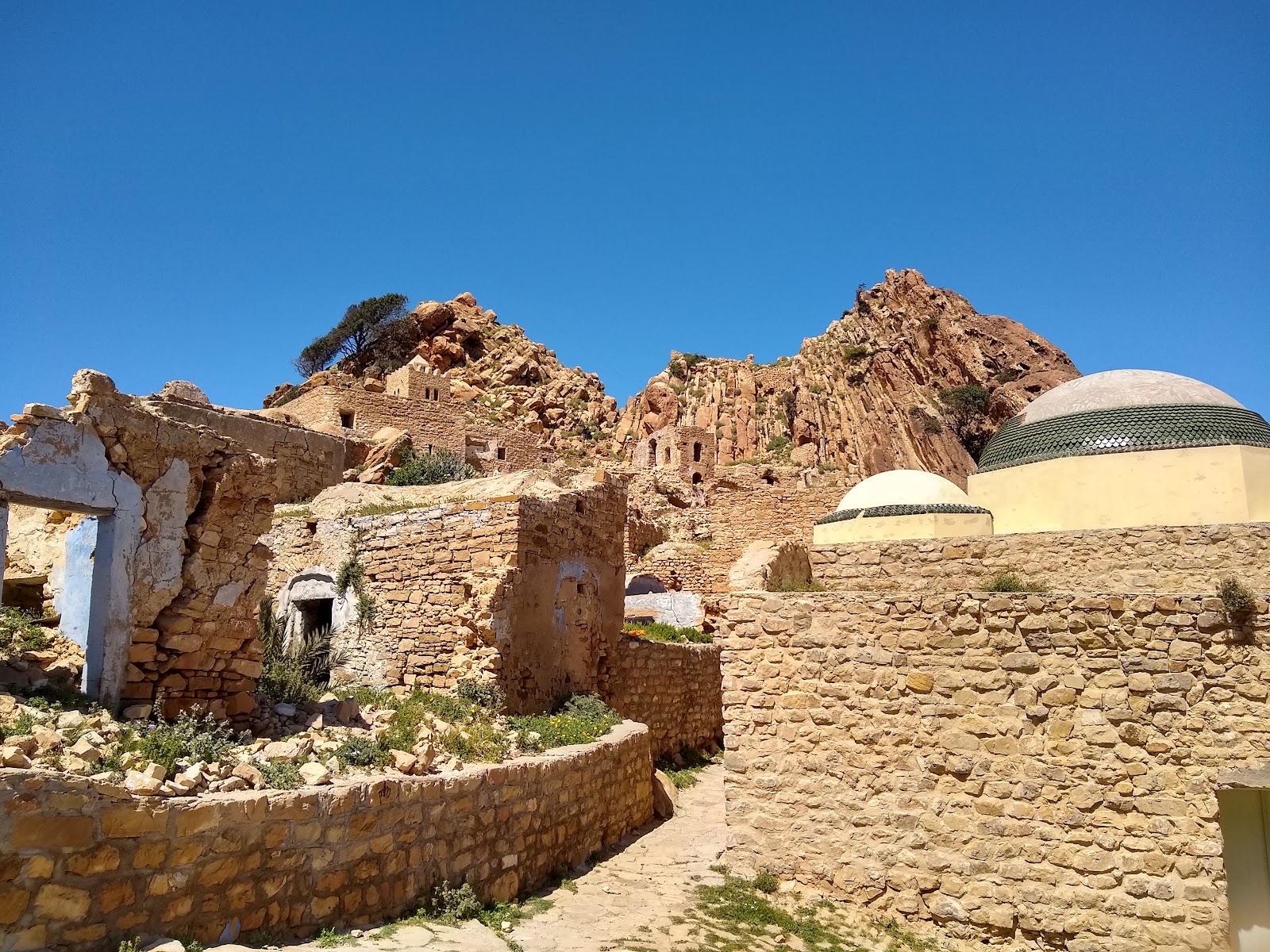
Following this we headed back into town of Zaghouan where we popped into the local police station. We were headed for a secure area in the perimeter around Tunis and needed to register before we headed up into the hills. The police were busy, but (for reasons that will be explained later) knew Anis well, and told us to just go ahead and that we could come back and fill out the paperwork later. From Zaghouan we headed up to the impressive old Berber village of Zriba Olya. Made entirely of brick from local clay and local stone, it's almost invisible from afar, despite sitting high atop a mountain.
On heading back down from Zriba Olya we popped back into the police station where the cops themselves were in the middle of lunch. They quickly took down our details and, after warmly welcoming us to Zaghouan and Tunisia, returned to their meal. We were on our way out the door (indeed, Sarah and Anis were already gone) when they bade us stay and eat with them. I couldn't help but be polite and sit with them and join them in their bread, white beans in spicy red sauce and chunks of lamb. Sarah and Anis rejoined the party. After not too much more than a taste, we headed out to lunch proper, the police once again welcoming us to the country and ensuring us that they (and all other police in Tunisia) were very nice folks.
This was certainly the case with the chef at the restaurant the police recommended us (always take food advice from police, taxi drivers and truckers!) He was super friendly and whipped up a vegetarian lunch for Sarah and Anis, and headed out to get homemade (instead of commerically produced) harissa. It was less spicy than the industrial stuff we'd had a bit of so far, but packed full of fabulous sweet and slightly smokey red pepper flavours.
Our final stops in the countryside were at the land where Anis is hard at work preparing an eco-guesthouse, goat cheesery (oddly, despite the prevalence of goats in Tunisia, and a decent sized local cheese making industry, there is no goat cheese produced in the country) and hop farm(!) As he's from outside the immediate environs, a former commerical brewer, and a Christian, he's had a bit of difficulty with the neighbours, and the local politicians from the Islamist party whose help they've enlisted to put up roadblocks to getting all of this up and running. This all sounds pretty miserable, but on the other hand, the number of his new friends in the region (including the aforementioned police) make it seem hopeful that it will (eventually) all turn out positively.
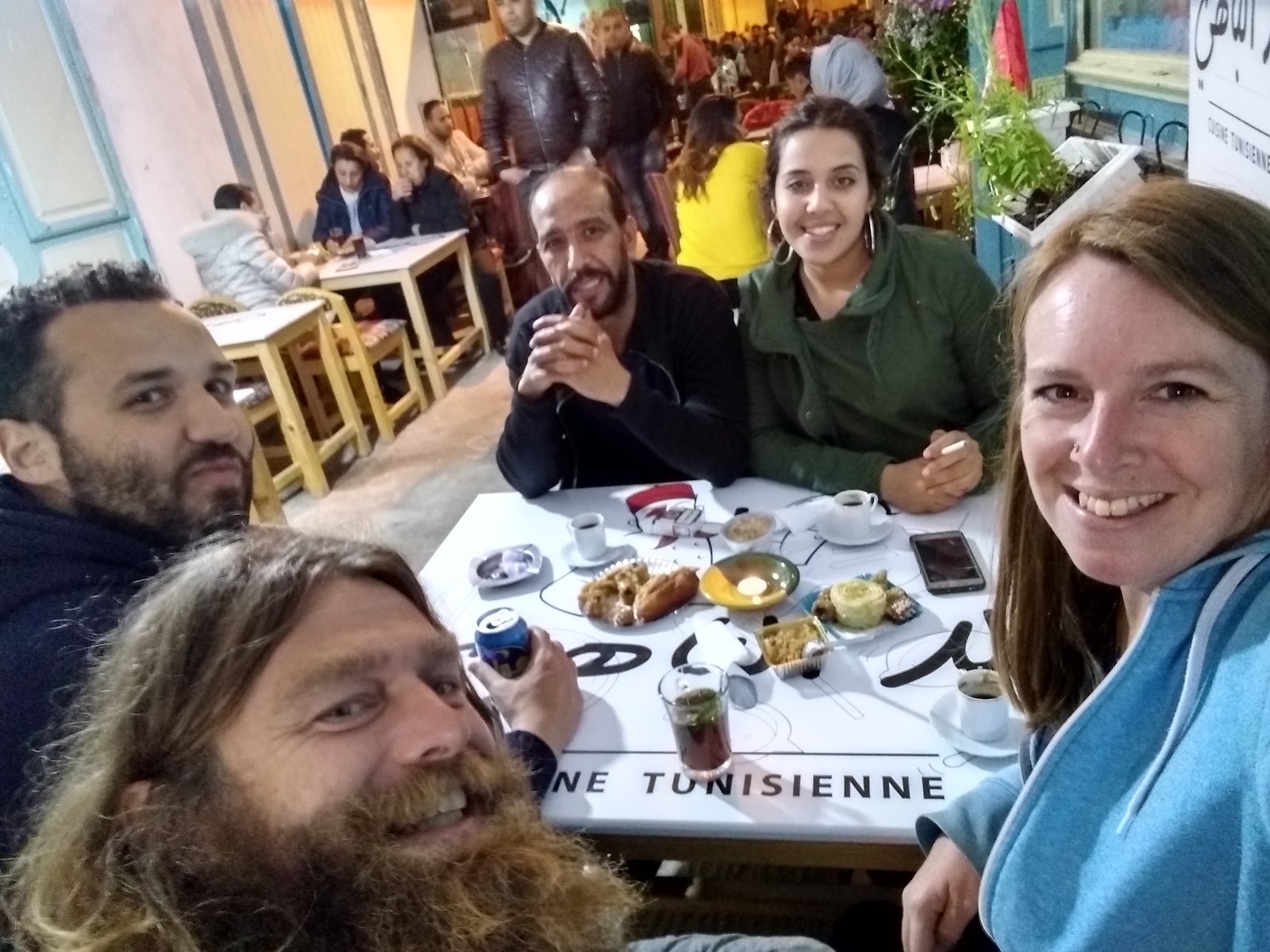
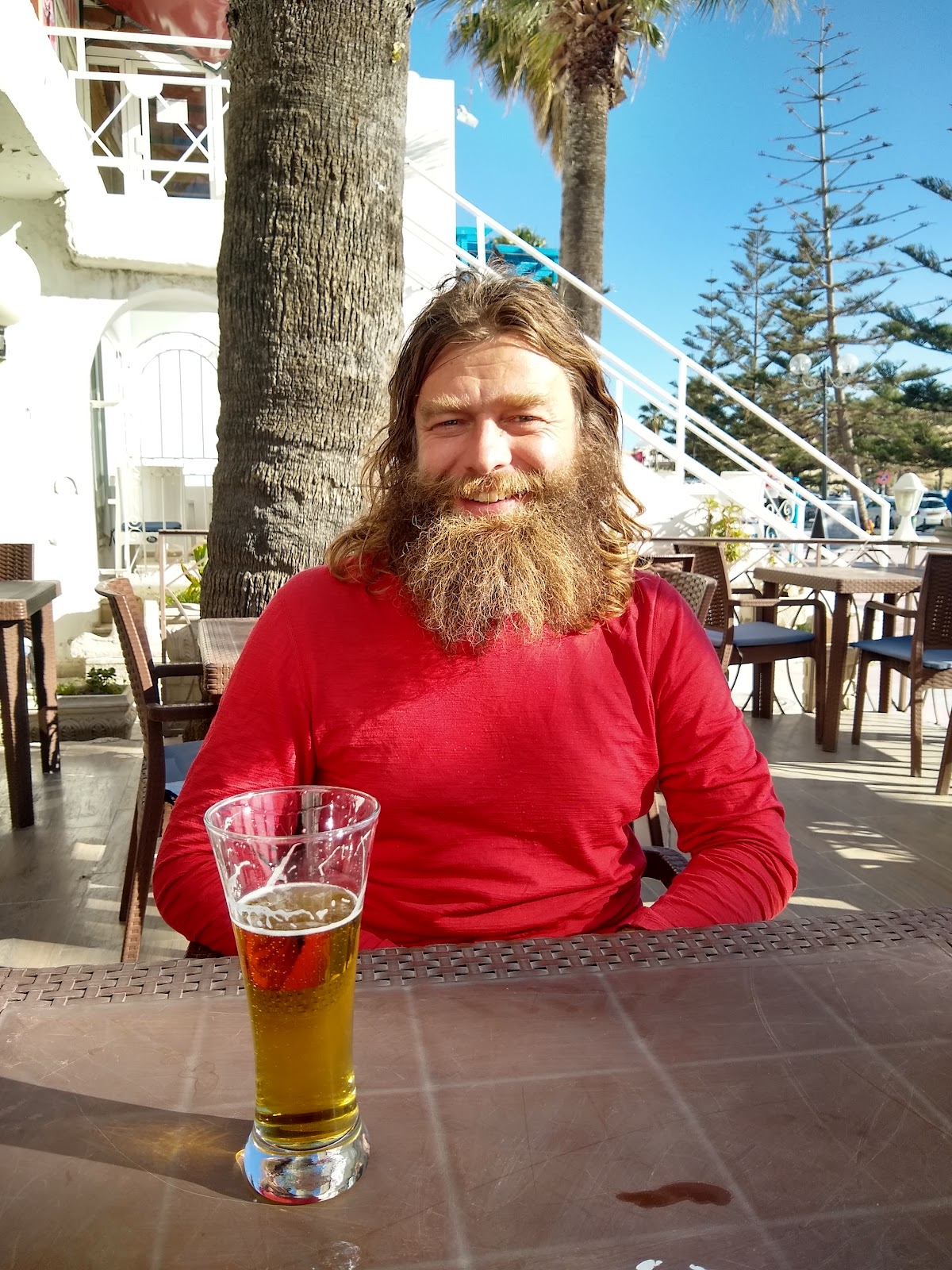
We spent the last couple of hours before sunset at a restaurant in the tourist beach town of Hammamet, drinking local Celtia beers with (still more of!) Anis’ friends.
The sun had set in Hammamet, but we finished off the night with a tour of the Tunis’ poshest neighbourhoods, while blaring the utterly ridiculous, utterly hilarious (and entirely new to Sarah and I) Steel Panther on the stereo. What a day! We were pretty wiped when we got back home to central Tunis.
Our third day in Tunis was pretty fabulous. We took the ridiculously inexpensive light rail (of I remember right, our one way tickets cost NZD0.16 each) to the renowned Bardo museum.
The Bardo well deserves it's renown. We knew it was probably be going to be good, having read online reviews and reports. In fact it turned out to be one of the most amazing museums we've been to anywhere in the world.
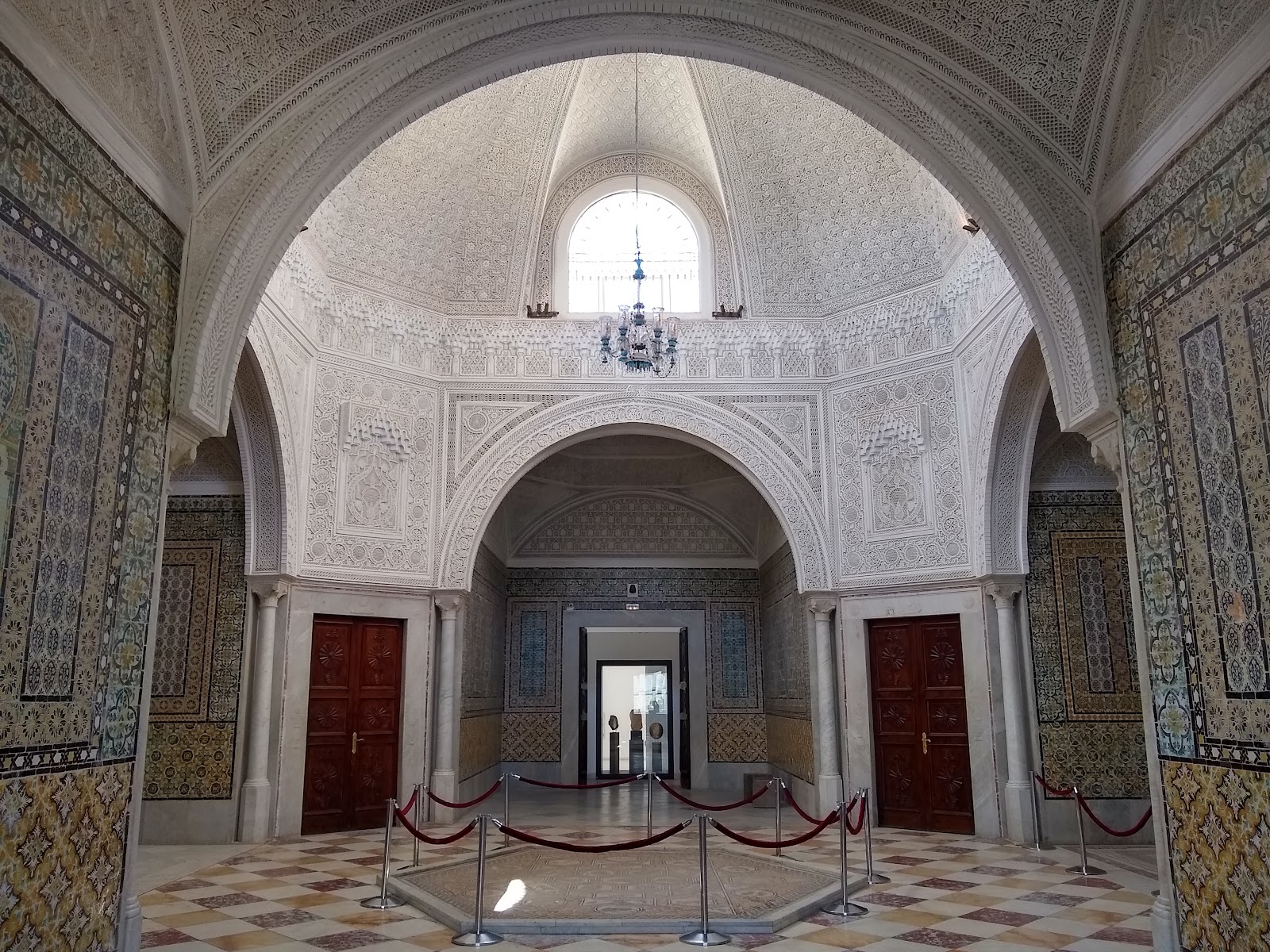
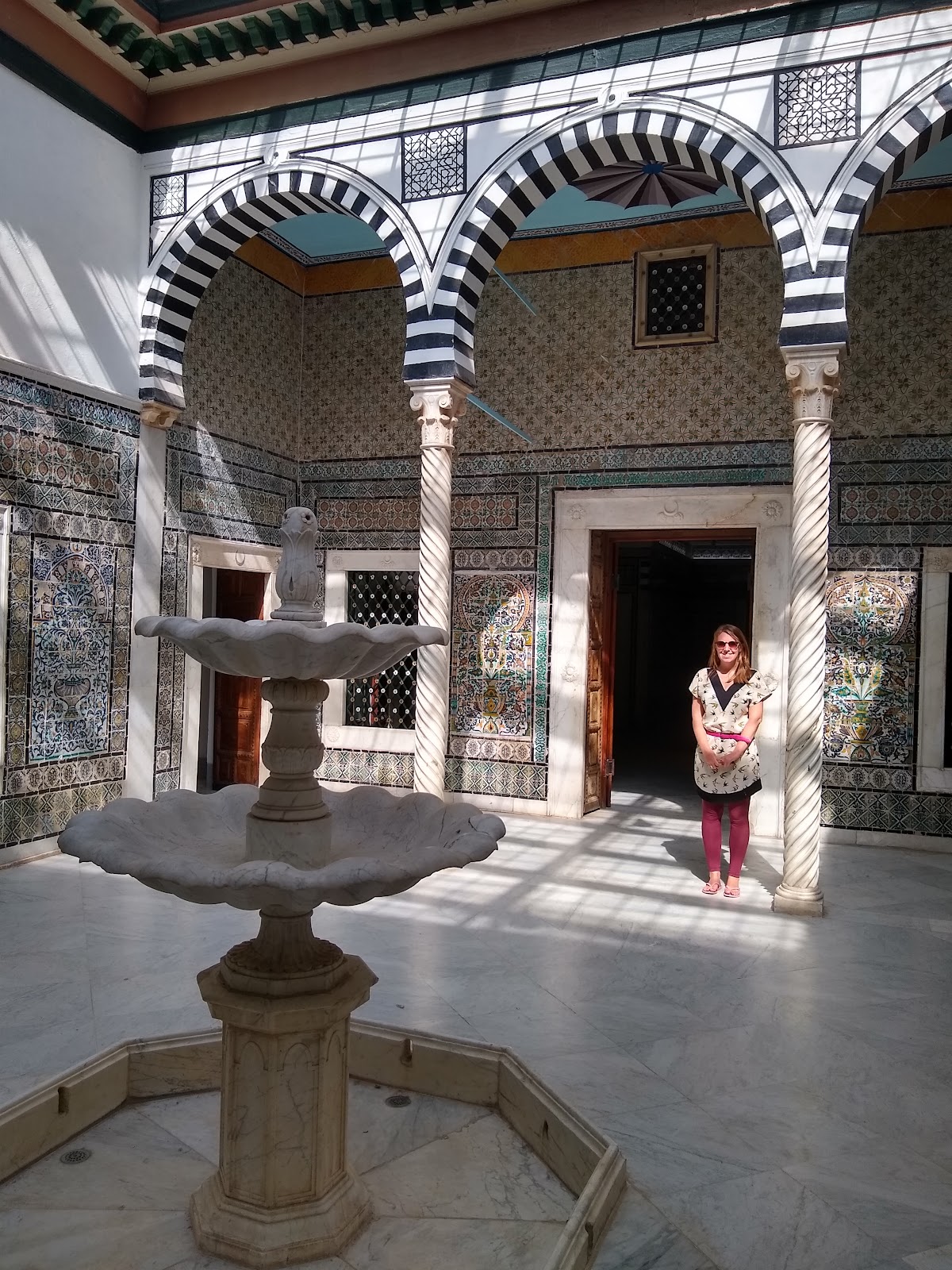
The building itself is amazing. It's an Ottoman era palace, and its rooms are a three storey maze of huge, ornately carved reception rooms, stuccoed domed and vaulted ceilings, marbled bathchambers, floor to ceiling walls of brilliantly coloured tiles and arched basement hallways.
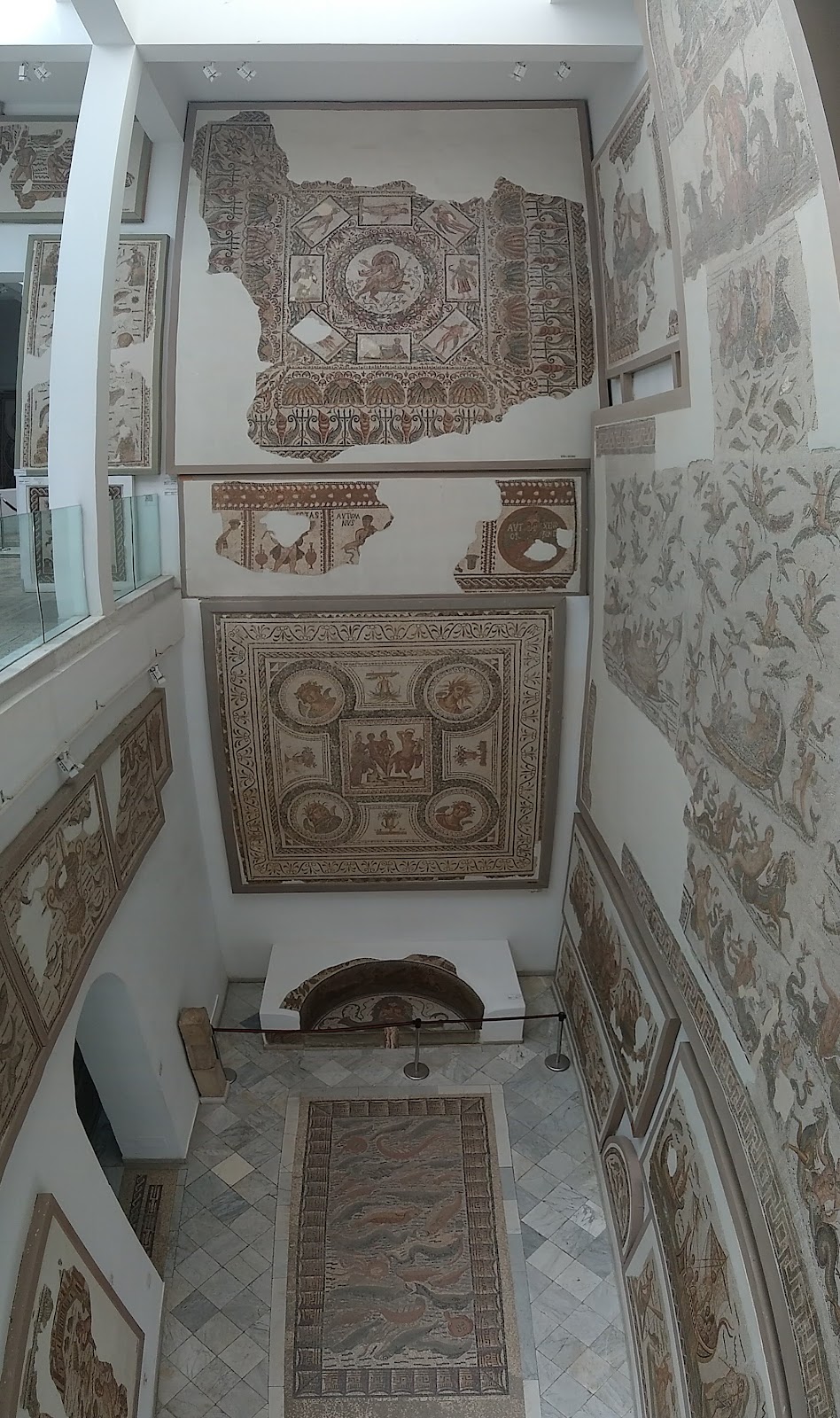
As great as the museum space was, the collection just blew it away. Tunisia was the centre of the Roman province of Africa, one of the richest in the empire. And the Bardo contains the best artifacts collected from Carthiginian and Roman archaeological sites all over the country. The Roman mosaics in particular were a-freaking-mazing. Every room seemed to be more impressive than the last, and I spent a good chunk of the visit literally open mouthed at the detail, colour and size of the artworks on the walls.


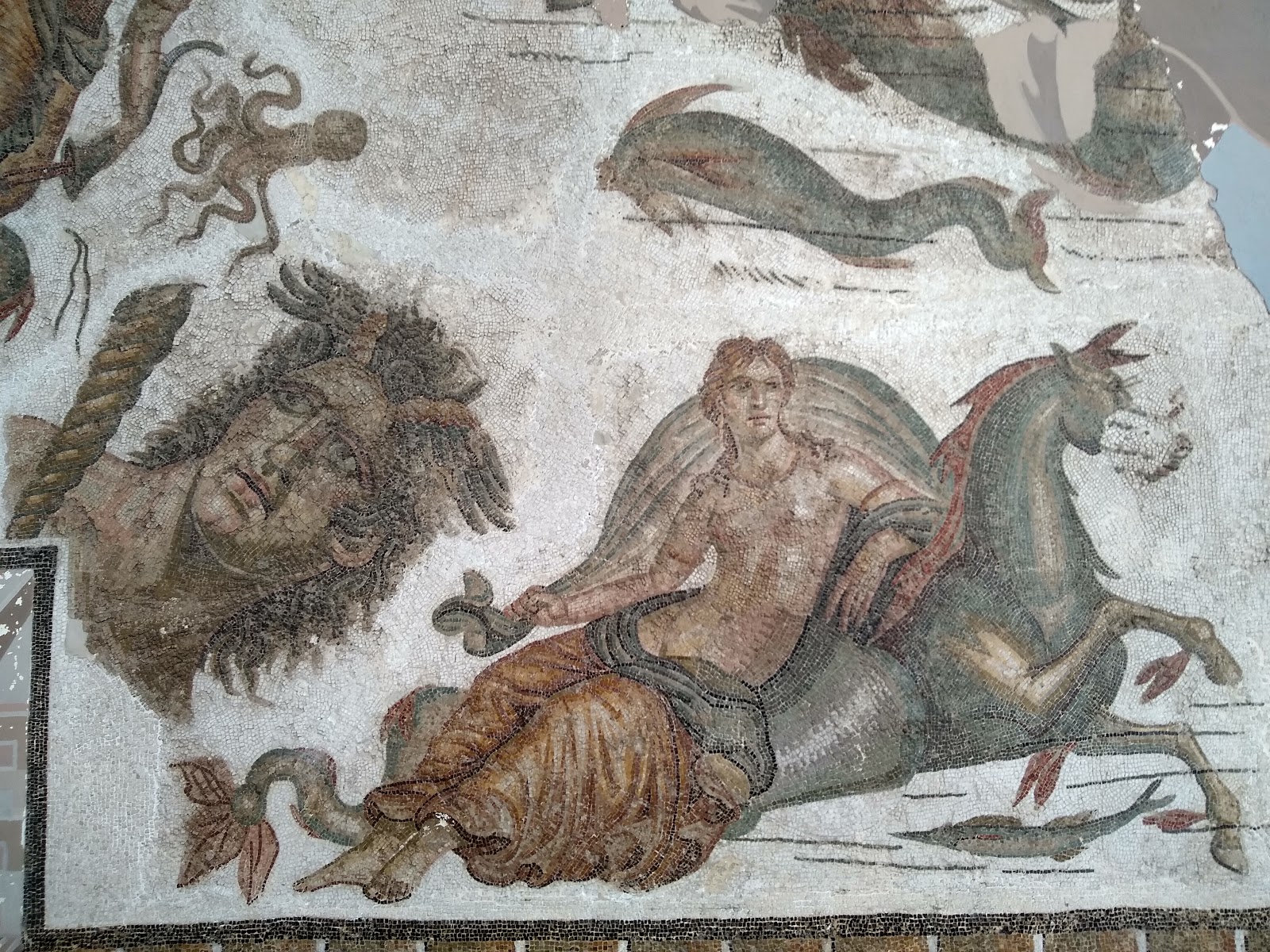
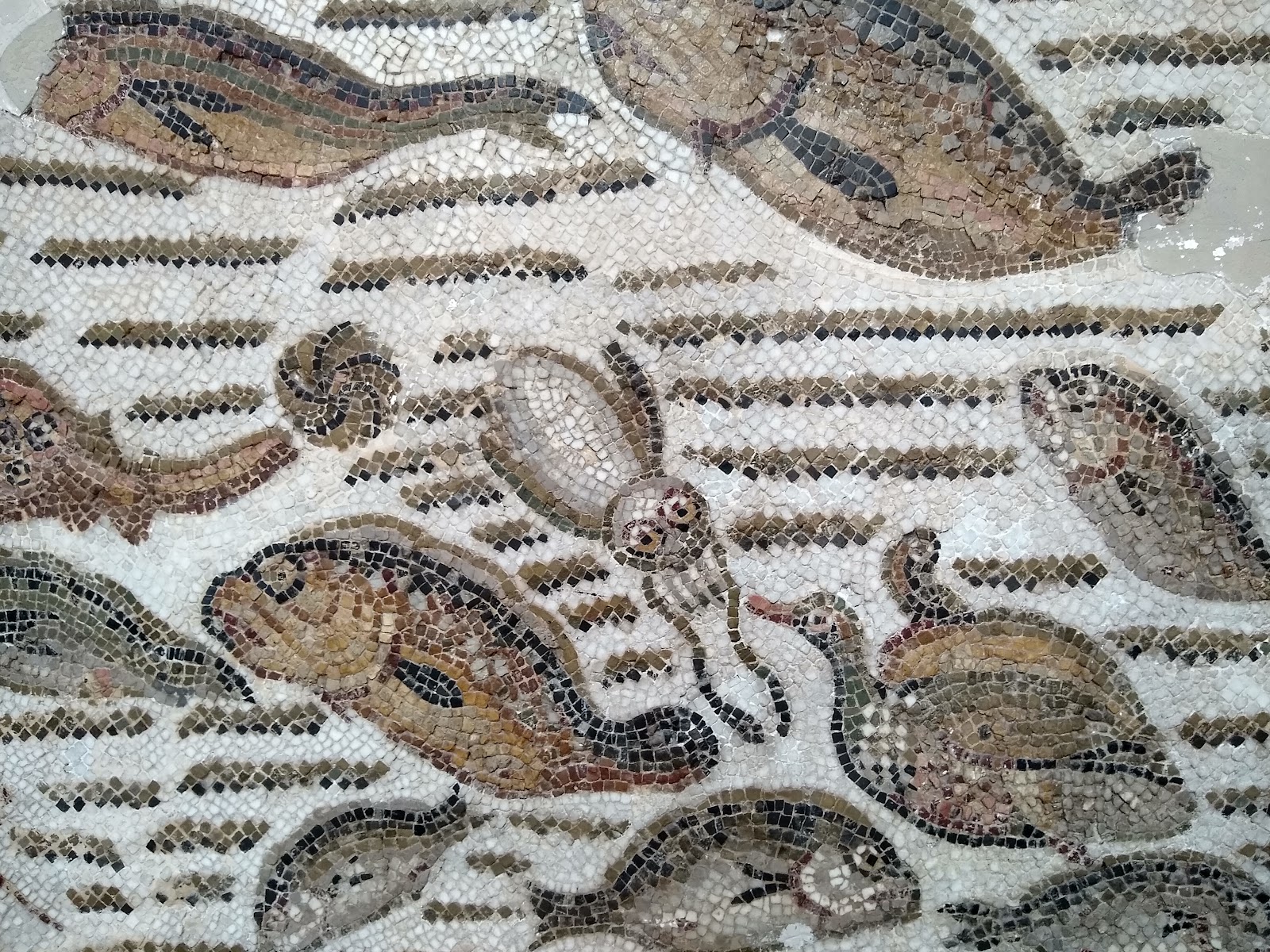
Our final stop down in the basement was perhaps the least outwardly impressive, but most interesting section of the museum. The section on Islam in Tunisia was surprisingly thin, but the section on post-Western-Roman Christianity was very cool. I've always known lots about Carthage and Rome, and have more recently learned about the rise of Islam in North Africa, but I've never known, or even thought much about what went on in between (which was, in short, a mix of control by the Byzantine Empire and Vandal kingdoms, theological arguments amongst various Christian sects and eventually, the rise of Catholicism including (and I'd no idea of this before now!) the birth of Saint Augustine.
Whew, another big day!
We drank a fair bit of coffee in Tunis. The quality varied quite a bit, with much of it being over-roasted and/or over-extracted with a bit of a burnt flavour. And it varied quite a bit in price. At one point we sat at a cafe on the main street and, after having consumed two cups were asked for 7.8 Dinars. While this is only NZD3.90, it's still double what a coffee at a similar establishment up the street ran us. And almost five times what the (very good!) coffees at the place round the corner cost us. Unsurprisingly, this last place became our regular coffee spot, very friendly staff, smoking customers, Tunisian news on TV above our heads in the narrow seating area and all.

Our final day in Tunis took us out by train to the region's most famous site: the remains of ancient Carthage. They sprawl over the modern suburb of the same name for several kilometres and we spent the day wandering amongst them. Through advance reading, we knew not to expect that much of the ruins themselves. For one thing, they are mostly Roman, with very little remaining of Punic Carthage. And for another, there's really not that much exciting left.
BUT (and this is a big, important BUT, which is why it's capitalized and bolded), it's Carthage. CARTHAGE! For anyone with an interest in Roman history, there's probably no more imagination-inspiring place except (and possibly not even) Rome itself.
There were a few cool highlights. One was the Byrsa Hill, founding location of Carthage. It had been excavated to show a section of the original Punic city, which the Romans had buried in fill behind a retaining wall when they levelled the hilltop for their Forum.
And the huge Antonine baths, of which only fragments, but very large and impressive fragments, remain.
And the Punic tombs, which include the graves of many infants sacrificed to the Carthaginian gods. When originally discovered, these proved something of a surprise to Historians, who had long supposed that the “baby sacrificers” label applied to the Carthaginians was probably just Roman propaganda.
And finally, the Carthaginian port. It was far from the most impressive physically, consisting of a circular lagoon about 400m in diameter and maybe 120m across, with a semi-island in the centre featuring a few lacklustre ruins. Even so, it was perhaps my favourite of the sites, as it was so easy to imagine hundreds of sleek galleys at anchor, the port all abustle with vessels under repair and construction and amphorae of grain and oil being loaded and unloaded.

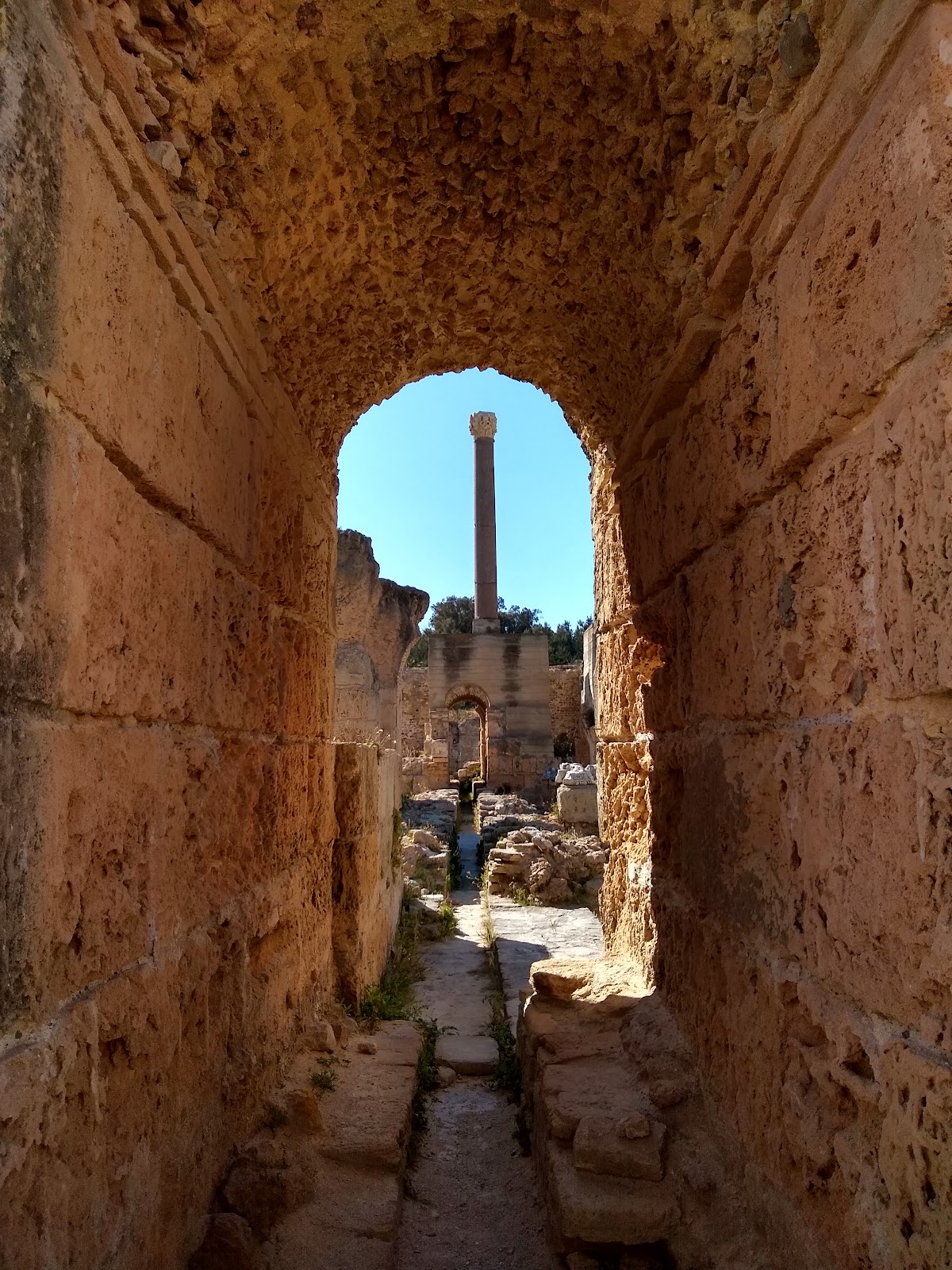
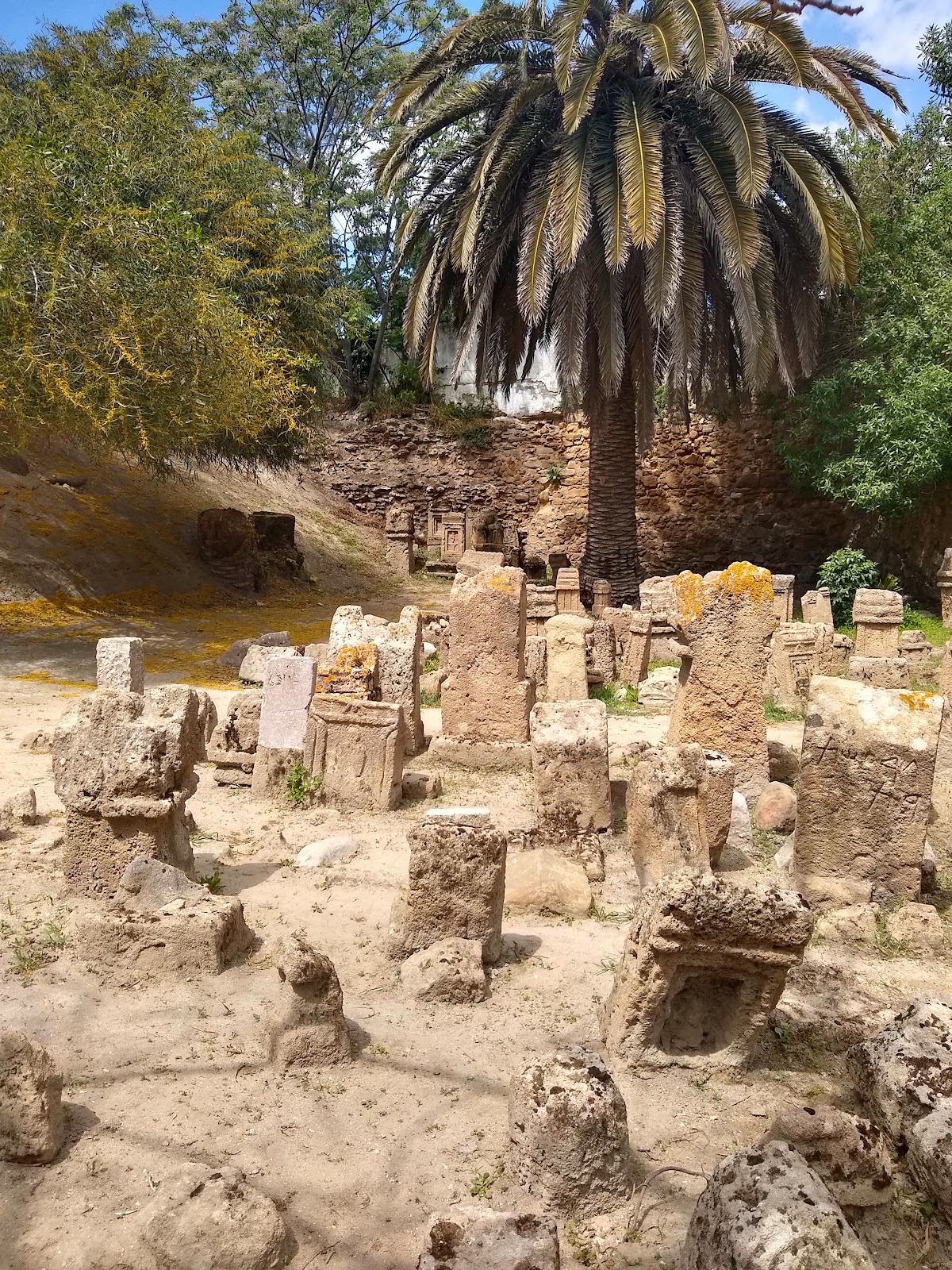

On our way home the commuter train stopped for maybe half an hour after young teenage boys tried to hold the doors open and climb on the roof as it left the station. They started chanting, singing and banging on the train, much to the irritation of me and many of the other grumpy old passengers. Though I have to admit I felt for (at least some of them, at least a little) when the police showed up and dragged every male under about seventeen off the train, shouting at, (rarely, but occasionally) smacking them on the head and spraying them all with a UV identifying spray in case they ran off before they'd been dealt with…

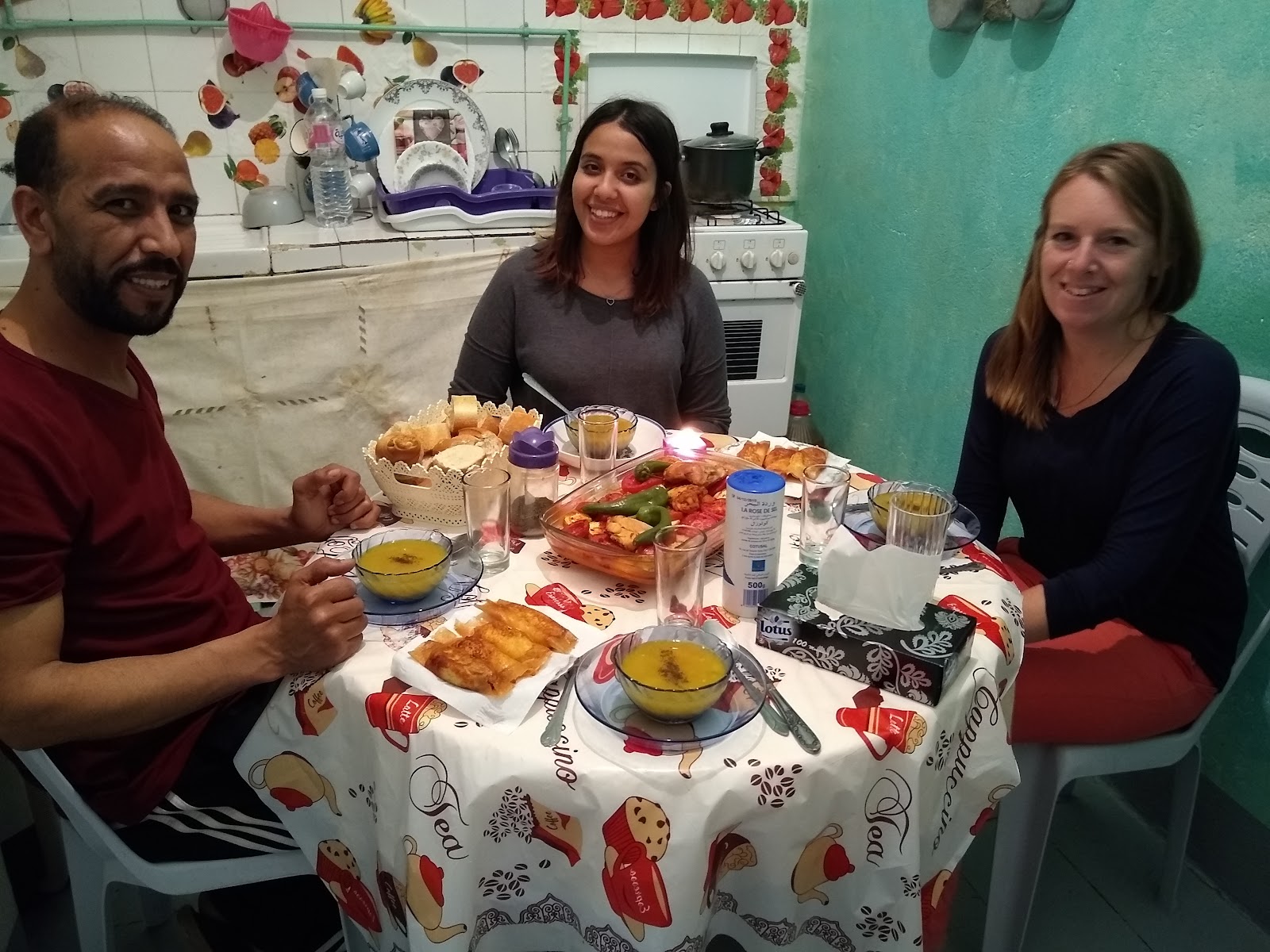
Back in Tunis we had one final lovely night when our Airbnb host invited us to join he and his girlfriend for dinner. We had tasty fried cheese pastries, a big baked dish of chicken, potatoes, tomatoes, onion and peppers and fresh bread. We brought along soft drinks (Orangina! And a weird Tunisian one that called itself cider, but tasted more like cream soda) and a delicious, very powerfully flavoured lemon sorbet for dessert.
On concluding this account of our time in Tunis, I'll say a big thanks again to Anis for being such a great tour guide, and for taking time out to show us around right in the middle of a difficult and tricky time for his project, and to Braydon for introducing us to him.