Showing posts with label Spain. Show all posts

Monday, 3 June 2019

This Little Pulpi Went to Porto


  • We'd reached Santiago with none of the delays we'd allowed for in our schedule, so we had a few days to take a pleasantly slow trip back to Oporto.

On the first of these we took the train down to the city of Vigo.  As Santiago is the best known city in Galicia, I'd kind of assumed that it must also be the biggest.  But Vigo, home to the largest fishing fleet in Europe, was a real, large city, three times the size of Santiago, and almost as big as Wellington.  Like Wellington, it's also a hilly (and on our first day there, rainy) place, so we climbed up a series of hills and stairways to our accommodation, a room in a private house booked on booking.com rather than Airbnb.

That afternoon we went out for a walk in the rain along the waterfront.  It may have been a suffered a bit from the weather, but also because it gave me the feeling of being the exact same as almost every other city that's tried to tidy and pretty up its waterfront.  But it gave me the opportunity to pick up a new phone at the mall at one end (with the 21%VAT refunded, it'll work out as cheap or cheaper than the best prices available online).
And while the waterfront felt a little underwhelming, the city streets, especially the long pedestrian shopping street were actually really pleasant, despite the weather.  They were grey, but shiny in the drizzle, and full of Vigo's hardworking residents out enjoying a Saturday afternoon off.


We'd actually had almost no real Galician food during our time in the region, so that evening we took our host's recommendation of a dinner spot and headed there at an early (by Spanish standards) 20:30.  The decor seemed almost like a parody of a 1980s seafood restaurant, but there were several Spaniards there, and when our food arrived it turned our to be decent value and great quality. We had about the most Galician meal imaginable, Pulpa de Feira (Octopus with olive oil and paprika), Pimentos de Padron (fried small, slightly spicy green peppers) and a bottle of Albariño wine to wash it down.  The octopus was incredibly tender, obviously really well cooked, but disappointed a bit in that it tasted (and even had a similar texture to!) Christmas ham! But still, it was a really fun meal, and a nice sort of a farewell to Galicia.


The next morning we took a wall up to Vigo's old fortress, which was green, sunny and warm, and had fabulously expansive views out over the whole city, the harbour, the Ria Bahias and the Islas Cies.  It was a minor downer when as we were preparing to leave I was stopped from refilling our water bottle when I spotted a guy lifting up his little French bulldog and washing it's bottom in the drinking fountain, using it like an impromptu doggy bidet!


From Vigo we took the bus down the centre of Galicia via the town of Tuy.  As with the previous day's train trip, much of our trip was crossing and recrossing the route that we'd spent the previous several days walking.  It was really fun to look out the train or bus windows and see familiar spots, and to look, point and say to each other “Peregrino!” whenever we saw someone with a backpack walking along the trail.

At Tuy we turned west and followed the north bank of the Rio Miño, the border between Spain and Portugal.  We arrived in A Guarda at the mouth of the Miño and did a bit of shopping, just catching the supermarket before its early closing on the Thursday before Good Friday.  We walked along the flank of a mountain before dropping back down to the river estuary and the village of A Pasaxe from which a ferry crossed the river to Caminha in Portugal.  Or used to cross. We arrived at the terminal to find a month-old sign stating (in Galician only, which meant that it took us a little while to sort out) that the ferry was undergoing mandatory maintenance and that crossings were cancelled until further notice.  

We sat and ate a picnic lunch while pondering our next course of action.  Just as we were finishing up, the owner of a water taxi appeared, readying his boat to take a friend across, and offered us a ride as well.  He took us across, conveniently skipping the three or so kilometres of town street walking we would have had to do with the ferry, and dropped us right on the headland at the south side of the Minho (it's name, but not pronunciation, changes when you cross into Portugal).


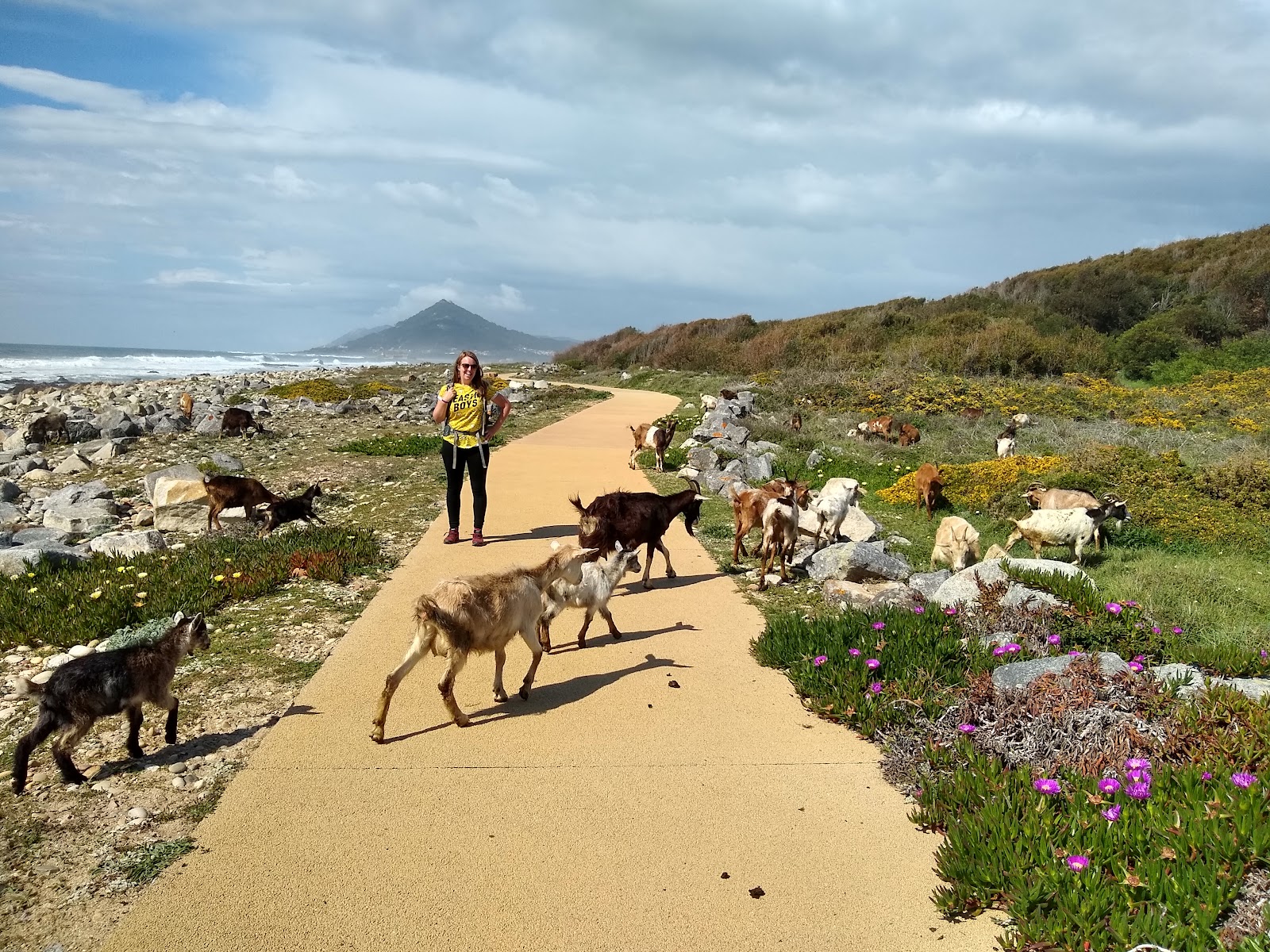
From there we had a beautiful walk down the coast on a sunny afternoon.  We'd really enjoyed our one day of walking on the coastal Camino as we set out, and this was a nice way to give ourselves one more taste of it before heading to Oporto.  We passed by lots of beach with big, rolling surf, a gorgeously sited fortress out on a little island in the mouth of the estuary, a couple herds of sheep and goats being shooed along the coastal track by their keepers, and, of course, lots of Peregrinos walking in the other direction, all of whom we greeted with a comeradely smile and a cheery “Bom Camino!”

Our stop for the night, Praia d'Ancora was a pretty little beach holiday town.  One of the nice things about being on the Camino route is that even if you aren't staying at the cheap-as-chips municipal albergues, you can be confident that there will be plenty of accommodation in every price range.  So we spent one more night sleeping in a dormitory with our fellow Peregrinos. It was interesting to see the difference between private accommodation and the municipal albergues. This time there was no mandatory lights out at 22:00, so there was lots of laughter and loud (drunken?) talk in the next room over, someone playing Big Yellow Taxi on their phone very loudly at 23:00, and our one dorm-mate who furiously chastised the offenders, muttering something or other about the police in German even after they'd agreed to quiet down.  The next morning was different too, as with no ridiculously early checkout time, none of our fellow guests were bashing around and turning on the lights at 06:15.


We ourselves didn't even leave until almost noon, catching a train into Oporto at 12:02.

In Oporto I kind of expected everything to be closed as it was Good Friday. But no!  After being warmly greeted by our host Hamza back at his brand new Lovely Aguas Guesthouse, we went out for a stroll around the historic centre of the city.  And it was all abustle, with everything from tourist restaurants to supermarkets to underwear stores all open for business.

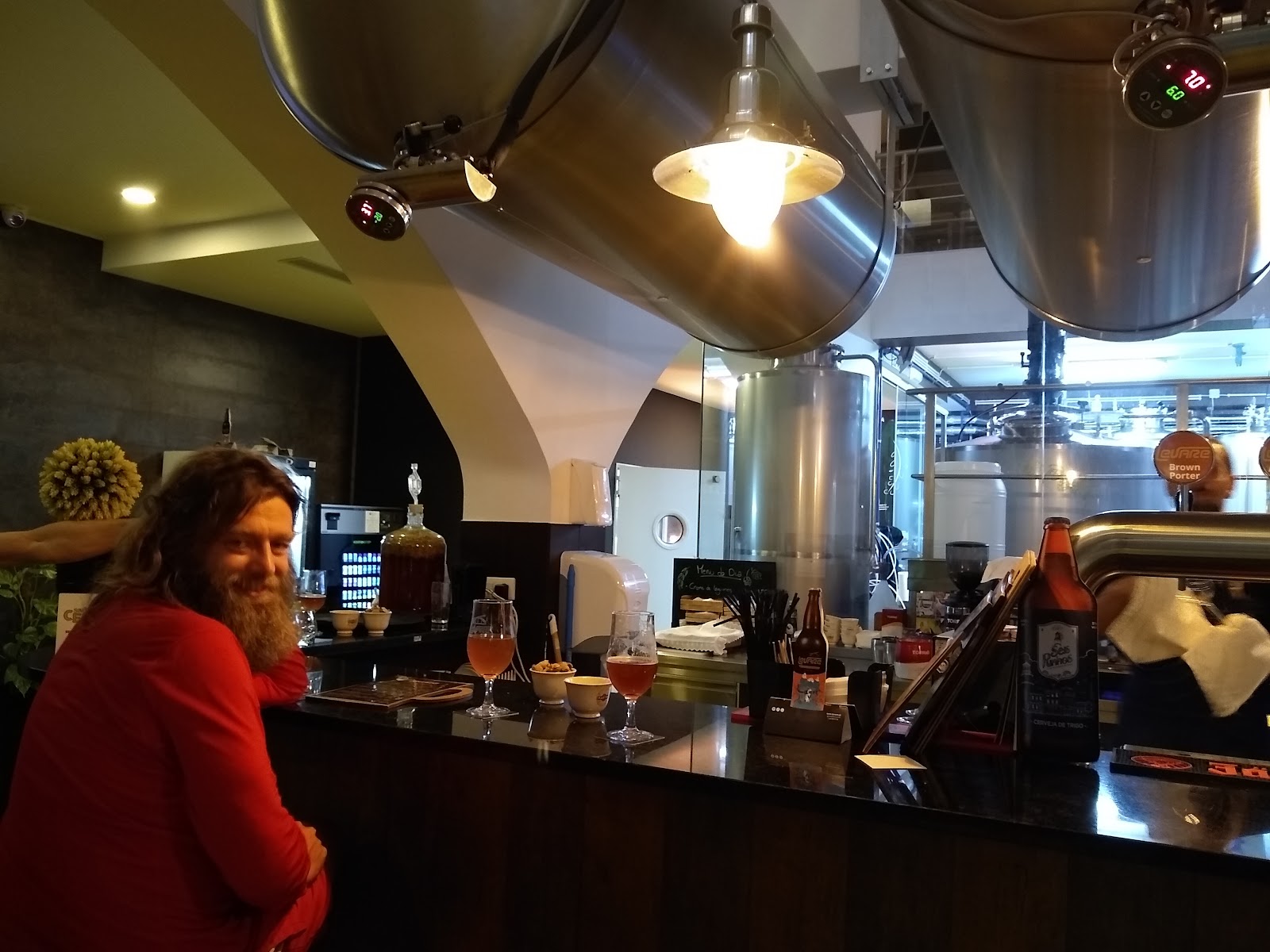
We joined the crowds on the car-free (but not light rail-free, the trams drove straight across, tooting selfie snapping pedestrians out of their way) Luis I bridge.  On our way home we popped into a little brewpub. It was fun having (a very little bit of, as they didn't really speak English) a chat with the brewers, though only one of the beers (a dry hopped saison, which was really more like a Belgian pale ale) was really any better than “okay”.

The next day was devoted to our one must do (or rather, “must drink”) of Oporto, Vinho de Porto, or Port wine.

At Easter Weekend, Oporto was astonishingly busy.  The pedestrian mall we walked into town along was absolutely packed.  The square in front of the cathedral, which had held less than ten people, almost all pilgrims in the 09:00 hail when we'd started out Camino was filled people taking photos and a queue of others waiting to go inside.  But thankfully there were still spots available on a 15:30 tour of the Offley port cellars.

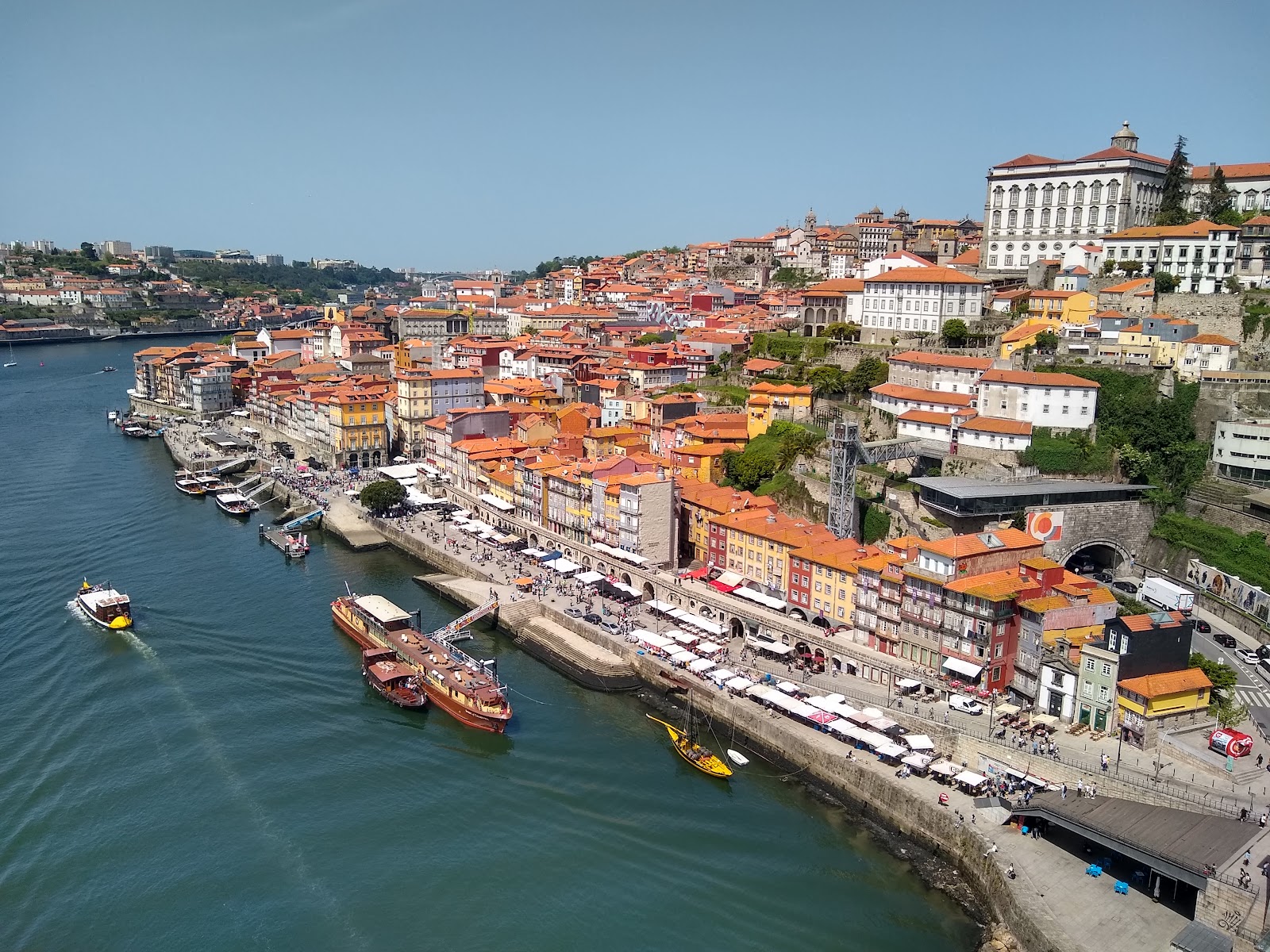
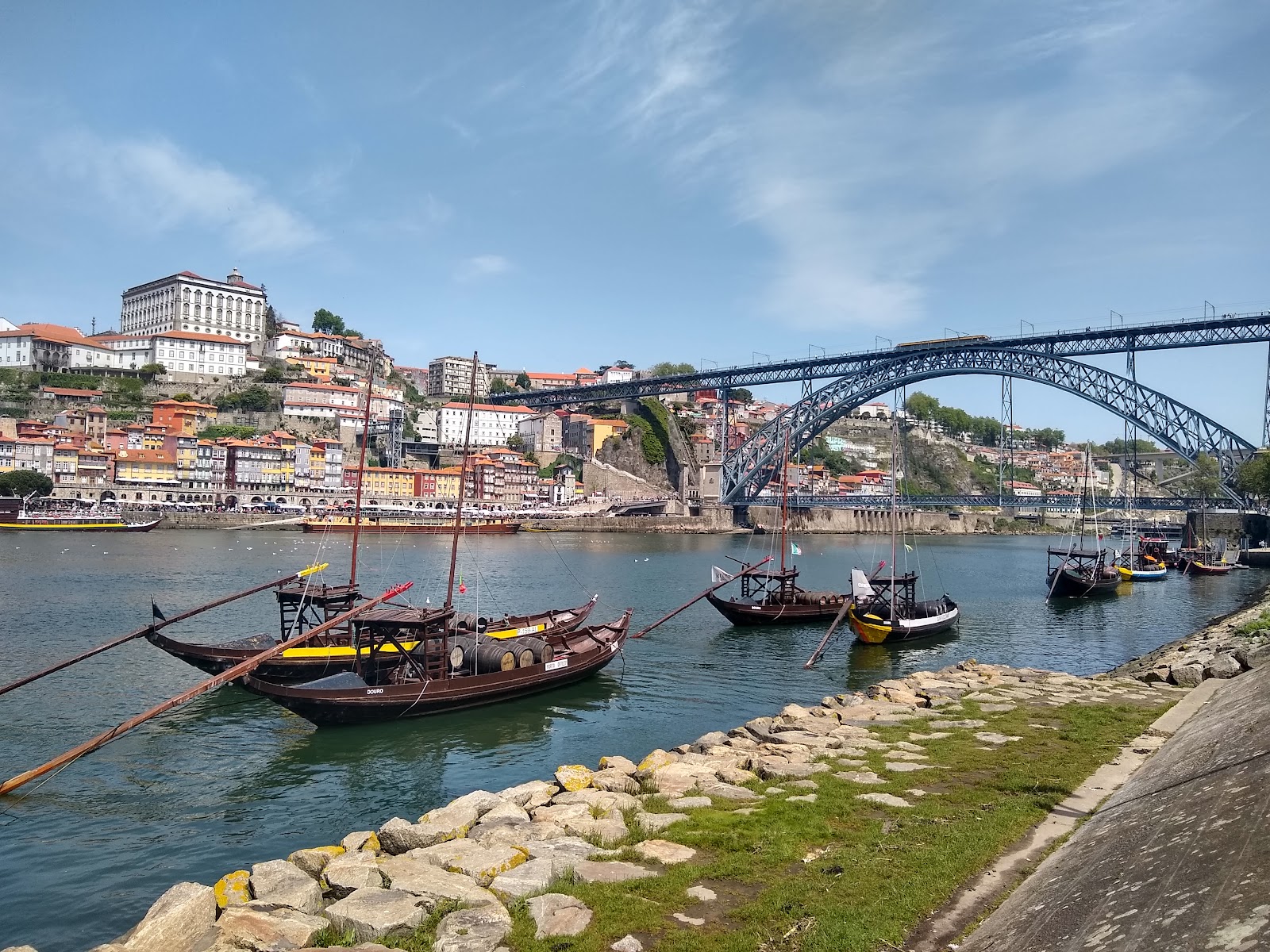
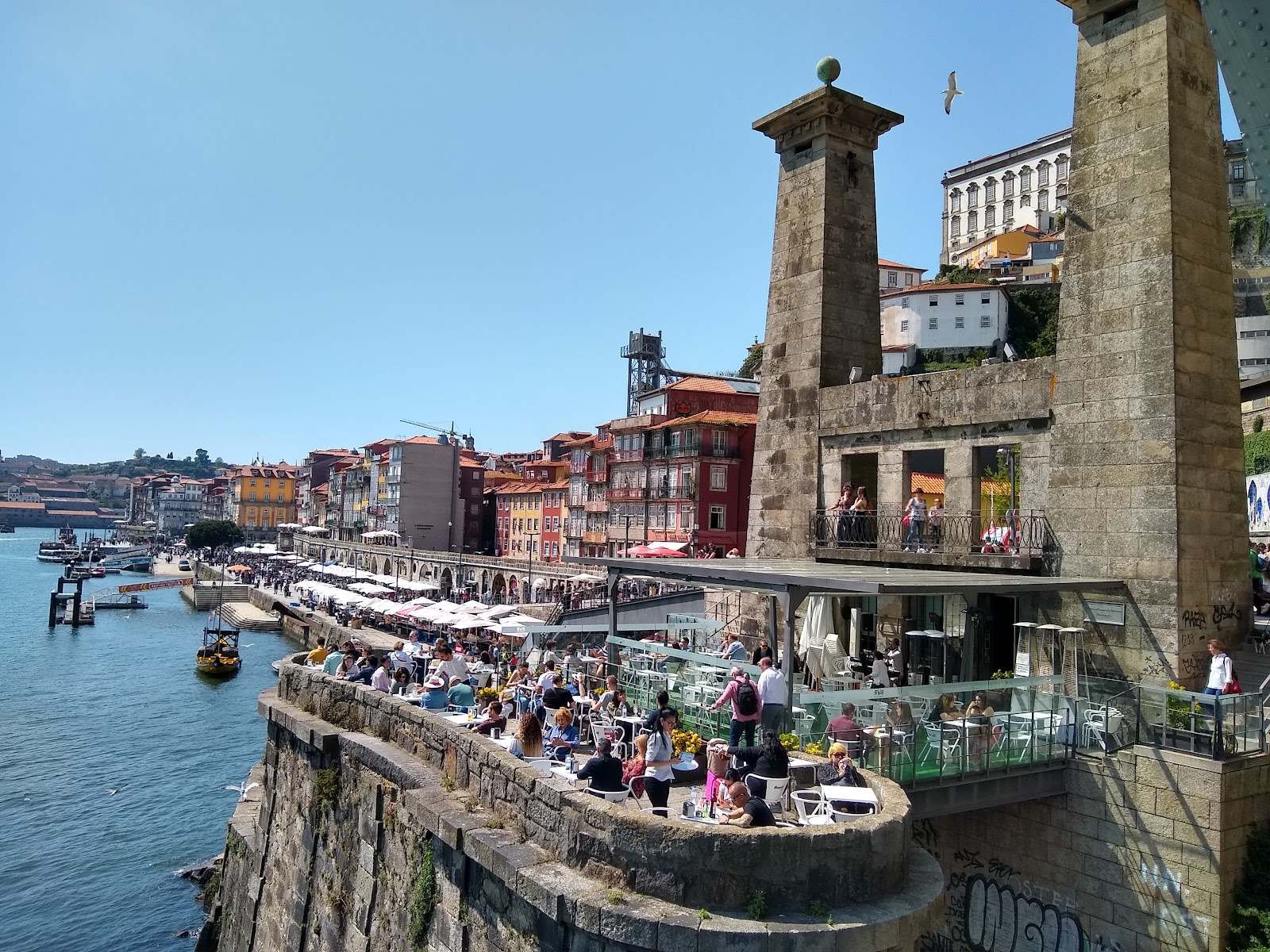
None of the cellars (or “Lodges” as they're curiously called) are actually in Oporto proper.  They're all across the river in the city of Gaia, but we didn't notice any difference as we crossed from one tourist-strewn bank to the other, nor as we walked along the charming but busy south bank.  The south bank of the Douro is lined with old barges that used to ferry barrels from the wineries upriver in the Douro valley down to Oporto for aging and export, as well as heaps of bars and restaurants taking advantage of the great views back to the colourfully tiled and roofed buildings of Oporto.  And of course the banks are also lined with wine cellars, each taking advantage of the opposite view (the one from Oporto) to advertise their wares with big signs on their facades or roofs.

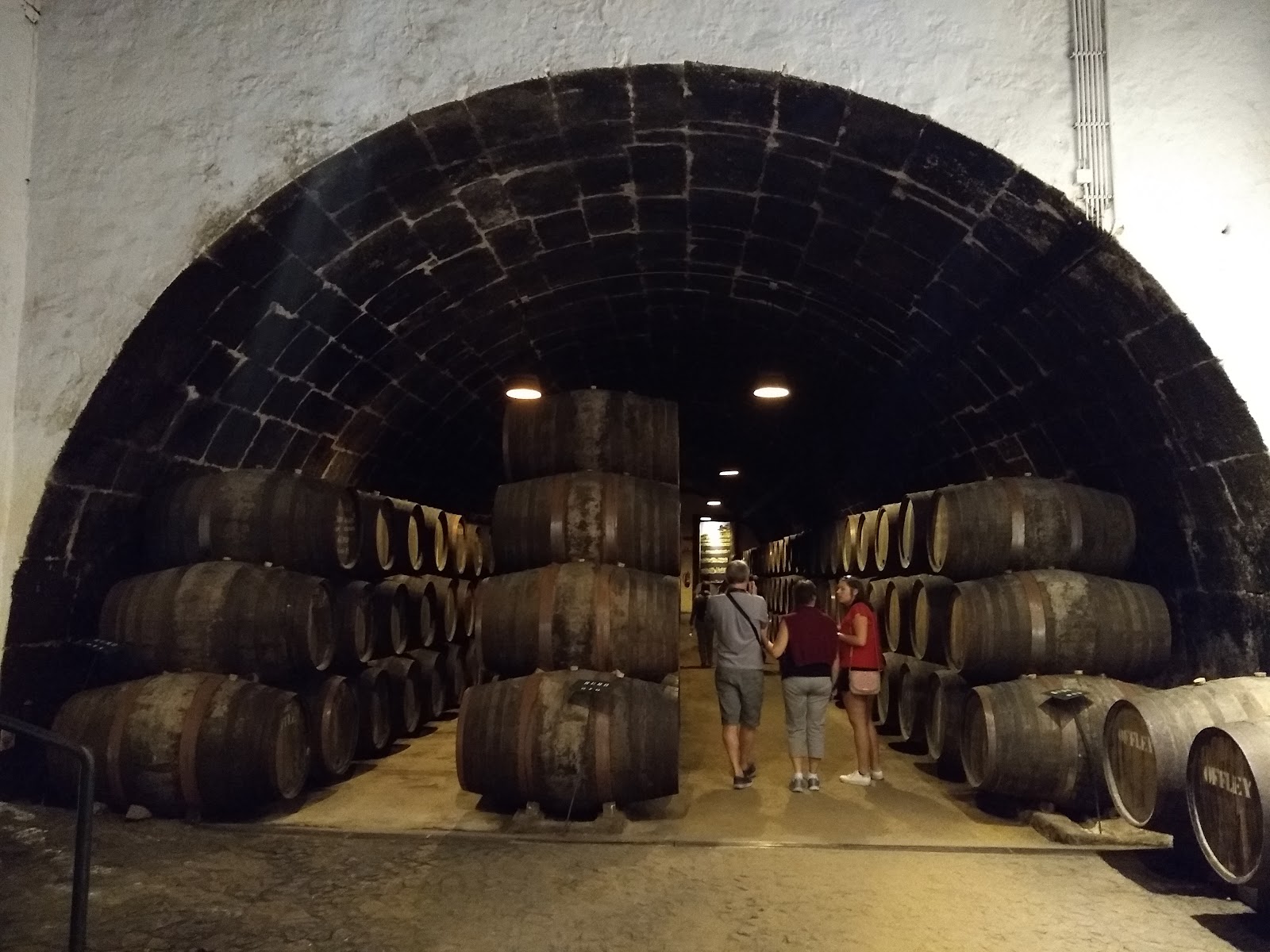
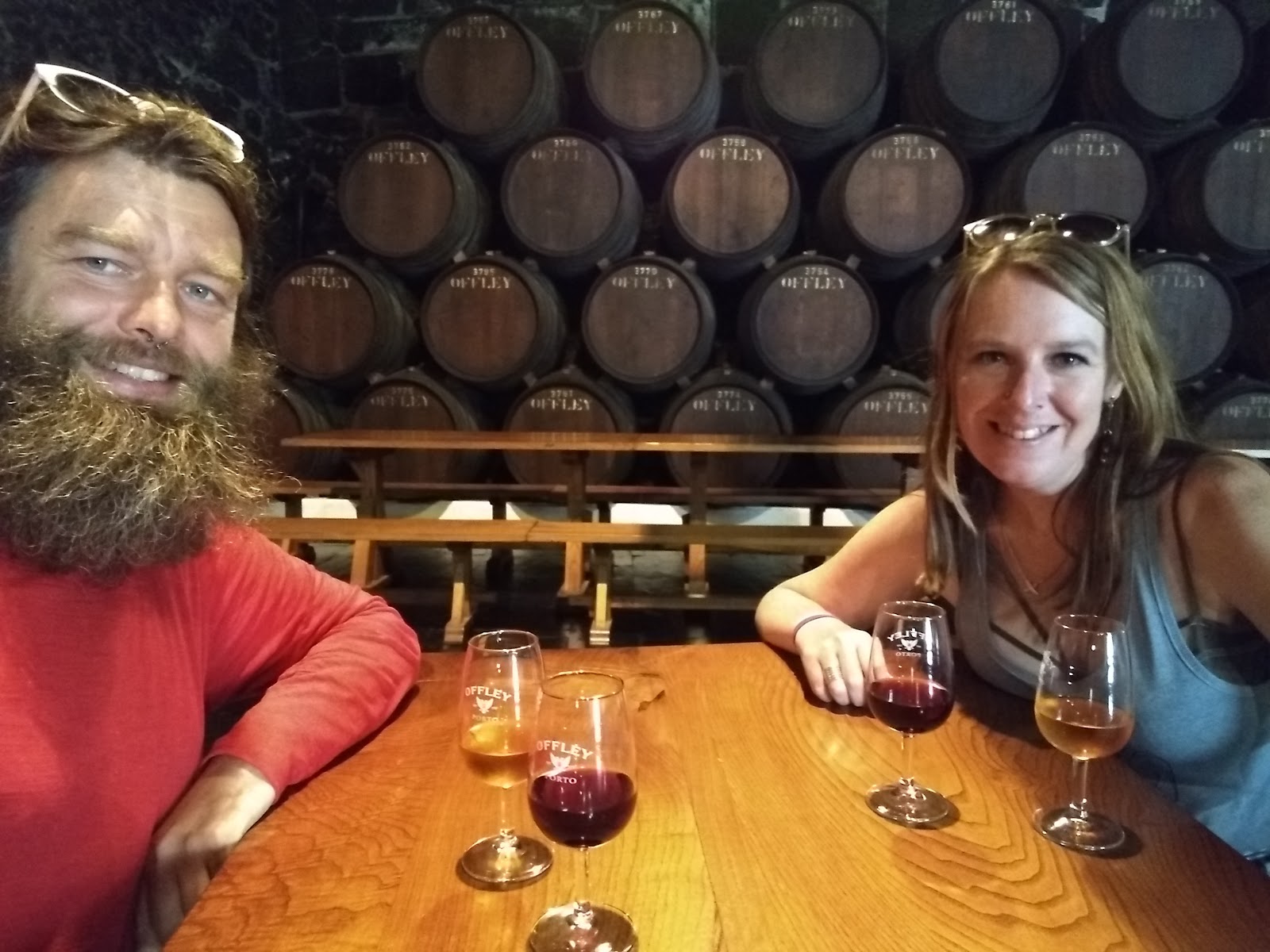
The tour of the cellars was more expensive than, and not quite as interesting as the sherry cellars in Jerez.  There's not as much (obvious at least) process going on in the production of Port wine, though it was interesting to learn that the different types (tawny, ruby, white, etc.) derive their different characters pretty much entirely from aging in different containers (foeders vs. barrels) for different lengths of time.  And that “vintage” port can only be produced in years independently judged to be of exceptional quality by an independent assessing body. Also intriguing is that most ports are only around 5% alcohol when their fermentation is stopped by fortification, all the way up to a whopping 20% abv.

We tried a few types, including the newfangled rose port (which, despite the additional sugar and booze, tasted surprisingly like a pumped up rosé table wine) and a Lacrima, the sweetest of ports (but still left in the dust in terms of sugar content by Pedro Ximenez sherry).

Following our tour we climbed up the hill from the river bank and sat ourselves down in the fabulous Jardim de Morro.  High up on the south bank of the Douro, the view is arguably even better than that down at river level. We started with two Vienna lagers from a local brewery that had a stand in the park (as much for the glasses as their contents, but the beer was very good as it turned out).  And with bread, lots of hard, salty Portuguese cheese and a bottle of Ruby port, we were set for the remainder of the afternoon until sunset. We were surrounded by music from the winery sponsored DJ, and a happy mix of tourists and Porto locals spending their Easter Saturday out in the sun admiring the view and one another's company.
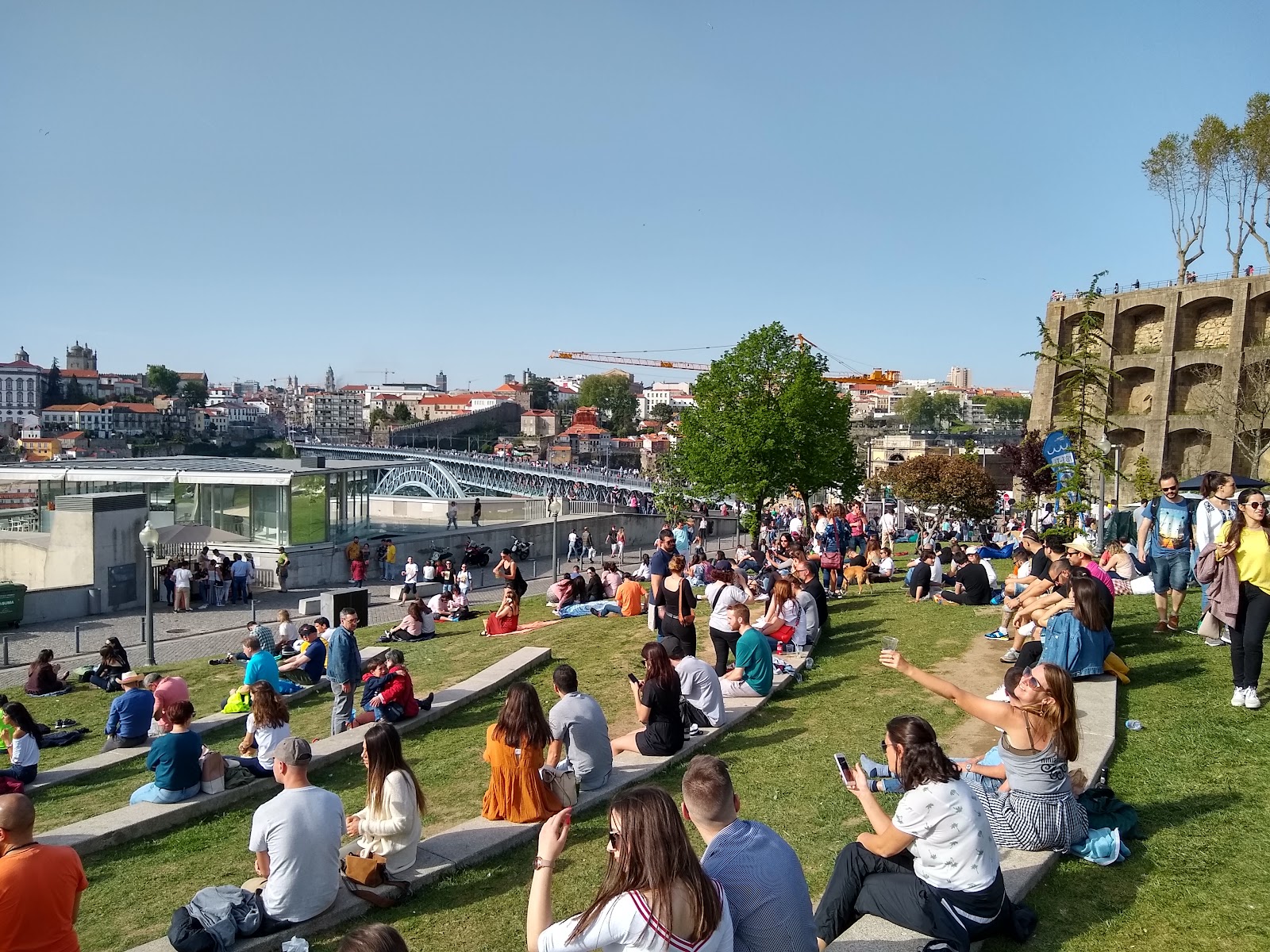
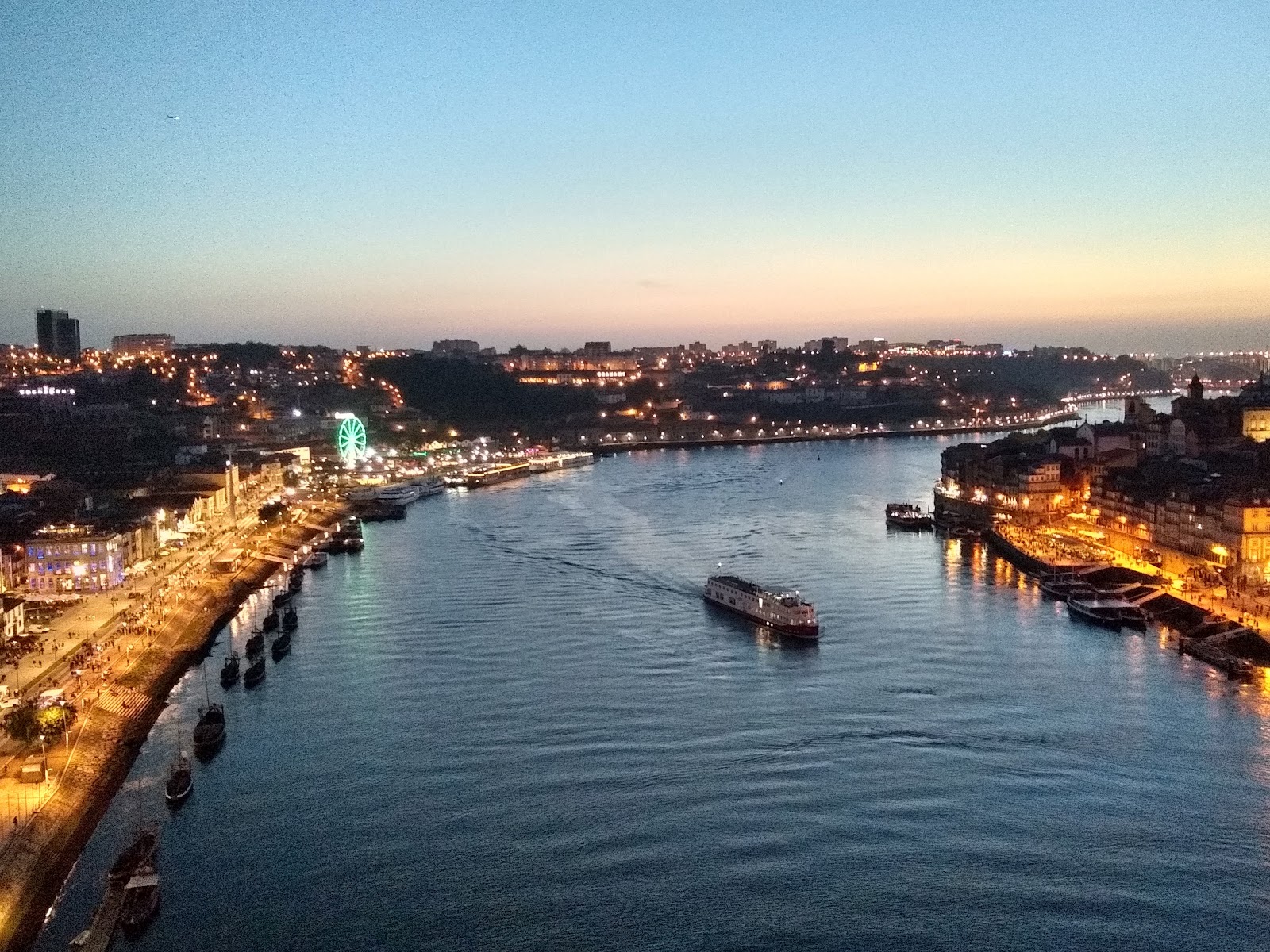

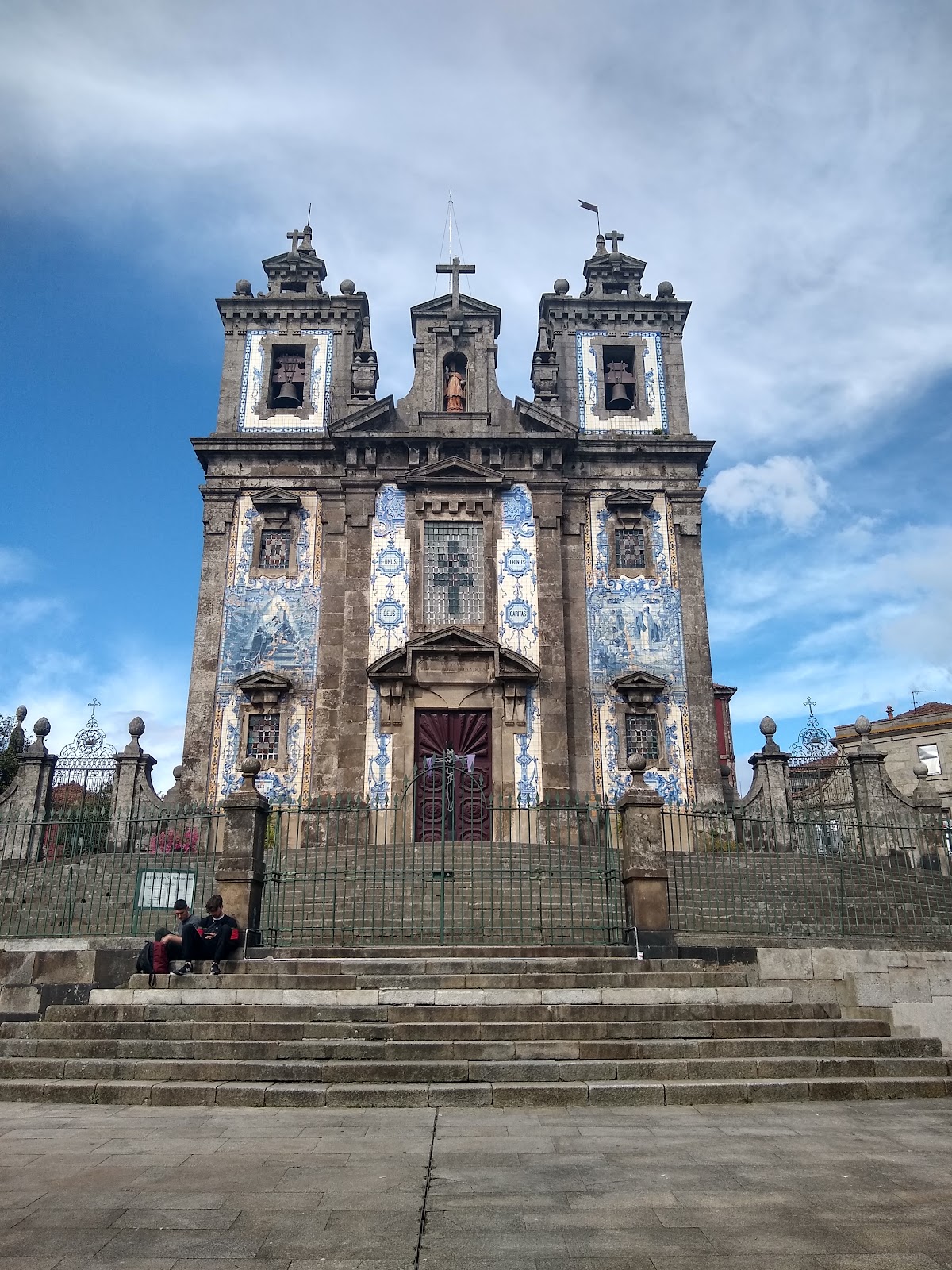
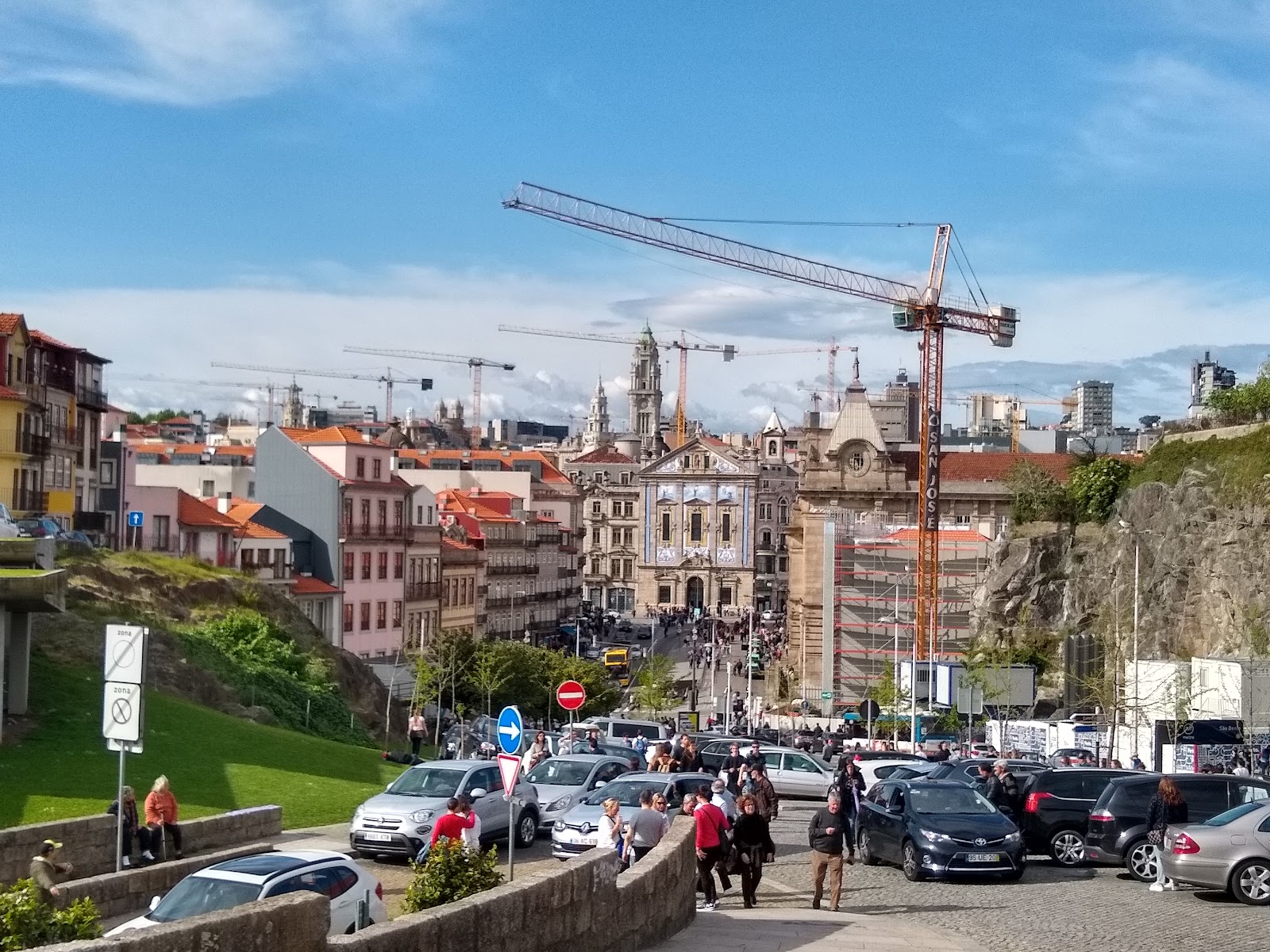
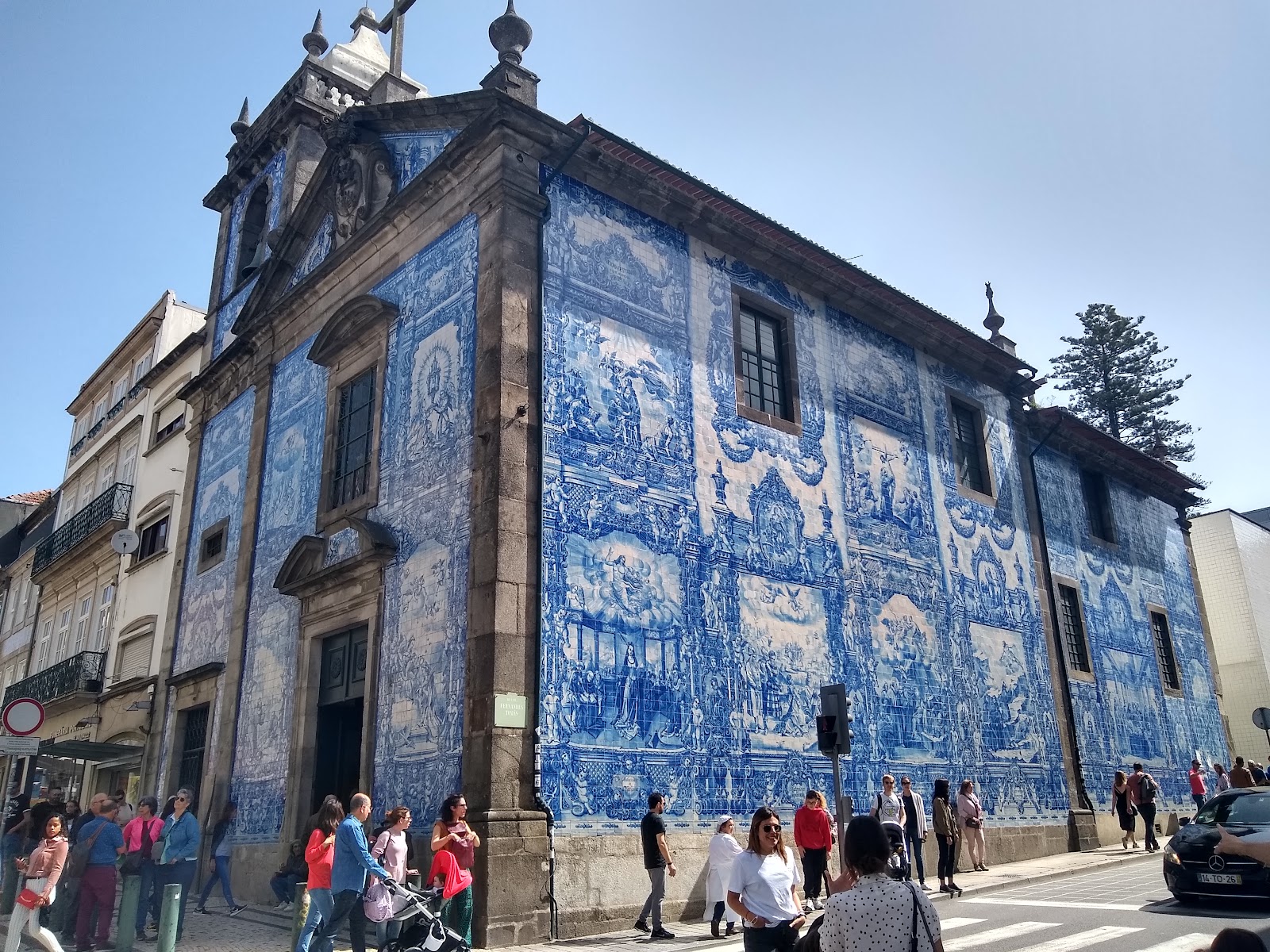
Our final full day in Oporto was spent in almost exactly the same fashion, minus cellar tour, plus Vinho Verde, plus wind, plus a little rain.  So I'll skip lightly over it, and just talk a little about how the city of Porto itself. It's really, really pretty. Most of the centre of the city is filled with three to five storey buildings.  Many of these have facades of brightly coloured tiles, with lovely little wrought iron balconies. And the churches! Most of them have tiled facades as well, but these are blue and white, illustrating scenes from the Bible right on the fronts of the buildings themselves.  But for all its prettiness and popularity with tourists, an awful lot of the buildings look like they've been unmaintained for too long. Plenty of them, right in the heart of the city near the river are literally falling down. It seems like central Oporto is a weird mix of places where no one can afford to live and where no one would really want to live (until they're fixed up, at which point they instantly become places no one can afford to live).


Before heading to the airport on our last morning in Portugal we supplemented our tourist visit with a wee bit of purely local flavour in the form of a Francesinha sandwich.  I actually hadn't been that enthralled by the photos I'd seen of them. But our friends Dave and Denise had given the Francesinha rave reviews, and it is pretty much the food of Oporto (as opposed to the food of Portugal as a whole, which would probably be salt cod, which is one of the very few foods I actively dislike, and thus didn't eat while in Portugal).  So I decided to give it a try. On our long slow ramble to the metro station, we stumbled across a Belgian beer bar (which had a few Portuguese craft offerings as well) and made a big deal about their Francesinhas.  I ordered a Normal, with French fries but without friend egg on top. When it arrived at the table it was a solid looking square drenched in pale orange sauce. But when you cut in you discovered that the square was two slices of (surprisingly good, sturdy, non-fall-aparty) bread packed with chourico sausage, salami, ham, even a pounded-thin (and perfectly cooked!) steak.  The sauce was, like the meat, salty, but lightly spicy too.

I'm not 100% sold on the Francesinha being an actual sandwich (if you can't pick it up and take a bite out of it  [which you can't with a Francesinha without burning your hands and covering them in the sauce that's poured over top of it before serving] then it's not really a sandwich in by books).  But I'll let that slide, since it is a big salty, spicy, juicy pile of deliciousness.


With this solid ball of food in my stomach (Sarah had had a salad… clearly not thinking ahead!) we headed to the airport to get checked in for and wait the final few hours for our budgo flight out of Oporto, heading most of the way across Europe to an unlikely destination in the middle of the Mediterranean.



Saturday, 1 June 2019

Camino Portugues Day 11+

With our walk concluded we actually didn't have tons to do in Santiago.  We made a celebratory dinner on the night we arrived, accompanying it with several celebratory bottles of wine.

This, combined with my somewhat sore feet's need for a day off meant that aside from a couple of short shopping outings, we didn't really leave the hostel on Tuesday.

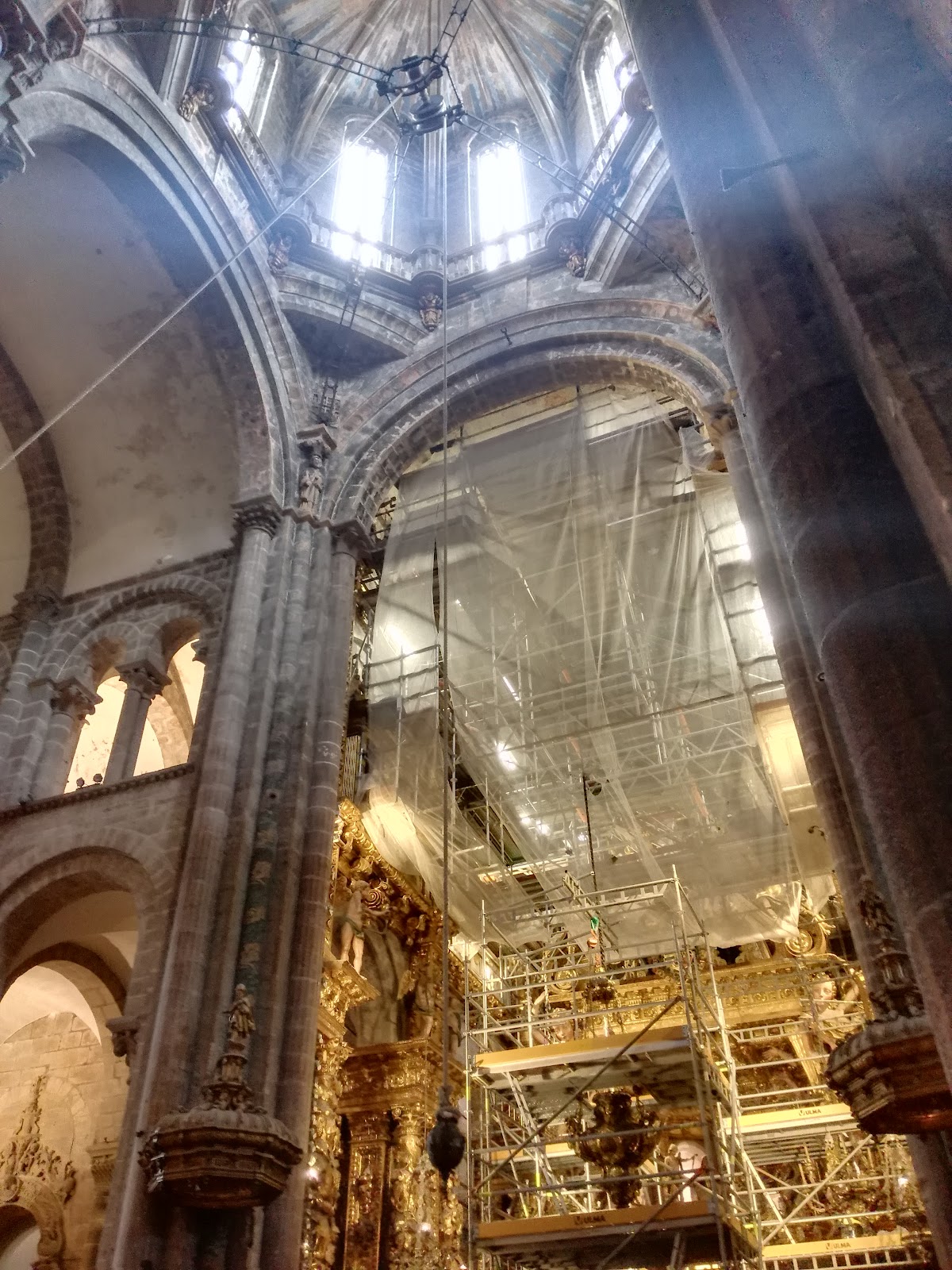
The following morning we were pretty much back in tip top shape.  My feet hurt only when I stepped on my jandal strap in just the wrong way, and Sarah was feeling so good that she once commented that she kind of missed walking!  We went for a stroll around old Santiago, and took the time to visit the inside of the cathedral that was officially the destination of or pilgrimage. It was under heavy renovation, so the daily pilgrims’ mass was being held elsewhere, and a lot of the interior was covered in scaffolding.  But the building actually still looked very pretty to my eyes. And the silver statue of Saint James that sits above his tomb was still accessible for pilgrims to hug (yes, that's a thing you're meant to do). And the tomb itself, which sits beneath the statue, was still open for visitors. It's surprisingly small and (compared to the huge gilded main altar above it) simple.  Whether you believe these are actually the remains of the apostle or not, it's still a pretty special place due to the centuries of devotion by those who did/do believe so.


Outside of the cathedral and nearby pilgrimage related sites, Santiago actually isn't much more than an averagely pretty medieval Spanish town, with a much higher concentration of lodgings and souvenir shops.  Between this and the fact that we had only two days before we needed to be in Oporto, we decided to hit the road and explore a little more of Galicia and northern Portugal with our remaining time.

So before fully putting our Camino to rest, a few final thoughts:

The prettiest bits were probably the ones in Portugal.  The Spanish sections were nice, and visited some lovely towns, but it felt that the pathway in Spain made a very concerted effort to take you to nice places, while in Portugal the path just went along the most convenient route, which was lovely because everywhere was lovely.

While the scenery and history were great, the best thing about the Camino was the sense of community.  The locals whose homes you were passing by, the hosts at the Albergues and probably most of all, fellow pilgrims always seemed happy to greet you and share a smile, a Buen Camino/Bom Caminho.  Even after arriving in Santiago it was great to walk around and see familiar faces from our walk and the glowing faces of strangers who were obviously just finishing theirs.

The walking really isn't that tough.  As you're regularly passing through towns, you just need to carry a light sleeping bag, changes of clothes and food and water for the trail.  You could probably keep your pack under 5kg if you wanted. Likewise, no special equipment is really required. Just a pair of comfortable shoes and a raincoat (though an awful lot of peregrinos walk with heavy hiking boots, trekking poles and even in a few cases, ridiculously unnecessary gaiters).

April seems a lovely time to walk.  The weather can be a bit wet, but its not cold and wet, and you'll have little or no trouble getting spots at the municipal Albergues (which I gather may be an issue in July or August).

So there we have it.  Camino complete. We will shortly be returning to our regularly scheduled an formatted blog.


Wednesday, 29 May 2019

Camino Portugues Day 11 (The finish!)

Camino Portugues Day 11
Herbon to Santiago de Compostela
Starting km: 229.7
Finishing km: 256.2
Distance walked: 26.5

We hadn't planned for this to be our final day on the Camino.  Even when we left the monastery in the morning, we were planning to just walk 12 or 13km to the final municipal Albergue in Teo, then stop there leaving us with an easy cruise on in to Santiago on day 12.

But it rained most of the morning and, despite this and a few small muddy bits, the walking was actually quite nice.  When we arrived at the Teo Albergue, it was still over two hours until it would open. And it was only about 2.5 hours walk to the place we were considering staying.  So that was that. On we went through surprisingly few suburbs and yet more pleasant forest.

And just as we were arriving in Santiago proper the rain stopped.  On our way into town we saw quite a few other pilgrims, but also lots of Santiagans (doubtless familiar with the passing parade) going about regular life.

With less than 2km left we took a small diversion fr the route to pop into our hostel.  We dropped off our packs and took long hot showers before returning to the road to properly conclude our Camino.

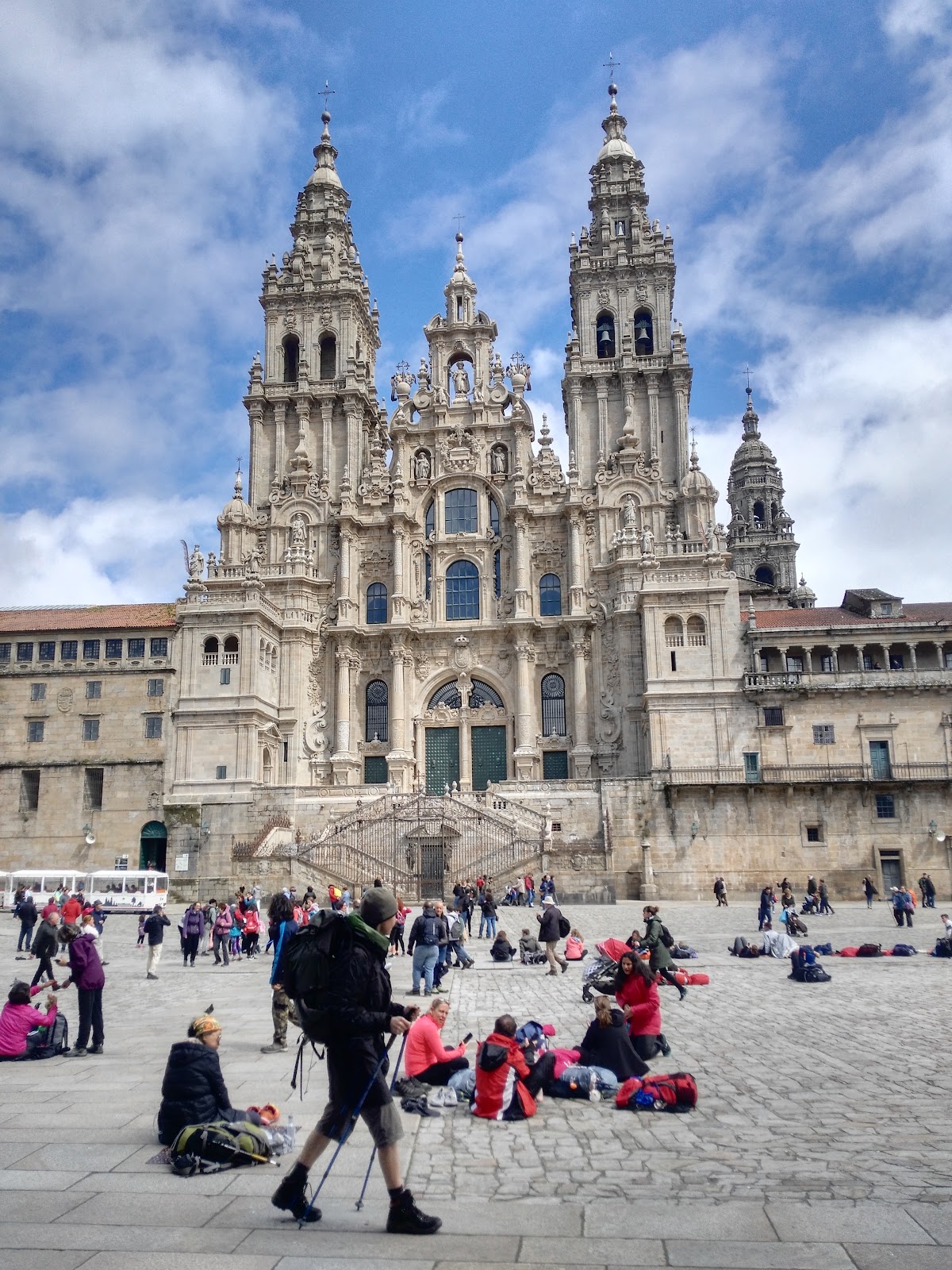
Most of Santiago appeared pretty unremarkable, but as you approach the cathedral the old city begins, and all of the buildings turn into restaurants and shops selling Camino related souvenirs.  We were only about 400m away when we saw the towers of the cathedral for the first time. Minutes later we were in the square in front of it. The sun had come out to welcome us and dozens of other pilgrims, most still with their backpacks, walking clothes and boots still on (we had some of our walking clothes on, but Sarah had changed her shoes and we were both sans packs).  We joined the other pilgrims sitting in the square, basking in the glow of the sun and of having reached the ebd of our roads. Several of our friends from the trail were there, and we passed several more when we finally got up and made our way a few hundred metres further to the pilgrims’ reception office.

There we joined a short queue and received the final stamps in our credencials, closing out our journey.  I got my Compostela (certificate indicating completion of the pilgrimage) and eventually (after some confusion caused by her saying she didn't want the route-and-distance-specific certificate, Sarah got hers as well.

Not entirely surprisingly, they've already suffered a bit, as we went grocery shopping on our way home, but really it's the thoughts and memories that count anyway.

So here we are.  Warm and dry in our hostel sipping celebratory cava and enjoying the end of our Camino.  I'll probably write one final entry tomorrow with a few final Camino memories and reflections, but for now, we're finished!

Wine of the day:
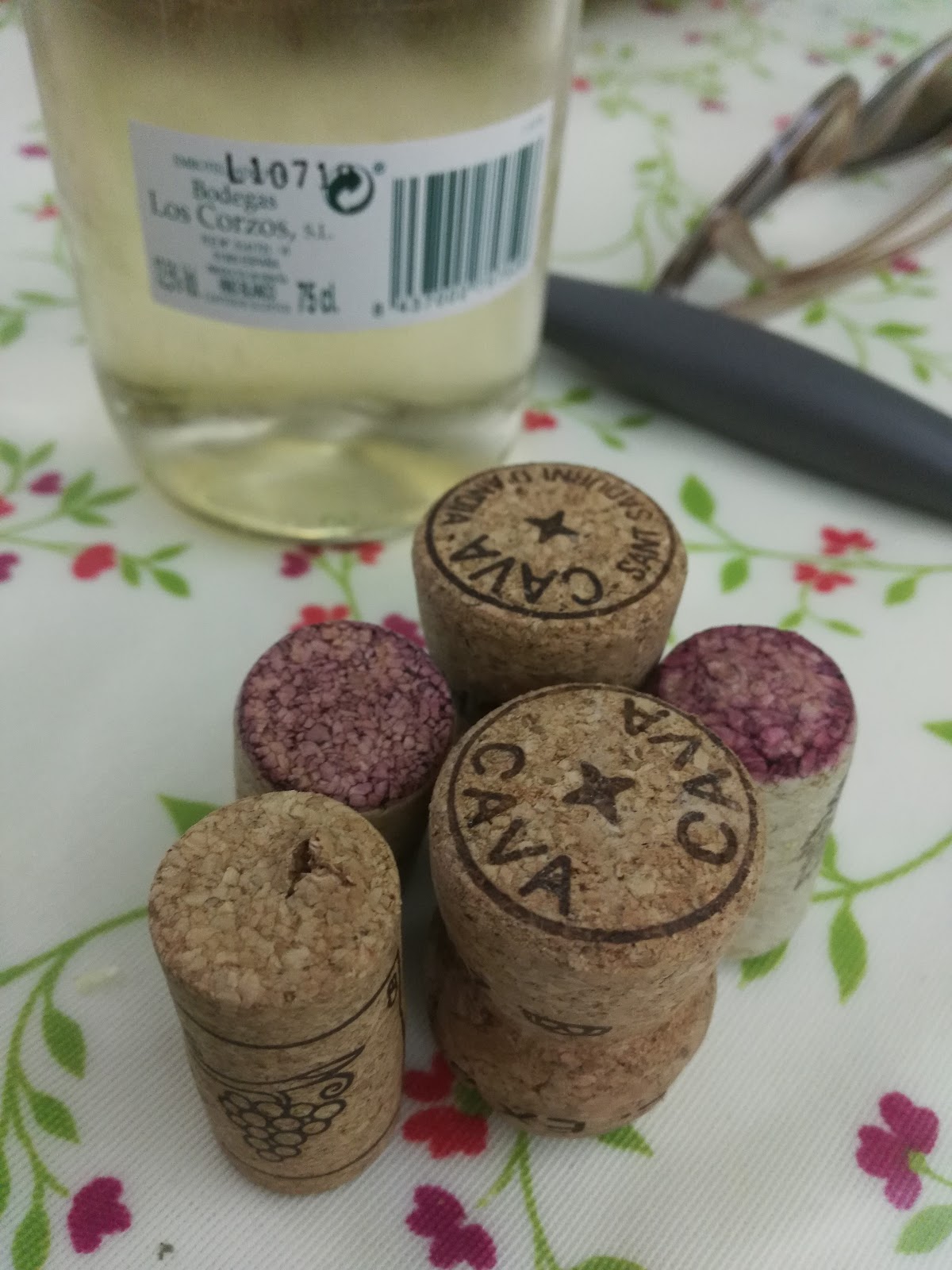
As mentioned before (and implied by the photo below) Lots!


Camino Portugues Day 10

Camino Portugues Day 10
Caldas de Reis to Herbon
Starting km: 211.3
Finishing km: 229.7
Distance walked: 18.4

I think this was probably our nicest day's walking in Spain.  It was almost all just through nice trails on fairly new (seeming) forest reserve.

We stopped for our coffee around 10:30. We've done this every day we have a kitchen available to make coffee in the morning, pausing sometime in the final 10km of the day's walk.  Today's spot was under a little covered bridge (next to the older looking stone bridge).

When we left for the day we'd planned to head to the town of Padron.  Part way along I revisited the idea of staying at the monastery in the nearby town of Herbon (I keep wanting to say Hebron).  At first it seemed like it would be impossible, as apparently its opening was delayed until April 17 (4 days hence) this year, but a bit more research indicated that it opened the previous week.

So we took the fairly well signed turnoff from the main Camino and walked 2.5km up the Ulla River. It wasn't open yet, so we went for a wander around the town of Herbon.

One of our favourite tapas in Spain has been Pimentos de Padron.  I'd learned that Padron, where the Camino passes by, is the home of this dish of fried, mildly spicy small green peppers.  But in Herbon we learned that this village, and in fact the Convento Franciscano de Herbon were the exact source of the dish.  We tried our luck in the town pub, which advertised Pimentos on its awning, but all they were serving to the big Sunday afternoon crowd was small tapas of pork and chick pea stew (which was, despite my disappointment at missing out on the peppers) very yummy.

Back at the Monastery, we received a tremendously warm welcome.  The pilgrim beds are in former monastic cells, so each pair has there own tiny bedroom.

In the afternoon brother José gave us a tour of the monastery.  He spoke French and Spanish. Other than Sarah and I, every single person in the tour group was from Germany and spoke English and German.  So somehow I got given the job of traducteur, translating from French to English as we spent half an hour visiting the grounds. The place had functioned variously as convent, seminary, leper colony, monastery and pilgrim hostel.  It had a strong association with proselytism in the new world, and this showed up in the decoration of the church, the legends surrounding it, and even the plants out in the (very large) garden.

The place began its life in the fourteenth century, but the most significant remaining parts are from the 17th (the church and a lot of the monastery) and the early 19th (most of the modern pilgrims’ hostel).

After the tour we had a bit of a break, and then joined the villagers for Palm Sunday Mass.  This was for just about all of the “pilgrims” a case of just watching what everyone else was doing and copying them (including grabbing olive branches on the way in The Mass concluded with a special blessing for all of the peregrinos.  While I'm not a devout Catholic (indeed, I'm not at all religious), it was both affecting and touching to see how seriously the brothers and the local residents took the pilgrimage, and I felt like it gave me a closer connection to its history and heritage.

That night we had a collective dinner, prepared by our hosts at the Albergue.  It was lots of fun to spend the remains of the evening talking with them and the fellow walkers for the third and final time on our Camino.

The generosity and affection of everyone involved in running this Albergue was very infectious, and it was probably my favourite place we stayed on the Camino.  It's interesting to observe that (at least with me and the couple others I talked to about this) that the Albergues which are operated most out of passion and love for the Camino, and request donations (donativos) probably end up (for a variety of reasons) doing better financially than those that simply charge a fixed fee.

We had a wonderful sleep in our cell, thoroughly enjoying our final night on the Camino.

Wine of the day:
House (or should that be Abbey?) Red with dinner.  It actually wasn't the best wine we've had in Spain, but the company and atmosphere made it.


Camino Portugues Day 9

Camino Portugues Day 9
Pontevedra to Caldas de Reis
Starting km: 188.4
Finishing km: 211.3
Distance walked: 22.9

The sunrise this morning was gorgeous.  We left the Albergue at 07:52, eight minutes prior to the mandatory departure time.  I kind of wanted to wait and see what happened to the fifteen or twenty people who were still getting ready when we left!

Aside from the lovely start passing through the bits of Pontevedra we'd seen the day before, the day's walking was pretty unremarkable.  Mostly rural, but fairly new buildings everywhere. And lots of it alongside the major N550 roadway (though thankfully this was on a quite recently constructed pathway alongside the road).

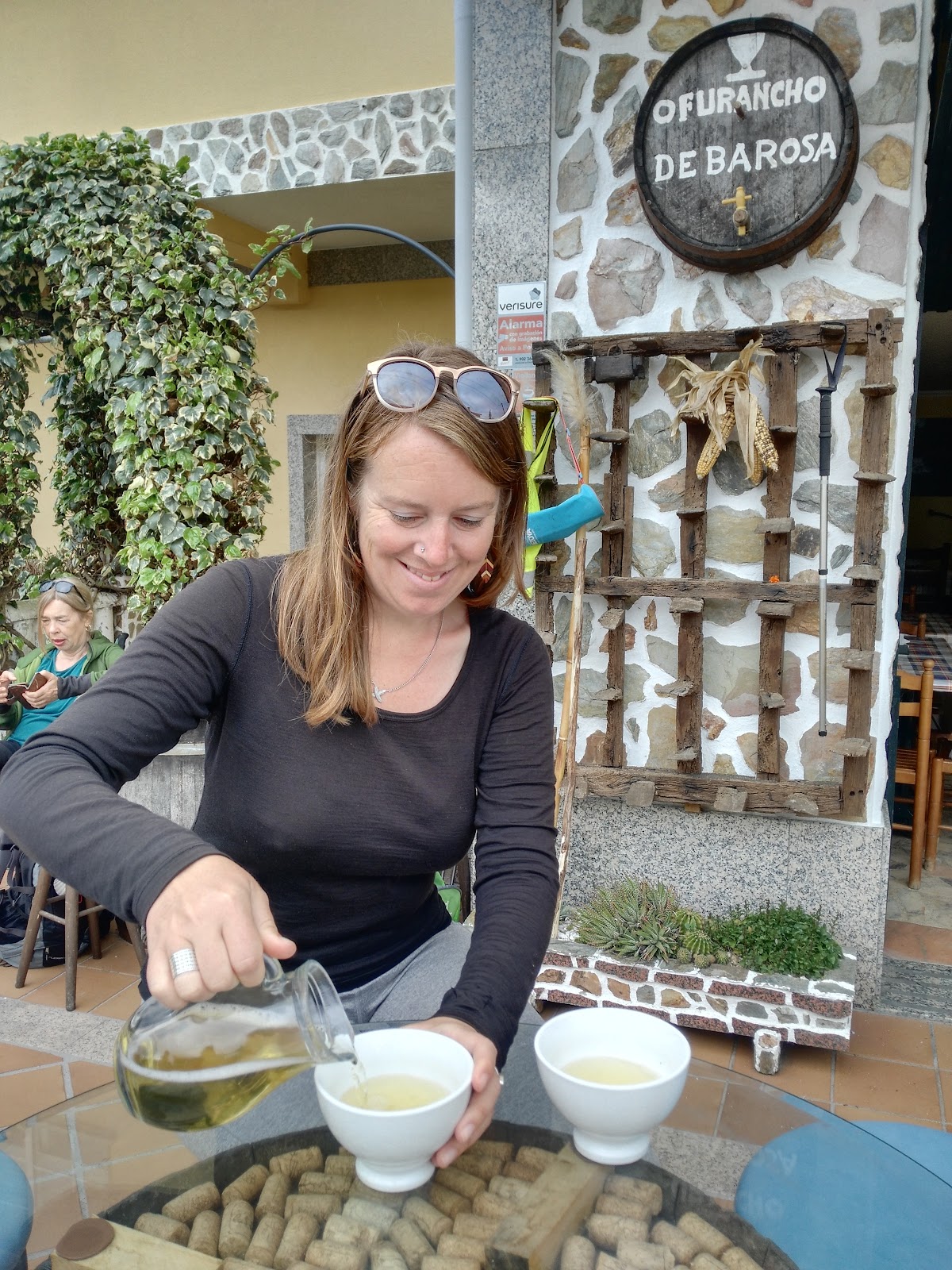
We had a fun moment not too far from the end when we stopped into a little farmhouse winery around 11:30, and split a half litre of their white (which came with a bowl of chips and olives).  We were the first customers of the day, but by the time we left, marching happily along for our final hour's walk into Caldas de Reis.

The town was pretty, but very grey and very empty when we arrived.  This was our first private accommodation on the camino, but it’s a atypical jn that instead of acting as a fancier alternative to the municipal albergues, it acts in place of them on a stretch of trail that really doesn't have any.  It was hit and miss. It wasn't quite as clean or modern as the “munis”, but had a proper kitchen, less stringent in and out times, and bedrooms with four single beds for the first sixteen to arrive (a welcome relief for Sarah who'd been kept up by snoring in the previous night's 28 bed dorm).

The big attraction of Caldas de Reis is its hot springs.  There are actually public pools that you can soak in. Unfortunately these were closed for renovation.  But we could still go to the ancient hot fountains and sit on the edge of the larger one and soak our feet while drinking a bottle of Gallican cider.

I made a fabulous (if I do say so myself) baked eggplant dish for dinner.  We had a nice time eating it, drinking our day's bottle of wine and chatting with the Korean group who shared part of the sixteen bed apartment with us.  I'm feeling much more cheerful now than when we arrived, and well ready to tackle the final 45km to Santiago de Compostela.

Today's wine:
Robalino Albariño
White made in Pontaverda (where we started the day) from Galicia's signature grape.  Very fragrant. Reminds me of a nice dry gewürztraminer.


Wednesday, 22 May 2019

Camino Portugues Day 8

Camino Portugues Day 8
Redondela to Pontevedra
Starting km: 169.4
Finishing km: 188.4
Distance walked: 19.0

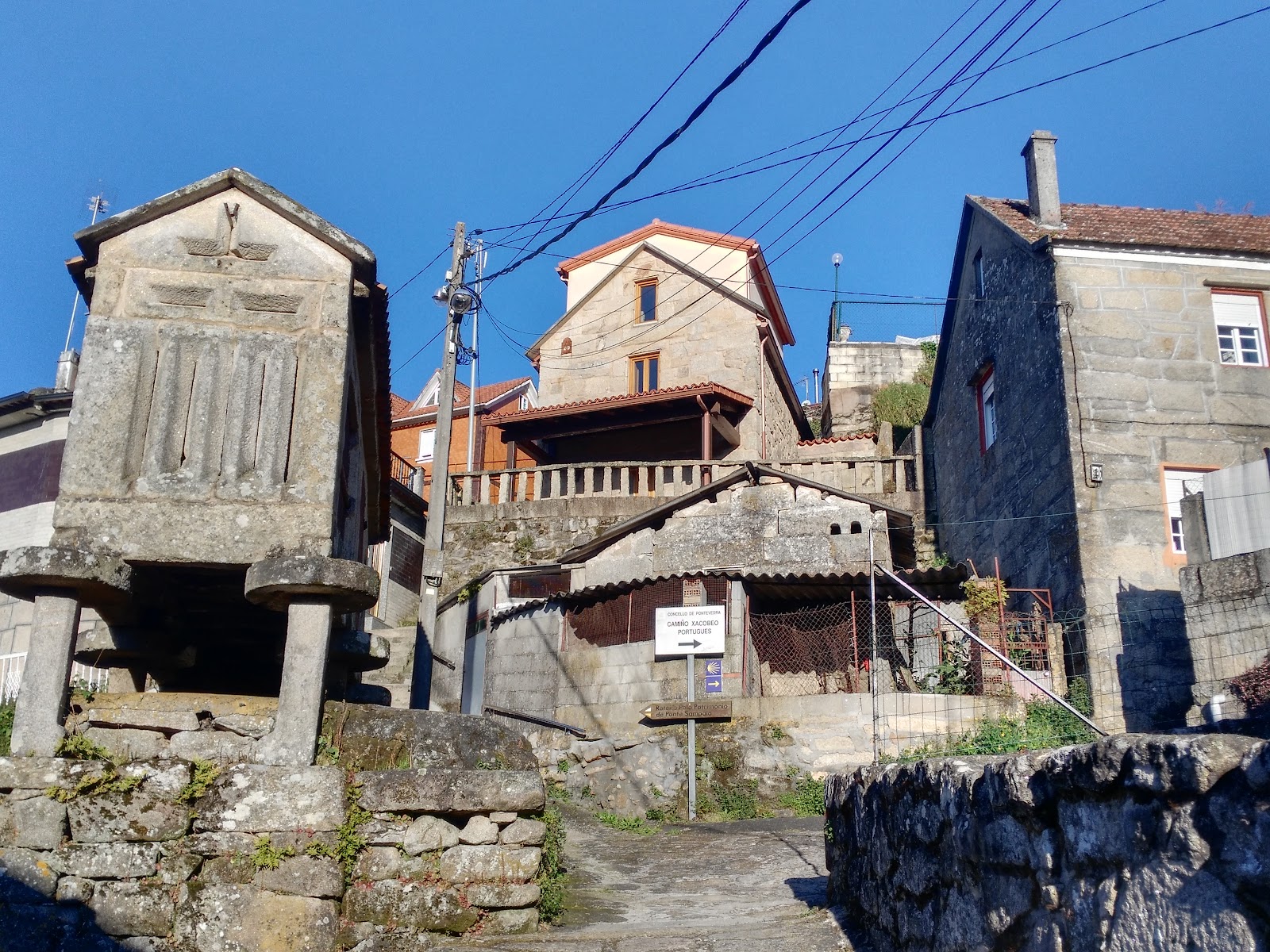
I was just getting ready to say something unflattering about the Spanish sections of the Camino Portugues, and then we went and had a really lovely day.  Almost all of the walk was through forest, and much of it on old Roman Road XIX. You could tell which bits were still original by the smooth but deep ruts in the huge thick paving stones.  And there were some lovely views out over the inlets and bays along the coast as we approached our destination.

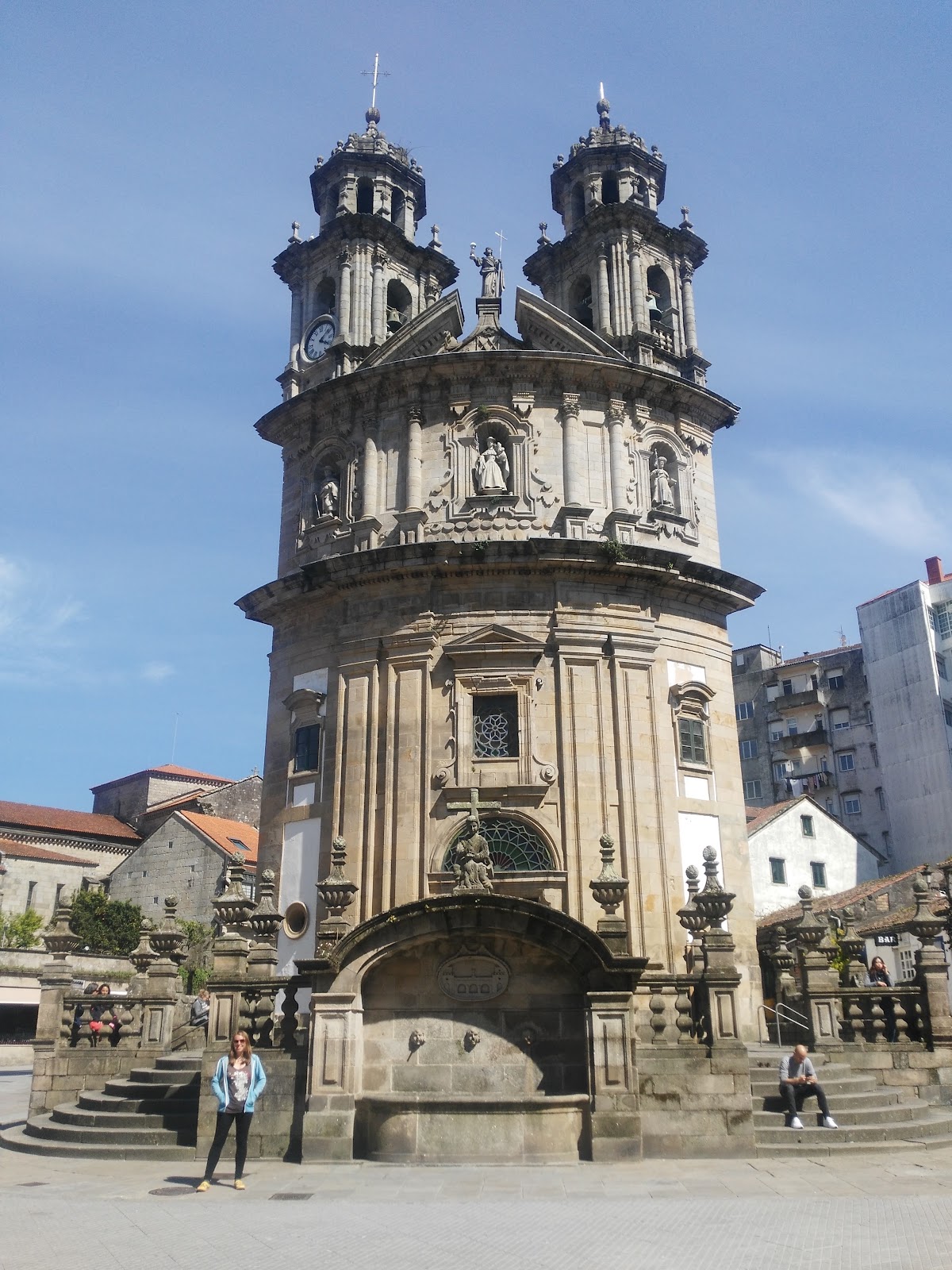
Likewise, while Tui had been amazing, the other Spanish cities and towns had been a little underwhelming.  But then Pontevedra came to the rescue. This was partly due to it being a lovely town, with tons of pilgrimage history (e.g. the sanctuary of pilgrims, right in the city's heart).  

But it also had a fait bit to do with the fact that we walked a scant 19km today, arriving on the southern outskirts of Pontrvedra around 11:40, an hour and twenty minutes before the Albergue even opened for the day.  So we sat and drank coffees, then a wine and a beer, before checking in.

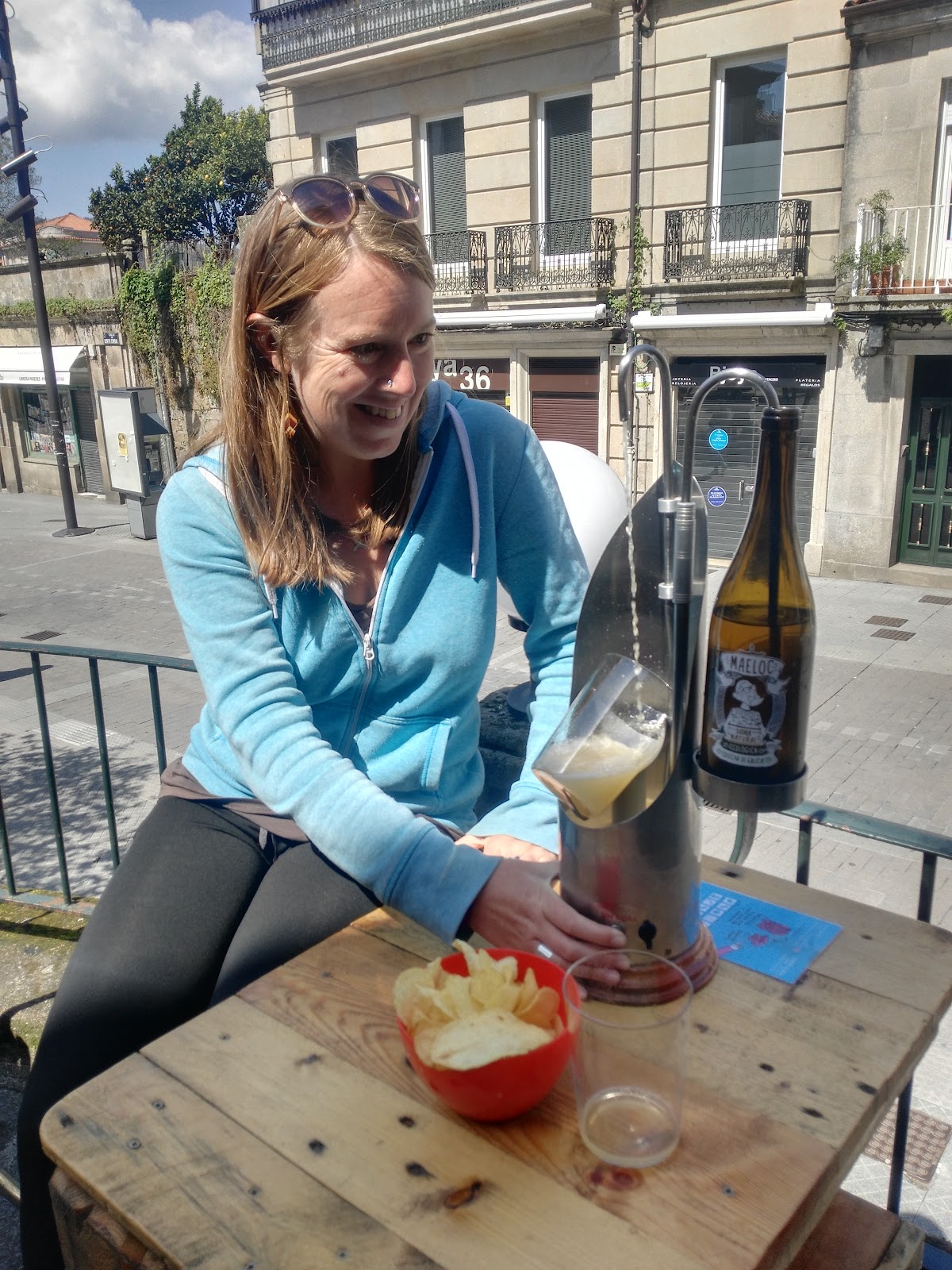
With all this done so early, and with our bodies still in such good shape, we had the time and motivation to walk into the city for a look around.  We even stopped for a cider at a sideria. As with the Spanish Cervecerias, which are places that serve beer not make beer, I was a bit disappointed to realize that it was “merely” a cider bar.  But it made up for this by having Galician sidra natural (bottle conditioned cider) served from 750ml bottles in this crazy contraption that pumped (not pressure forced) the cider out from just above the bottom of the bottle through a dip tube when you pressed a button, thus allowing you to share a bottle without stirring up the lees.

We, and many of the other walkers, also had time to enjoy the big Albergue lawn and the sunny afternoon. Many of them sat playing cards, talking, drinking beer or coffee, or just resting in the sun.

The Albergue itself was a good one too, as unlike all of the others we'd visited in Galicia, it had pots and pans and dishes in the kitchen, and it didn't ban alcohol.  So Sarah and I cooked a roasted garlic and red pepper stew and concluded it by enjoying it with a bottle of Galicia's finest out on the lawn with Luisa, a young German woman who we'd walked with earlier and who had rejoined us again this evening.

Today's wine:
Casal do Rio
A Galician white that tasted like an off-dry Pinot Gris or maybe a soft Riesling.  Nothing special, but nice and did a good job cutting through the stew that I accidentally massively oversalted.


Camino Portugues Day 7

Camino Portugues Day 7
Tui to Redondela
Starting km: 136.7
Finishing km: 169.4
Distance walked: 32.7

Today was a large amount of mostly pretty mediocre walking bookended by some lovely stuff.

We left the hostel at Tui just after 07:30, in acknowledgement of the many kilometres ahead of us.  It was bloody cold out, especially on my uncovered toes. Walking through the medieval city, then through the forest on the outskirts as the sun came up was very nice.  We had a morning coffee (along with every other pilgrim, it seemed) around 09:30 at a lovely, bright little trailside cafe.

A bit more nice forest, including a few km along a narrow slice in between the industrial suburbs of O Porriño and the motorway.  And then it was into the city of O Porriño itself.

This may be a bit unfair, as we only walked one path through O Porriño, but the Camino trail does seem to make an effort to take you through the nicest parts of each town, so I suspect it may be true and will thus say it anyway: O Porriño is a bit of a dump compared to the other towns and cities we've been walking through.  All gritty not-quite-modern-anymore housing and industrial facilities. At least it had a Lidl. As you may know, I've become bizarrely obsessed with the Lidl supermarket chain as making the most reliably good and cheap bread at their in store bakeries.

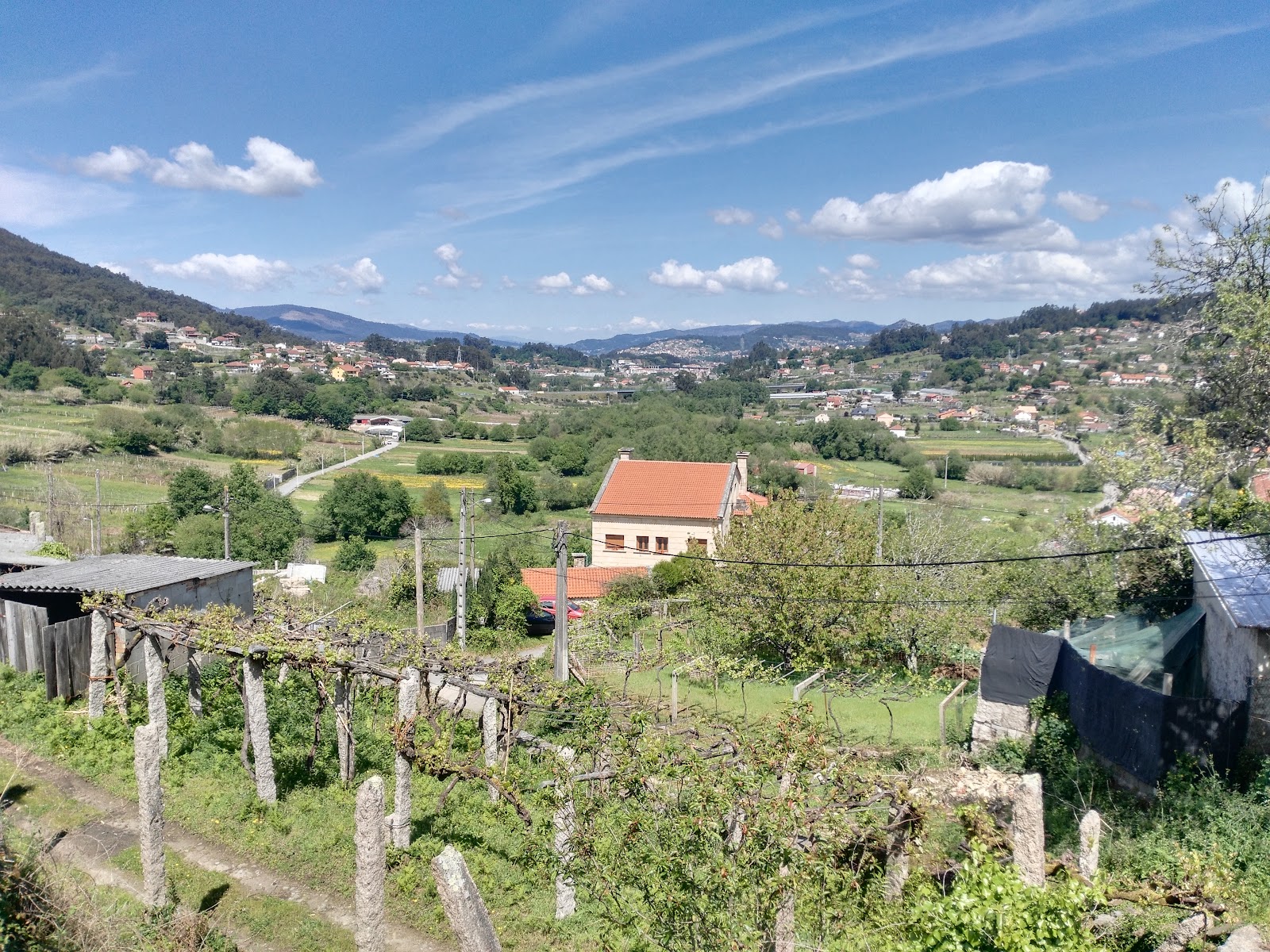
Eventually we left the northern suburbs of O Porriño and climbed up a modest 200m hill.  We were rewarded with a truly lovely view of our destination for the day, Redondela, along with its surrounding hills and the estuary of the Miño River.  It's here that the Portuguese Coastal Camino runs into an obstacle it can't get across and joins up with our more traditional central route.

Final comments of the day are on dogs:
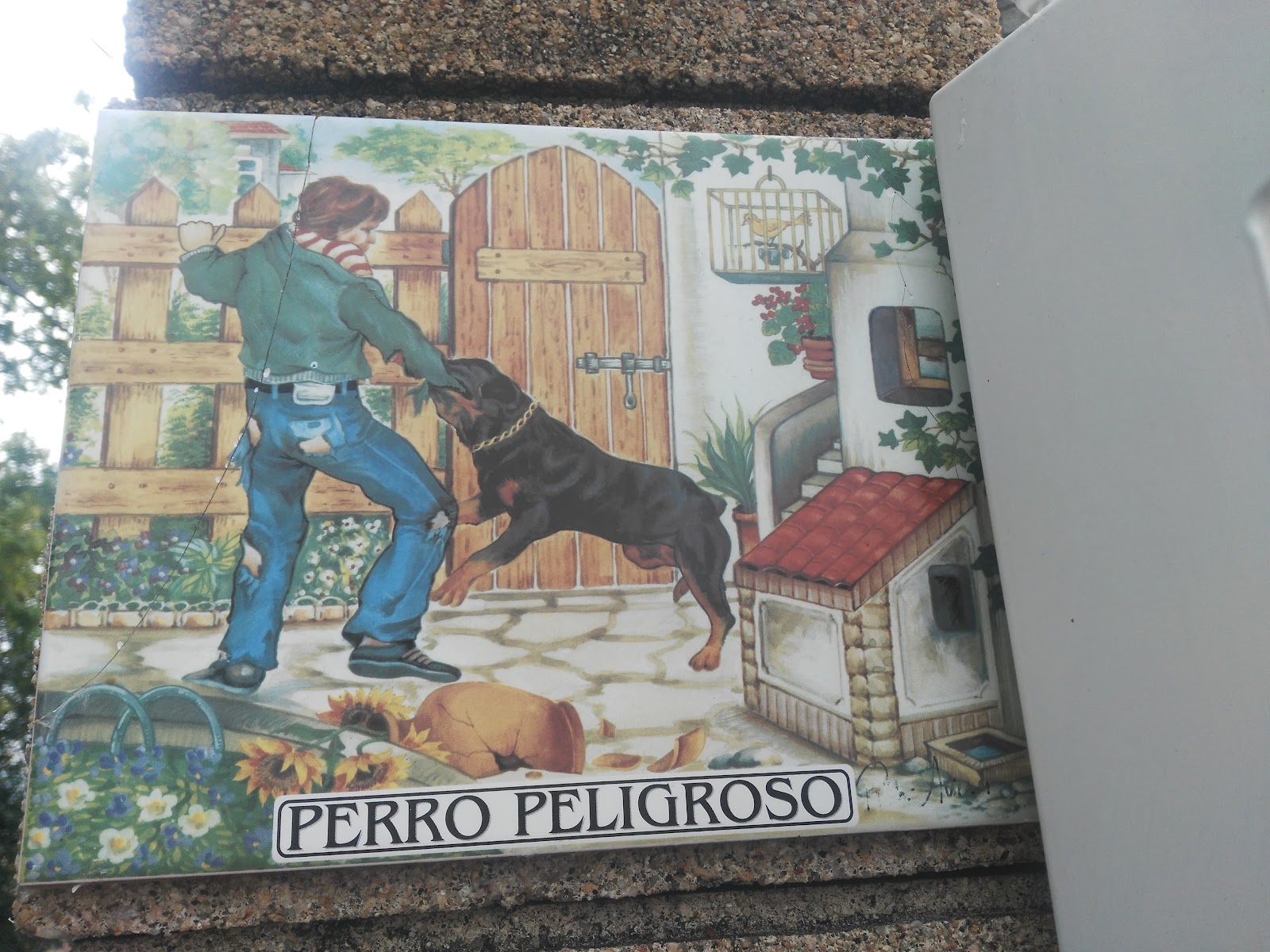
The Portuguese and Spanish love to keep very large, very barky dogs.  We were constantly being startled by them as we walked past houses. In fact on day one of the Camino I was so surprised by one I jumped and sort of kicked a nearby signpost, which stripped the skin off the top of the fourth toe on my left foot.  It's not been infected or anything, but is only just starting to heal. Spending so long on the feet every day has been a bit hard on it.

Anyhow, my other dog comment was about our walking companion.  We first saw the little beagle cross guy in O Porriño. A few km later we saw him again walking beside a Czech lady we'd met earlier.  And finally we saw him again outside the restaurant where she was having lunch. He started following us, sometimes barking at, but generally mostly ignoring the dogs behind fences that we passed.  At one point though we passed a driveway with two feline guardians and he spent several minutes growling fiercely at two stone lions before running along to catch us up. He would not be shaken or dissuaded (we certainly didn't give him food or water) so he ended up accompanying us 10km to Redondela we left him outside the Albergue, but haven't seen him since.  Hopefully he's found his way home if he has one, or at least has come across some more friendly companions.

Today's wine:
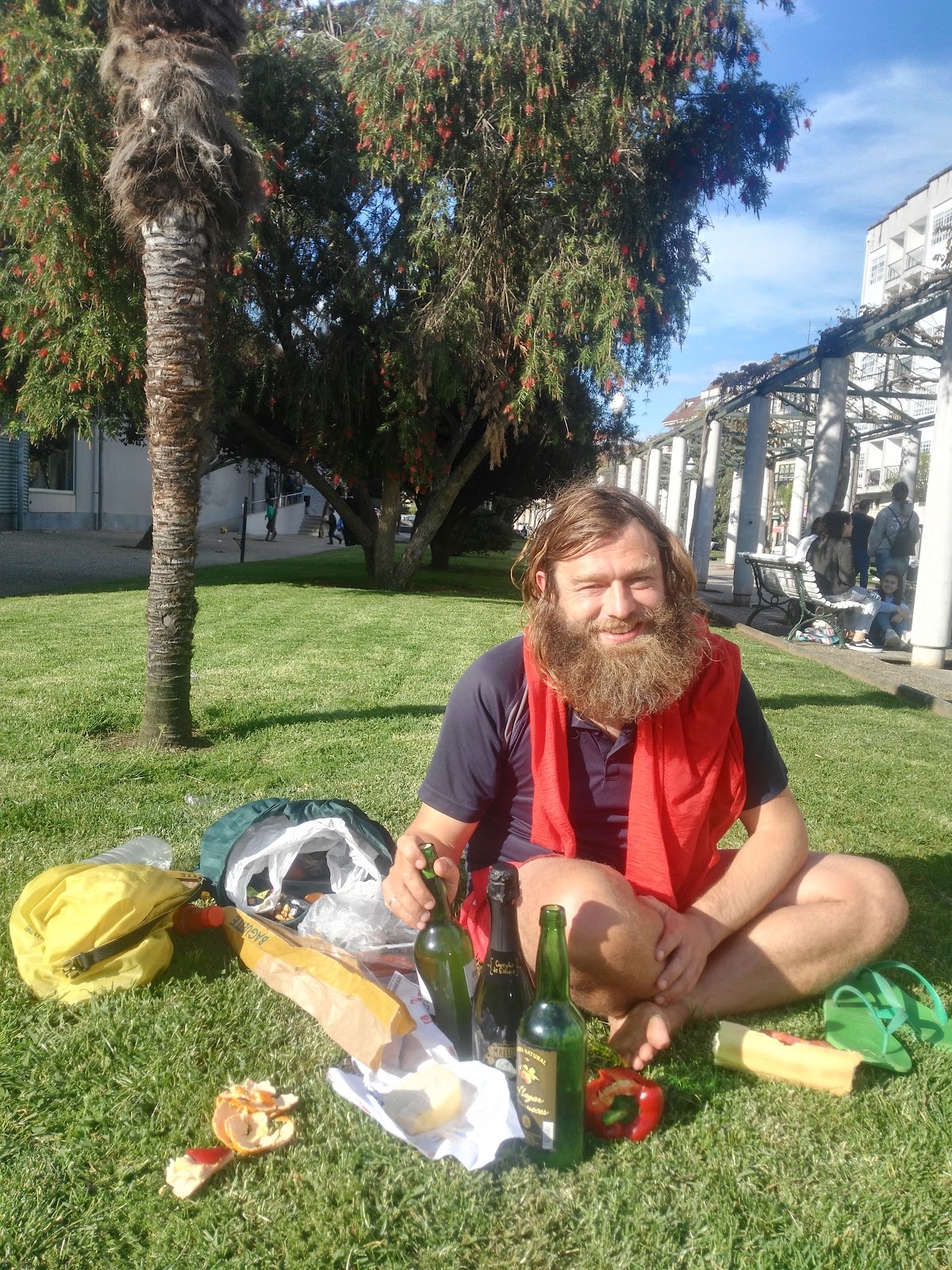
Cider!  Three bottles in the park with a picnic dinner.  One of the favourite Maeloc and two Sidras Naturals from Asturias.  These came in 700ml corked bottles with no lips (pirate rum bottles I called them).  These were dried and bottle conditioned with sediment in them. One was a bit sulfurous, but really good once this blew off.  The other was cleaner, unfortunately to the point of maybe being a bit boring. Still lots of fun though!