Showing posts with label Quito. Show all posts

Wednesday, 6 February 2019

Galapagepilogue

The Galapagos is a pretty tough act to follow.  But despite the fact that we'd spent over a week there, Sarah and I had seen relatively little of Quito other than our dentist's office, so Ecuador's capital still had plenty to show off.  Plus my family were all still with us for a while longer, so our final days in Ecuador were still pretty great.

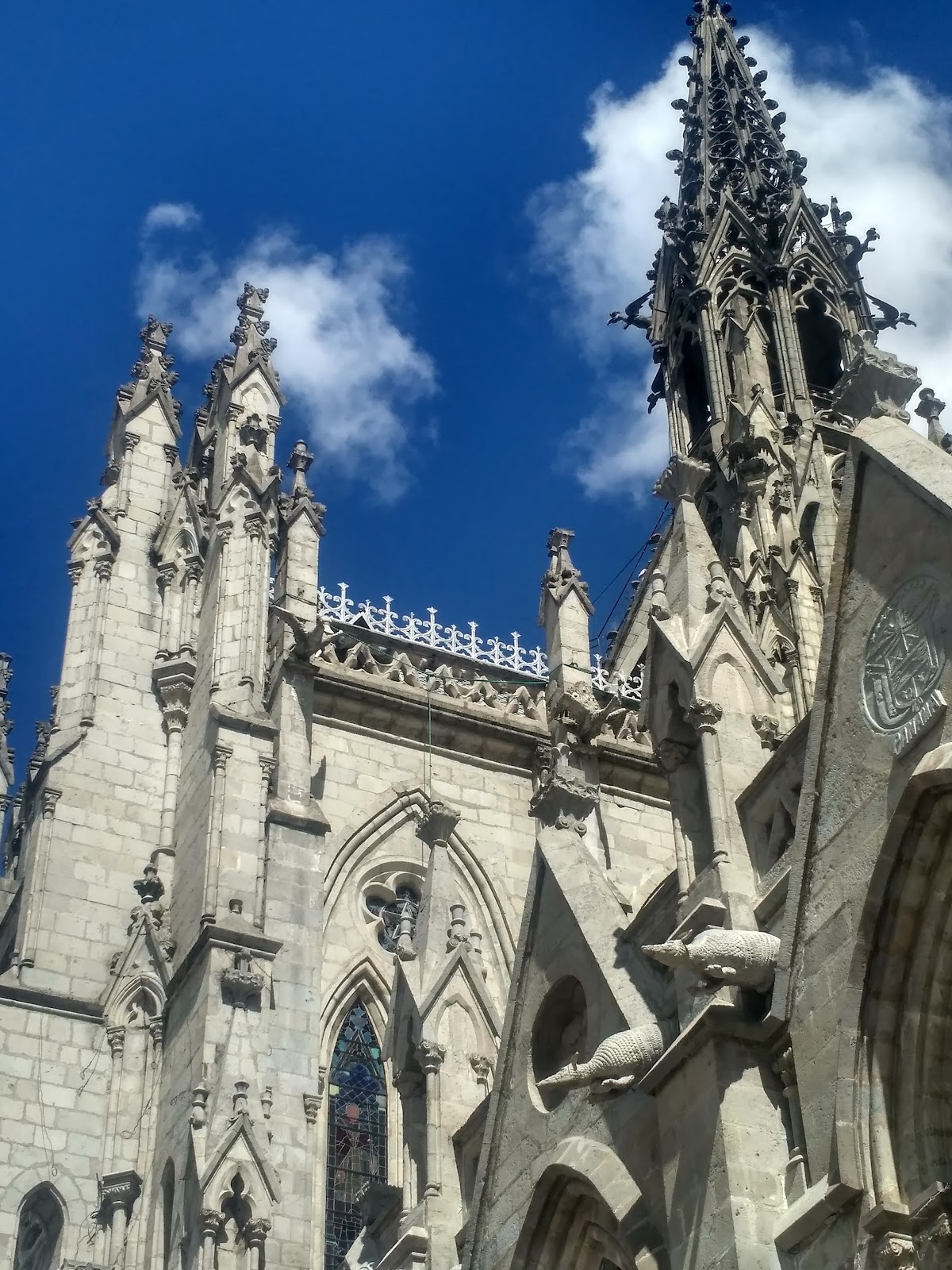
Most of our time was spent with the whanau visiting Quito's old town.  It's not as attractive as Cuenca, but as a former capital of all of Spanish South America, it's big.  And it manages to strike a fine balance between being pretty and remaining an active, lived-in city. Particularly impressive was the way the Bus Rapid Transit heads right through its heart without having destroyed much of its surroundings.




We did some good Ecuadorian eating too.  When we arrived back in town on New Year's Day, no shops or restaurants were open, so dinner came from the food stalls in the holiday-busy Carolina Park.  Cevichocho (corn and crunchy bits flavoured like Ceviche), chorizo on a stick, pizza. All quick and yummy.

We also are and drank yummy juices at the central market, an experience slightly soured by my mom's (fortunately old) mobile being plucked out of her backpack just before we arrived.  The market was mostly food and juice stalls, with a smattering of fresh produce and meat down on the ground floor. It was also here where my BiL Ka-hung bought nephew Desmond a set of light up devil horns, most suitable for adding to the image/nickname he'd picked up on the Galapagos boat: el Diablo Loco.

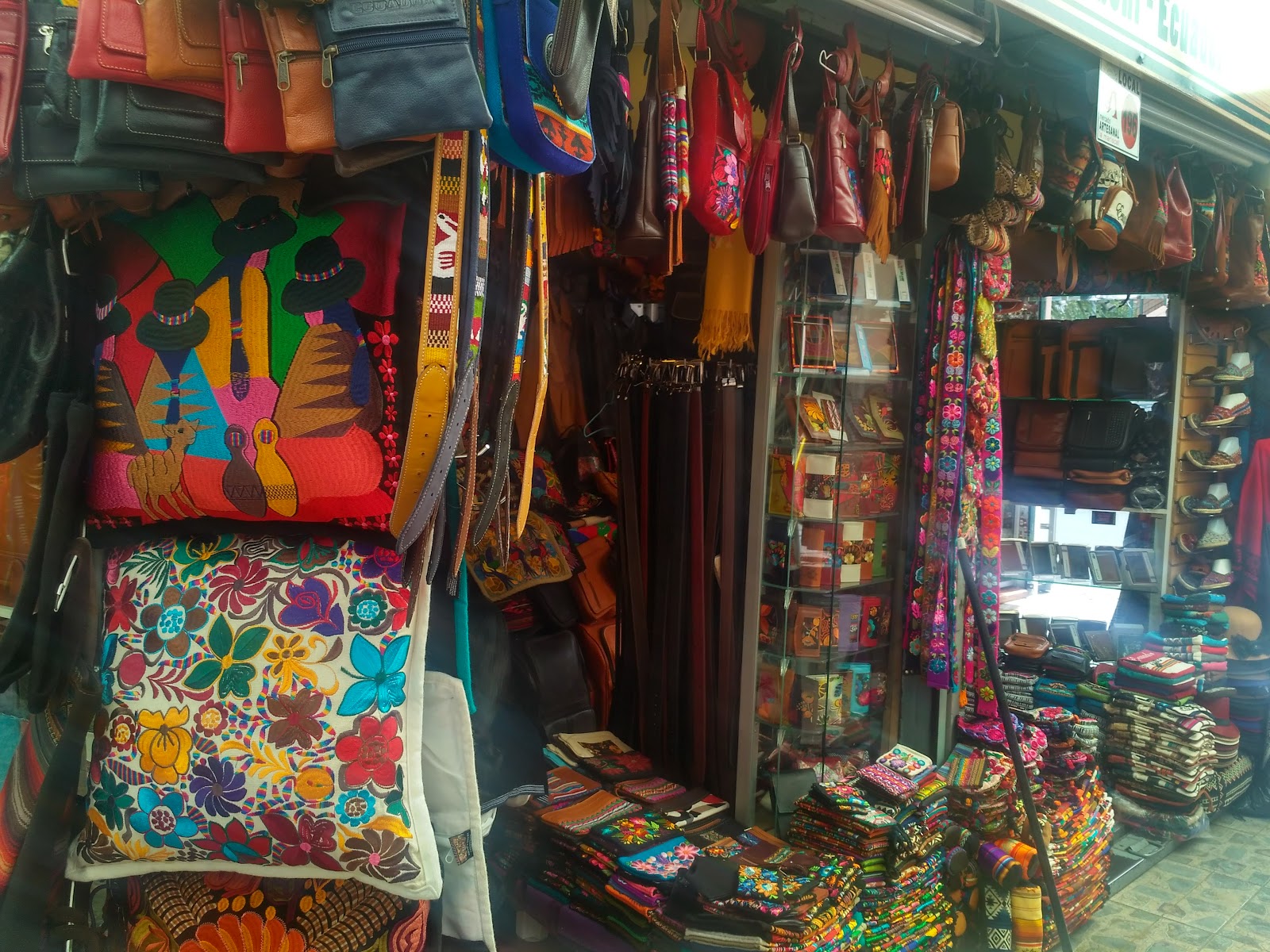
The family all went together to do some souvenir shopping, browsing the traditional (modern tradition anyway) Ecuadorian handicrafts: knitted touques and mittens with llama patterns, woollen ponchos, bread dough Christmas ornaments, football jerseys (oddly  one of the most popular Ecuadorian clubs is called Barcelona and has almost identical jerseys and logo to the Spanish club of the same name) and so on.

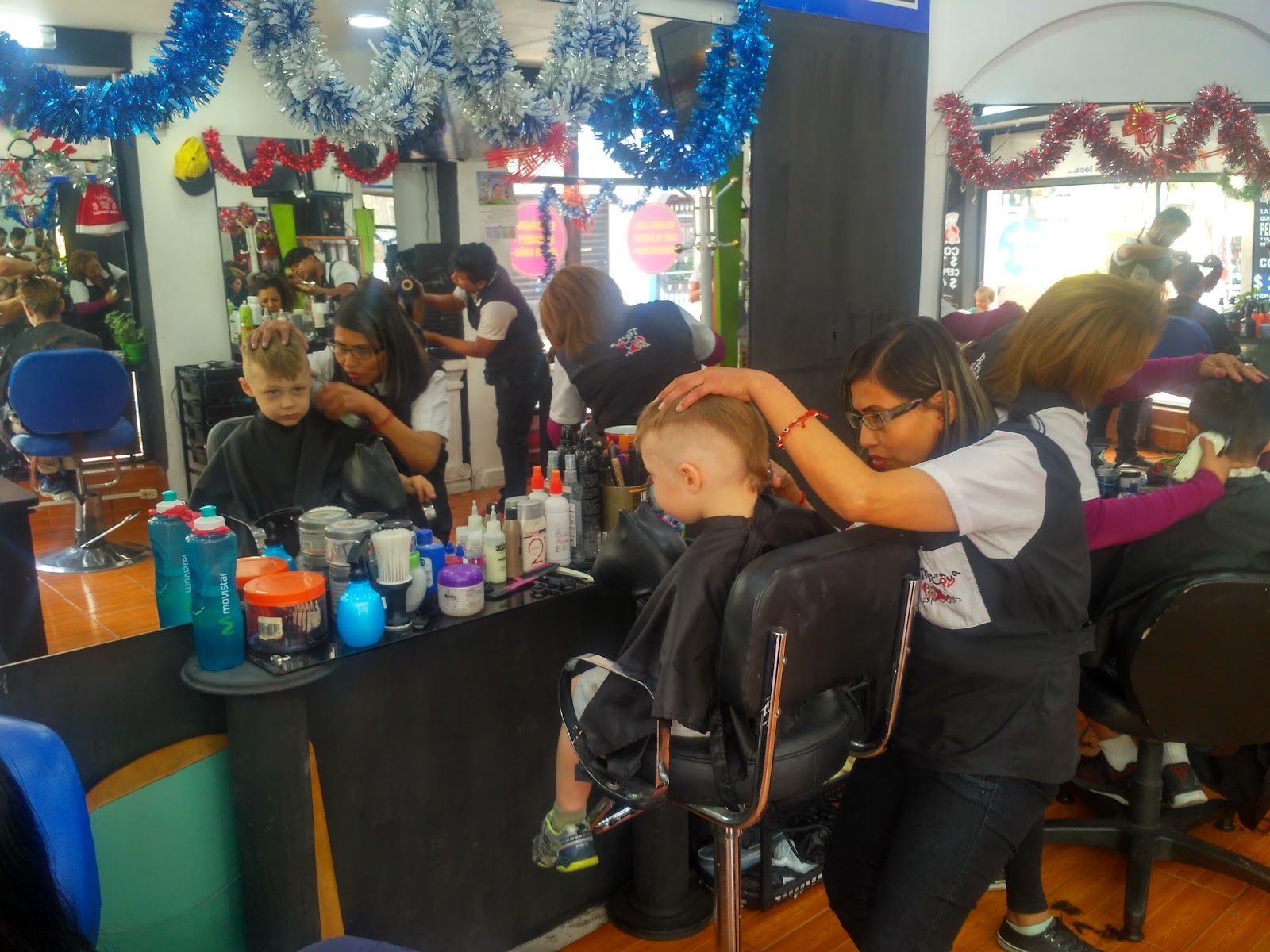
And (possibly the funnest bit of our second spell in Quito) the whole crew went to get haircuts together.  The staff at the salon seemed to find the whole affair just as entertaining as we did. They did a fab job, making most of the family look very sharp and tidy, and Desmond suitably crazy with a pseudo-mohawk sort of a 'do.

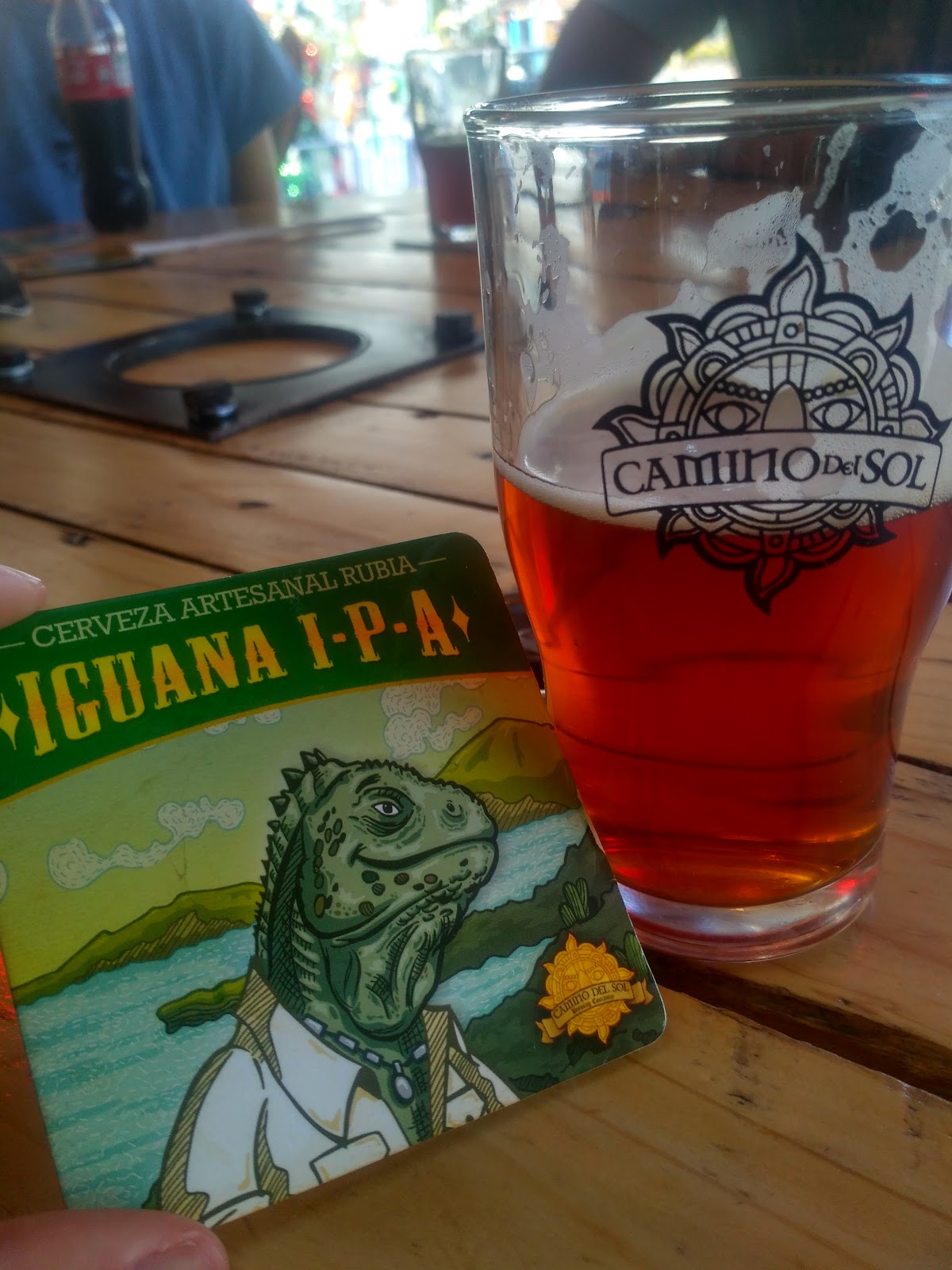
Most of the family went home eaaaarly in the morning on January 4, but my sister Melanie and her family stuck around for one more day.  With them we wandered around the old town one more time, popping into two breweries to have our final taste of Ecuadorian offerings. The first was depressingly bad, with thin, infected beers of the sort we'd drunk way too many of at small breweries in Ecuador. The second, Bandidos Brewery in the old town produced some very good brews, all fault free, and in styles that quite appealed to me: guyasana herbal honey wheat, coffee stout and a great IPA full of grapefruity, pine resiny old school American hops.
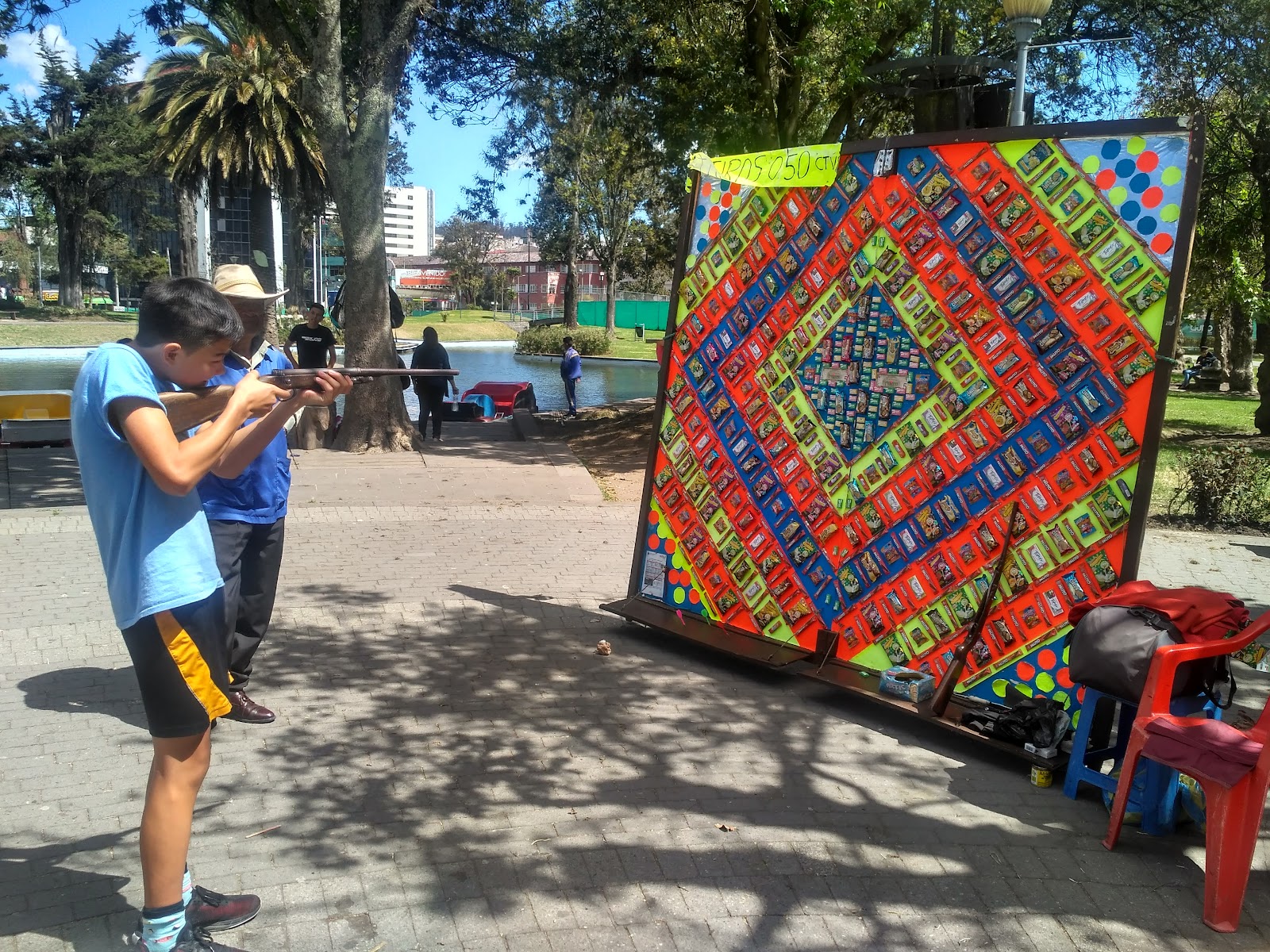

Before our final night in Quito we said a sad goodbye to the last of the family.  It had been a real treat to spend so long with them, and their presence for a couple of weeks did lots to stave off any creeping homesickness.  Fortunately for us, the next month or two of travel will be full of visits and meetings with a wide variety friends and family in a wide variety of destinations.

On our final day in Ecuador we made a quick final visit to our dentist (who had very kindly opened the office on a Saturday, the day after she returned from her Christmas holiday).  From there it was straight to the northern bus terminal where we got a ride to Tulcan, about five hours north on the Colombian border. (As with just about every bus terminal in Ecuador, there were multiple cute puppies preparing to travel with their owners, a fact that Sarah reminded me I ought to point out).

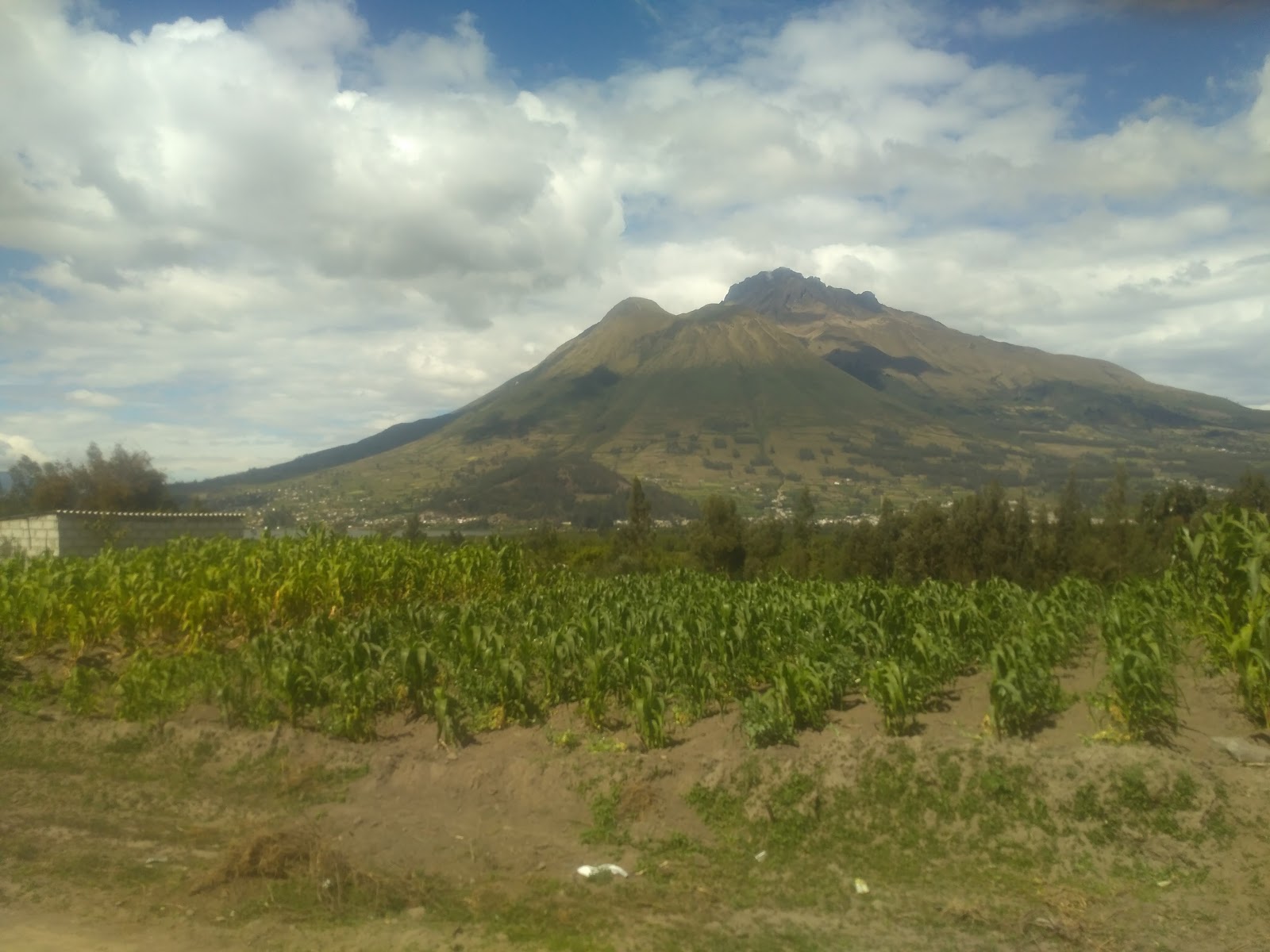
The trip was very pretty.  Big snow capped volcanoes and seemingly bottomless chasms passed by during the first half of the trip, changing to mountainous semi-desert for the second half.  We arrived in Tulcan just before sunset, which gave us just enough time to explore the city's cemetery before crossing the border.


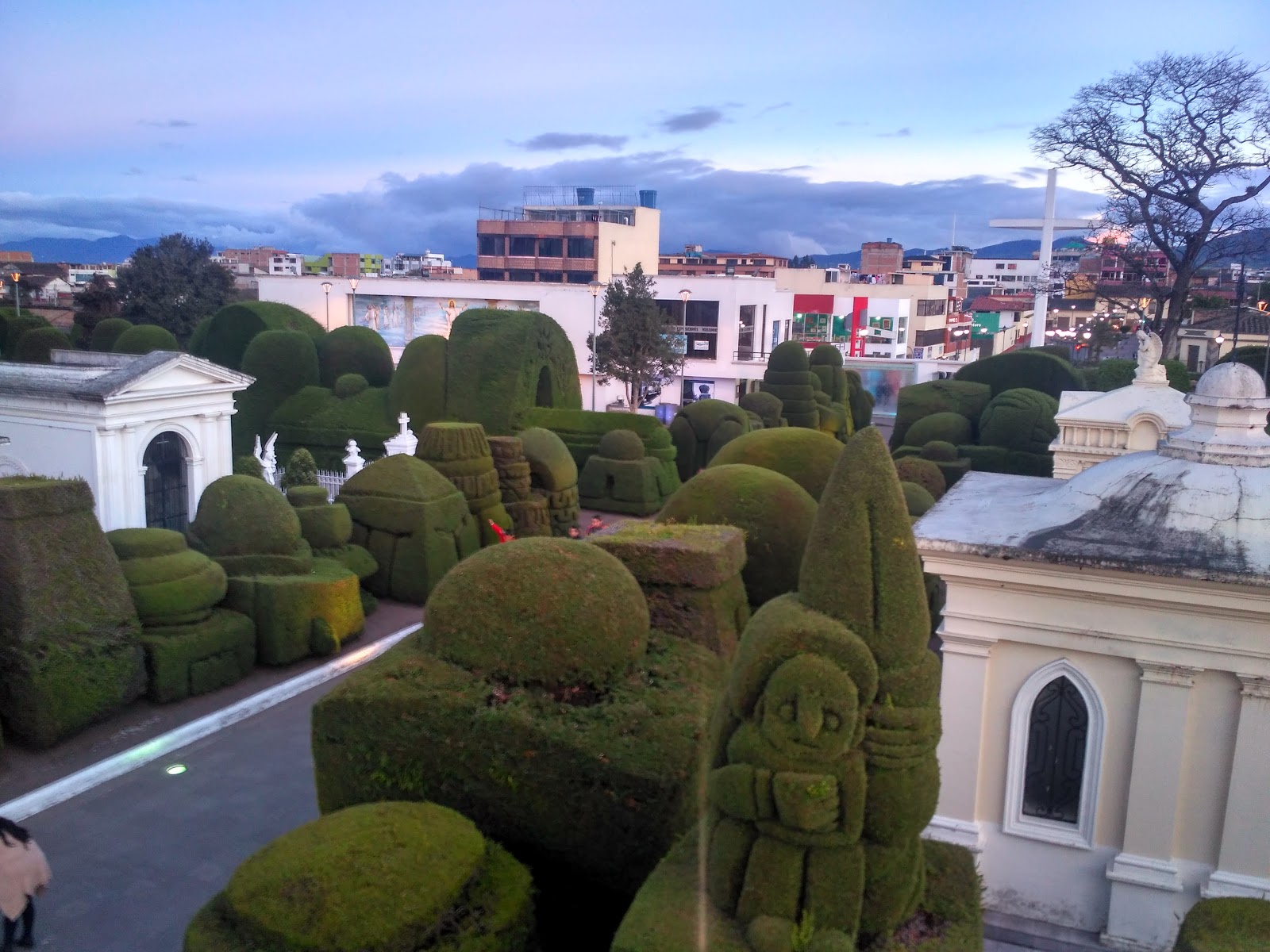
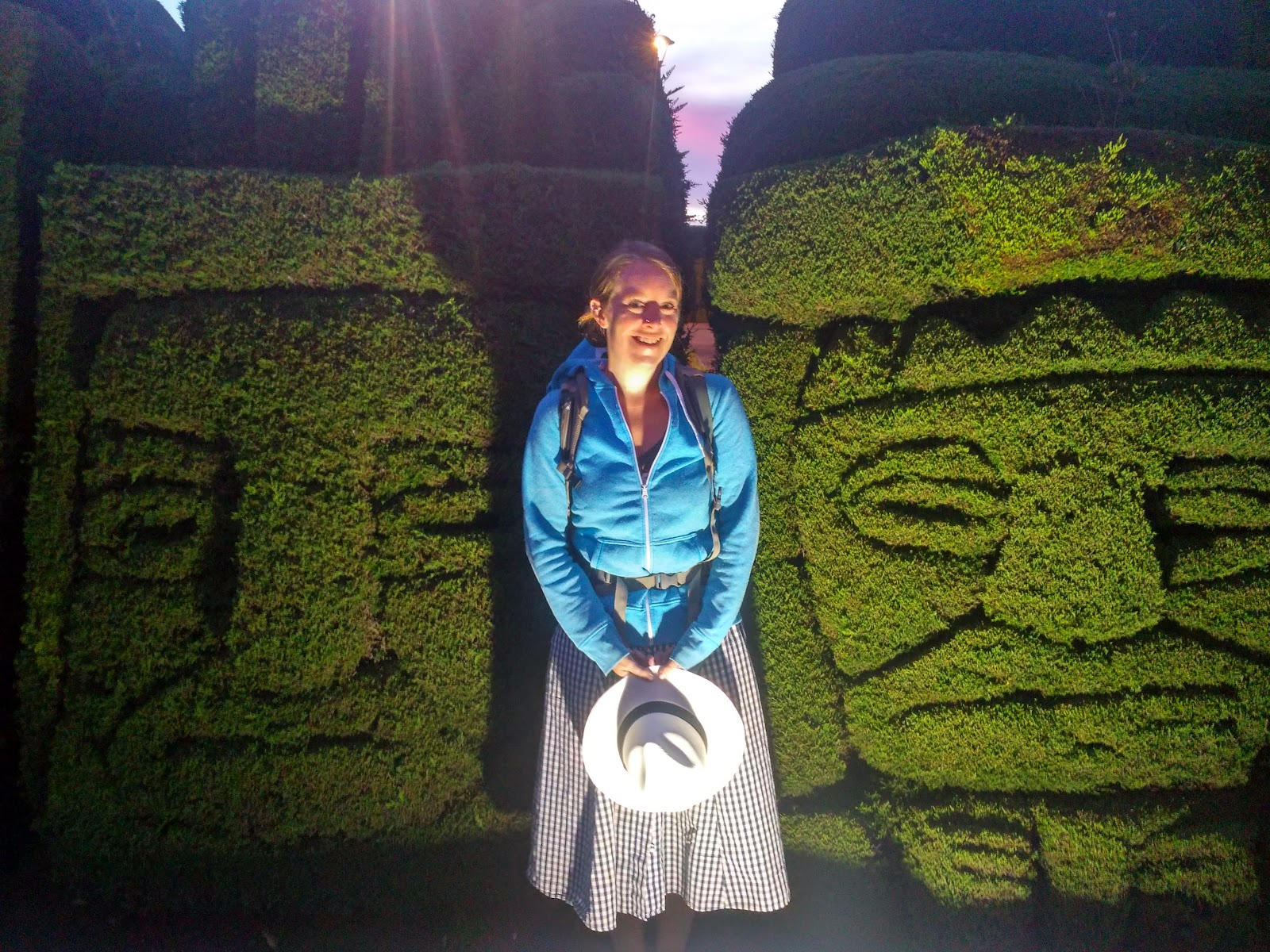
Why, you ask, would we want to explore a cemetery at dusk?  Because, as we'd learned by reading a travel guide on the bus while headed there, the Tulcan cemetery contains a huge (some say the biggest, though I have my doubts) collections of topiary in the world.
It was an honest to goodness tourist attraction, with dozens of people climbing on top of the crypts (they had stairs and handrails that actively encouraged this!) to take photos of the decorative gardening with the setting sun and 4700m volcano in the background.

At the border things were busy.  We were joined by dozens (hundreds?) of Venezuelan migrants headed south.  But the numbers may have gone down a bit from their heights in the preceding months.  And the Ecuadorian government had expanded the opening hours from 07:30-16:30 to 24 hours.  And they'd constructed temporary facilities (showers, sunshades, vaccination clinics) to help them along their way.  So even with the half hour of computer problems, it was only just over an hour until we got to the almost empty Colombian immigration hall.

As a Canadian I had to pay a “reciprocity fee” imposed by the Colombian government to match the Canadian biometric information collection fee that Colombians have to pay to enter Canada.  But I knew to expect this, and the immigration officers were very nice about it, even giving me a discount when they didn't have change for my 205,000 Colombian Peso payment of the 201,000 Colombian Peso fee.

Once through we tried and failed to find a collectivo (shared minibus) heading north to the town of Ipiales.  In fact we couldn't even find a taxi. We asked the border officials how to get into town and they took us for a little walk and found us a private car with two young men getting in.  It's sometimes a bad idea to get into unofficial taxis. And often (in South America at least) to get into a taxi with anyone other than the driver. And areas of Colombia near the Ecuadorian border are described as “avoid all non-essential travel” by the Canadian and NZ governments.  But then the ride had been recommended by a police officer and a representative of the UNHCR. So we decided to go with it, and had a quick and pleasant trip, chatting with the guys and listening to their loud and cheerful music as we approached Ipiales, our first stop in Colombia at around 21:00.

Friday, 4 January 2019

Cuando te Encontro? Ahora!

Our first week in Quito was perhaps as un-touristy, and for many people perhaps un-pleasant as any on our trip.

We spent the majority of it at the dentist or heading to/from her office.  I'd been planning on having a crown done for a molar I'd had a root canal on back in NZ, and Sarah needed a second look at her mouth after breaking a tooth while sailing up the Amazon.

Our dentist, Idiana, was super nice  and professional and did a great job of making sure we were happy and comfortable.  After a look at our chompers, and a very thorough cleaning of both of our teeth, she made me a new night guard (to prevent damage when I grind my teeth at night) and had a fancy zirconium crown made for my tooth.

Sarah, meanwhile got a full mouth x-ray done.  As it turned out, in addition to her one broken wisdom tooth, two others were badly decayed and Idiana suggested that the best bet was just to remove the lot.

We expanded our dental tourism beyond Idiana's office with visits to the radiology lab for Sarah's x-rays and to a pharmacy to buy her pain medication, THEN a visit to a walk-in clinic to have her intramuscular injection of said medication.  The whole process was impressively organized and smooth. Collect a number at reception. When called pay ($3!), head upstairs and wait for your number to appear on the TV screen, telling you which consulting room to head to. A quick stab in the bum with a new single use syringe and we were in a taxi back to the Secret Place.

While Sarah had very limited pain and swelling compared to many who undergo wisdom tooth removals, it wasn't as though she didn't suffer: she had to refrain from fatty foods and all dairy products (including cheese!) for a week!

We did do a few fun things as well, of course.  We visited a couple of breweries in the bar-packed La Mariscal neighborhood, joining Quiteños at the pub on their final Friday before Christmas.  The beer had neither the highs nor the lows of Cuenca. A German-themed bierhalle (I liked it because it was pretty much all traditional German styles, but not a Helles or Pilsner amongst them.  Altbier, Kölsch, Hefeweizen and a hoppy Bock). And an American style (both in terms of the decor and beer styles) brewpub. Neither produced any badly faulted brews, but most had niggling issues and none was really great.  To tell the truth, the only reason to drink these beers instead of Ecuador's entirely serviceable mass-produced continental pilsner was for a bit of a change.


And in between appointments we actually skipped town, heading to the beautiful (if thoroughly gringo infested) village of Mindo.

It began its rise from sleepy backwater to tourism hotspot as a destination for birdwatchers, it's position in the cloud forest of the western slope of the Andes making it a home to heaps of rare and beautiful species.  But since then it's added zip lines, tree canopy walks and even tubing down the river to the tourist menu. Not to mention plenty of vegetarian fare at the restaurants that line the plaza and main street. We did a veggie burger taste test over our two nights.  Both had quinoa patties. One was “gourmet” with cacao honey and avocado, while the other was a more traditional burger with mustard lettuce, tomato and cheese. I reckon that the trad-burger was my winner.


Eating burgers wasn't, of course, the main reason for our visit.  We'd been stymied in three previous attempts to see Andean Cocks of the Rock.  Sarah absolutely loved their Guyanian cousins and was determined to complete the set by seeing the second species in person.

We even wrote a song about it:
“Cock of the Rock, can't wait to meet ya.
Cock of the Rock, how will I greet ya?
Cock of the Rock, you're such a handsome creature,
Oh you Cock of the Rock!”

“Gallo de Peña, cuando te encontro?
Gallo de Peña, como te saludo?
Gallo de Peña, mas guapo en el mundo,
Oooh Gallo de Peña!”

We almost thought we were going to miss out again! The day we arrived we visited some our companies and asked about the possibility of arranging a tour to see 'em and were quoted a price of USD110!  I though that Sarah needed some cheering up in anticipation of her surgery, and it was one of the few things on her “really want to see/do” list for South America, so I was willing to suck it up and pay whatever was necessary but (in an unusual reversal of roles), she balked at the cost.

In the end we managed to arrange something on our own, just stopping at the main crossroads and chatting with a taxi driver, asking if he knew of a place to see the birds.

He chatted a bit with his compatriots and soon we had a plan to be picked up and driven out to the Lek (display spot for male birds) at 05:30 (later revised to 05:00!) the next morning.

The ridiculously early wake-up turned out to be all worthwhile.  We stopped to pick up a birding guide (which we hadn't realized was part of what we'd negotiated!) and met one other birder before walking 600m through very dark pasture, then jungle, arriving at the lek before sunrise.

And there they were, in all their glory.  Much louder and more raucous than their Guyanian cousins.  They're also shyer, so the closest we saw them was maybe 30m away.  But it was still plenty close to see their brilliant orange bodies and mohawk crests and to see the dark “trousers” that distinguish them from their orange, fluffy bummed eastern relatives.


Having the birding guide along was definitely worthwhile, as he taught us some cool Cock of the Rock facts:
There are about 3,300 living Andean Cocks of the Rock, but only about 300 of these are the Ecuadorian subspecies.
Cocks of the Rock can live to about seventy years old in the wild, but only lay eggs once every five years or so!
Groups of males guard the nests and chicks, even of unrelated birds.  It's apparently not uncommon to see fifteen or so brilliant orange male CotRs chasing off a falcon that gets too close to a nest!
The guide had brought along a telescope and binoculars so we could get a better view of our quarry, and was fascinated to see our photos of the Guianian Cocks of the Rock near Kaieteur Falls.

I think the other birder thought we were kinda weirdos as she was just at the start of a full day tour, while Sarah and I were just heading straight home after our early morning lek visit.  When a birder thinks you're weird you're definitely doing something… not sure whether it's something right or something wrong, but definitely something.

Back in town, our primary objective completed, we could spend the rest of the day listening to the rain on the roof of our charming wooden guesthouse while we sat on the balcony in hammocks reading and watching the brilliant orange and green hummingbirds and scores of egrets that came to visit.


With all of our dental work and out of town trips behind us, we spent the 22nd of December prepping for the arrival of my family from Canada. It was largely due to the family holiday that we had decided on South America as a destination for these four months of our travels.  So it was exciting that the time had arrived.

The first few days in Quito were wonderful.  We got settled in our Airbnb, did some food shopping for the whole crew. I even baked a gingerbread house in lieu of decorating the place!  We were joined by nine members of my immediate family, ranging from my eighteen month old niece to my soon to be seventy dad.

The family spent one day strolling through town and taking the gondola up to 4100m high Pichinca volcano.  The clouds obscured the views out over the snow-capped giants to the south and east, but it was still really fun, partly because of the views of the city itself, sprawling down 1000m below, partly just because of the fun of doing it with family and partly because it's exactly the sort of thing that Sarah and I never do when travelling on our own.


Similarly, when we went out to the huge, beautifully managed and very busy Parque Carolina on the final Sunday before Christmas, we loved wandering around with everyone, trying (and watching them try) exotic (and not so exotic) snacks from the vendors (cevichocho: steamed corn and heaps of toppings prepared like Ceviche, really tasty looking hot dogs and cotton candy).  We even took the pedal boats out on the lagoon (while letting my four year old nephew Desmond steer, it became abundantly clear why children aren't allowed to have drivers licenses).


Back at our temporary home, we reveled in its comforts.  Doing heaps of laundry in an actual machine. Watching pre-Christmas football with my BiL Greg.  Cooking the sorts of meals you can reply only do at home with family (roasted chickens and potatoes, quinoa and lentil stew…).  Decorating (and later dismantling) the gingerbread house. And on Christmas Eve, handing out the little gifts we'd prepared for everyone (happy to have that weight an volume out of my pack, I can tell you!)  We almost immediately “borrowed” my mom's gift, a bottle of Pisco from Peru to make a big jug of Pisco Sours for everyone. It was a long way from home, but it was still a very happy family Christmas.


But the highlight of the trip was very much still yet to come. On Christmas morning, we all jammed ourselves into a minivan to head out to the airport for our flight to the Galapagos Islands, Ecuador's premier tourist destination and a place that, almost thirty years earlier, was the setting for some of the best travel memories of my life.