Showing posts with label Ecuador. Show all posts

Wednesday, 6 February 2019

Galapagepilogue

The Galapagos is a pretty tough act to follow.  But despite the fact that we'd spent over a week there, Sarah and I had seen relatively little of Quito other than our dentist's office, so Ecuador's capital still had plenty to show off.  Plus my family were all still with us for a while longer, so our final days in Ecuador were still pretty great.

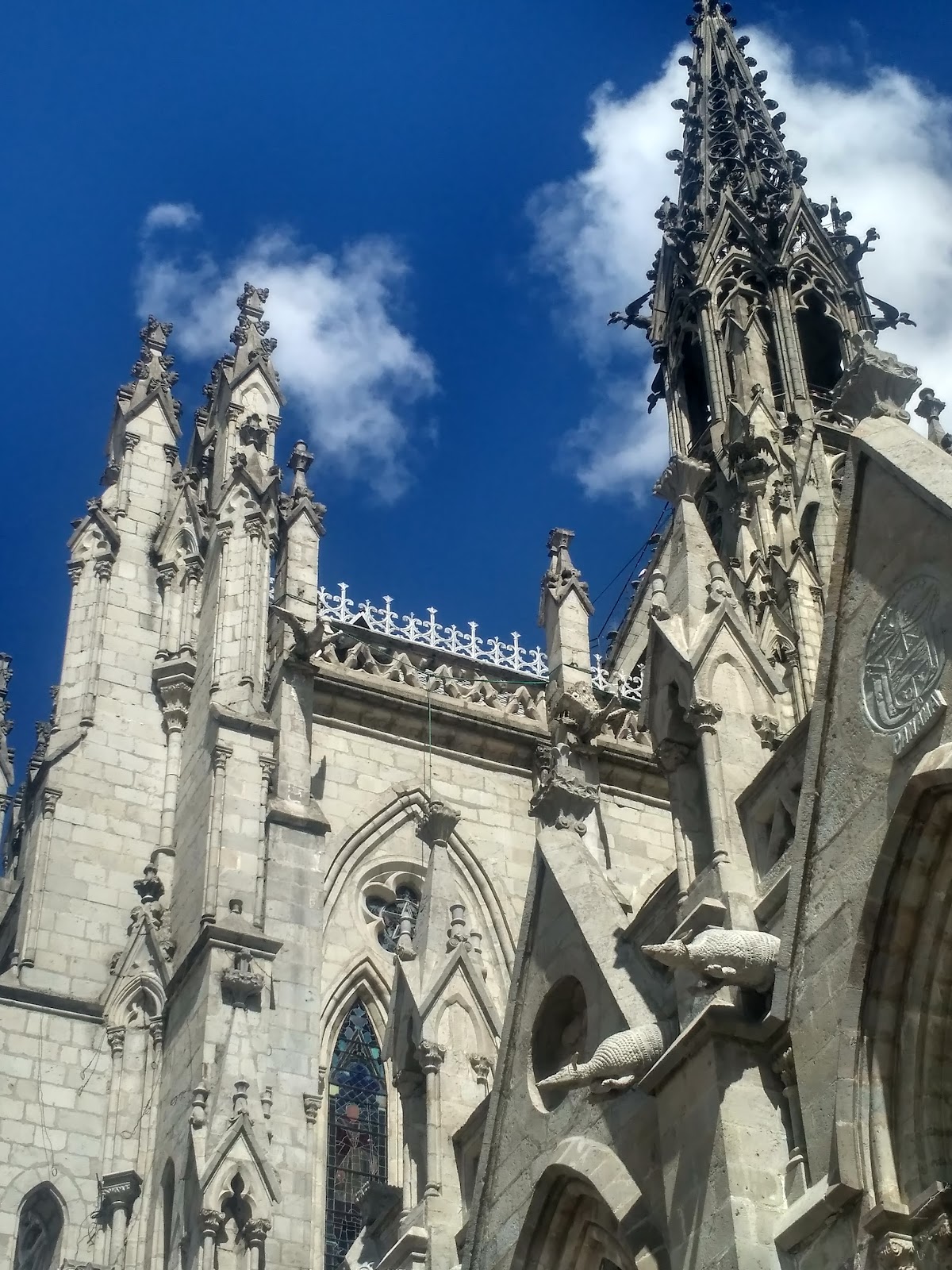
Most of our time was spent with the whanau visiting Quito's old town.  It's not as attractive as Cuenca, but as a former capital of all of Spanish South America, it's big.  And it manages to strike a fine balance between being pretty and remaining an active, lived-in city. Particularly impressive was the way the Bus Rapid Transit heads right through its heart without having destroyed much of its surroundings.




We did some good Ecuadorian eating too.  When we arrived back in town on New Year's Day, no shops or restaurants were open, so dinner came from the food stalls in the holiday-busy Carolina Park.  Cevichocho (corn and crunchy bits flavoured like Ceviche), chorizo on a stick, pizza. All quick and yummy.

We also are and drank yummy juices at the central market, an experience slightly soured by my mom's (fortunately old) mobile being plucked out of her backpack just before we arrived.  The market was mostly food and juice stalls, with a smattering of fresh produce and meat down on the ground floor. It was also here where my BiL Ka-hung bought nephew Desmond a set of light up devil horns, most suitable for adding to the image/nickname he'd picked up on the Galapagos boat: el Diablo Loco.

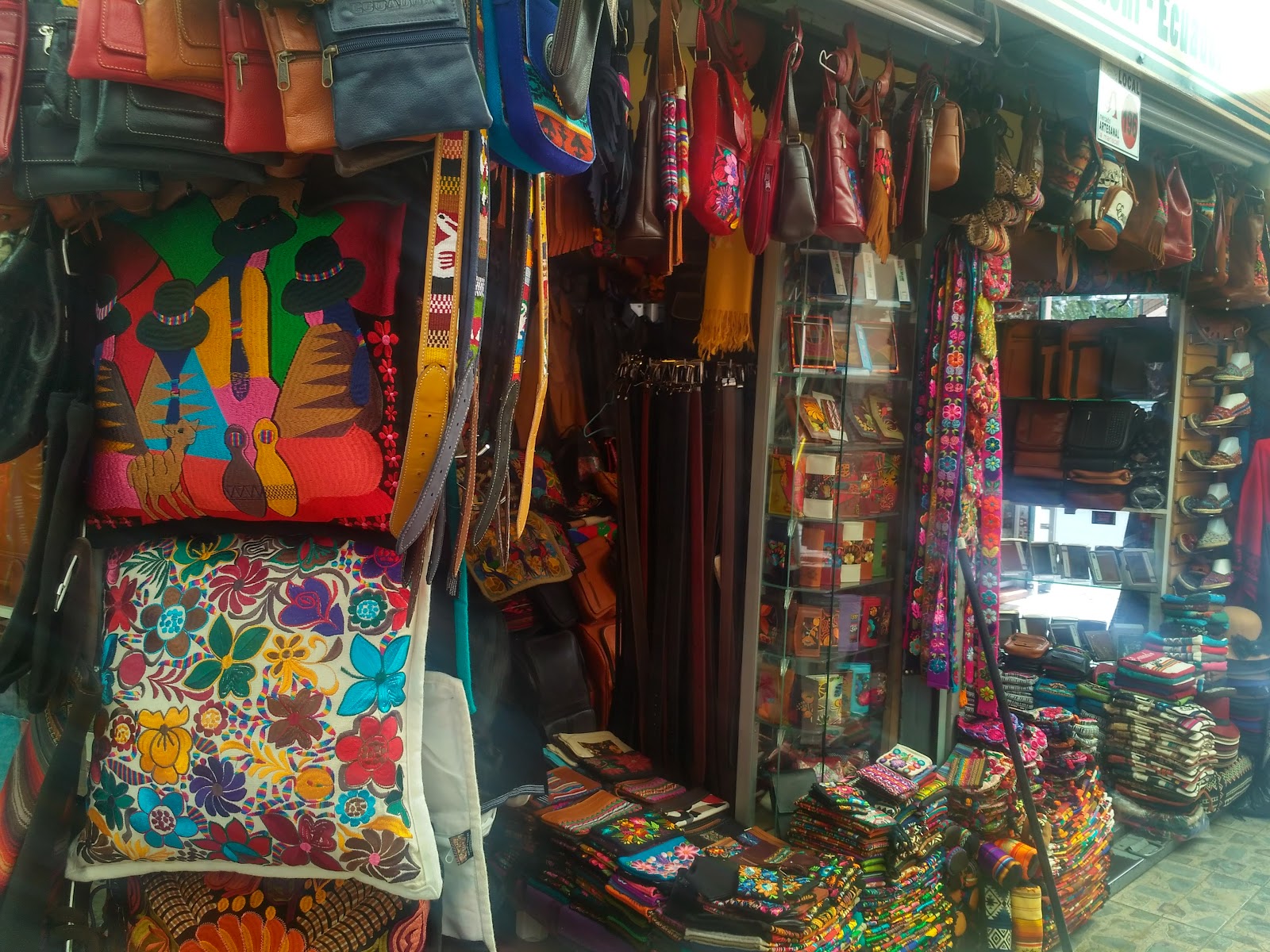
The family all went together to do some souvenir shopping, browsing the traditional (modern tradition anyway) Ecuadorian handicrafts: knitted touques and mittens with llama patterns, woollen ponchos, bread dough Christmas ornaments, football jerseys (oddly  one of the most popular Ecuadorian clubs is called Barcelona and has almost identical jerseys and logo to the Spanish club of the same name) and so on.

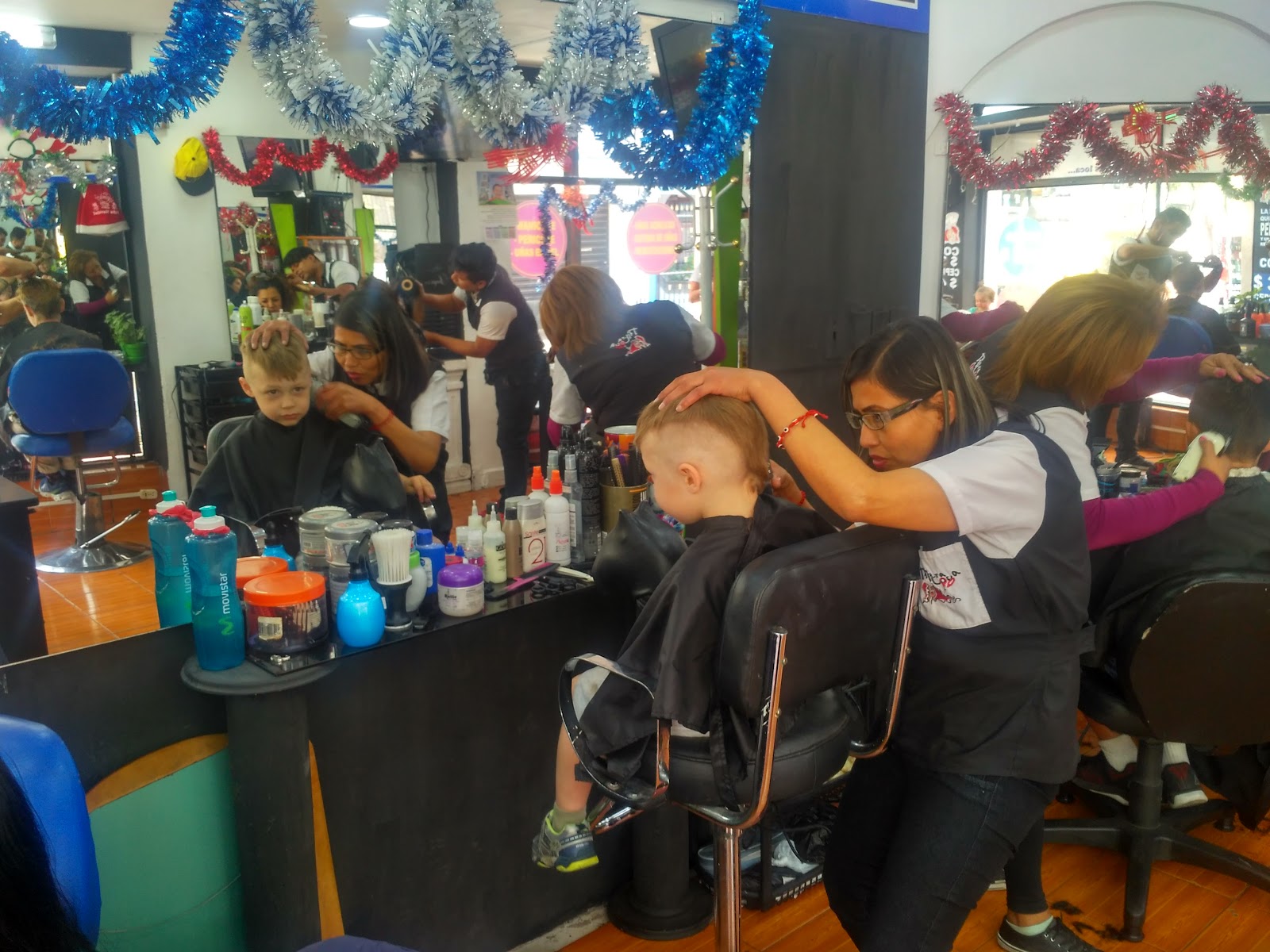
And (possibly the funnest bit of our second spell in Quito) the whole crew went to get haircuts together.  The staff at the salon seemed to find the whole affair just as entertaining as we did. They did a fab job, making most of the family look very sharp and tidy, and Desmond suitably crazy with a pseudo-mohawk sort of a 'do.

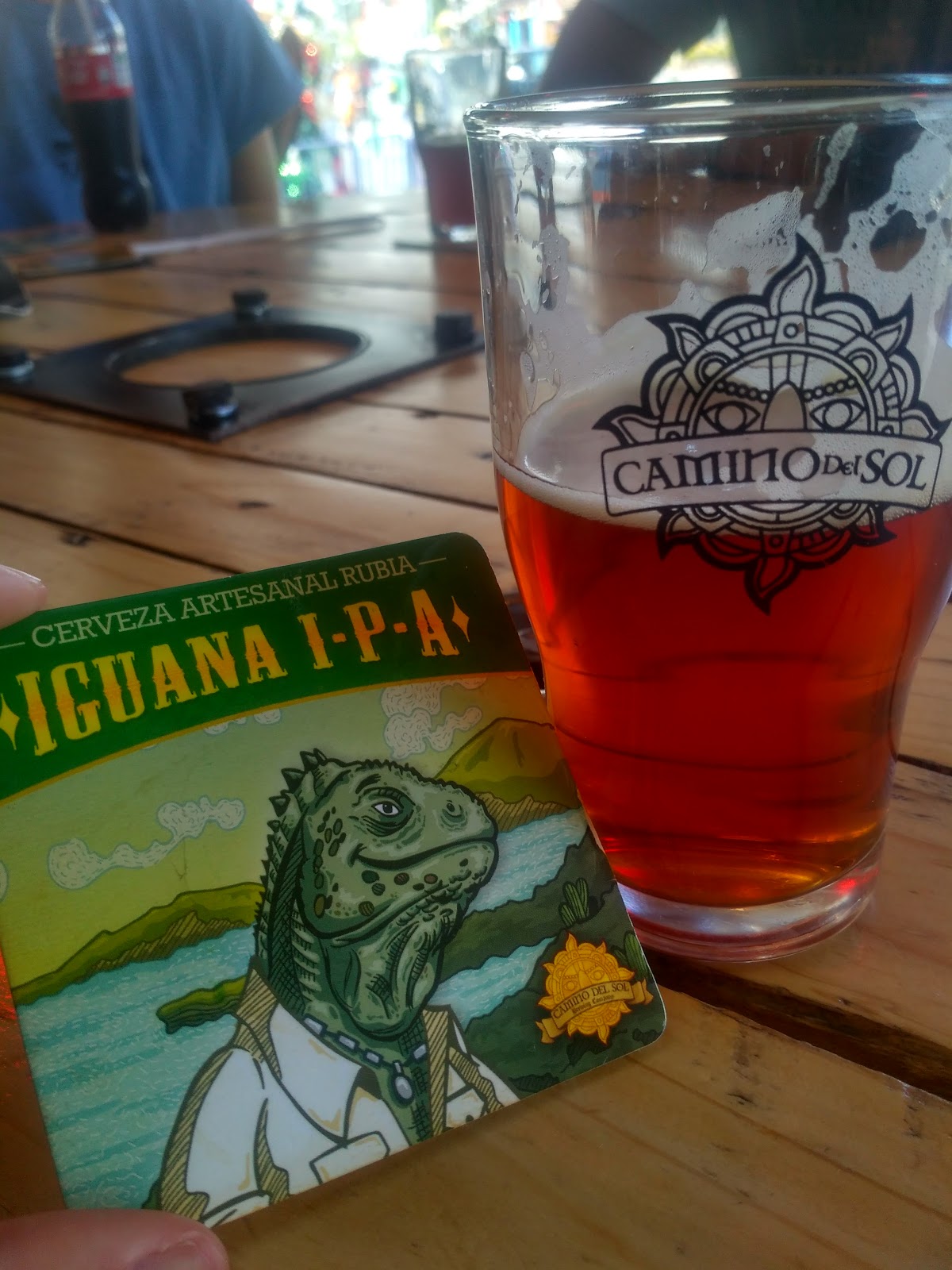
Most of the family went home eaaaarly in the morning on January 4, but my sister Melanie and her family stuck around for one more day.  With them we wandered around the old town one more time, popping into two breweries to have our final taste of Ecuadorian offerings. The first was depressingly bad, with thin, infected beers of the sort we'd drunk way too many of at small breweries in Ecuador. The second, Bandidos Brewery in the old town produced some very good brews, all fault free, and in styles that quite appealed to me: guyasana herbal honey wheat, coffee stout and a great IPA full of grapefruity, pine resiny old school American hops.

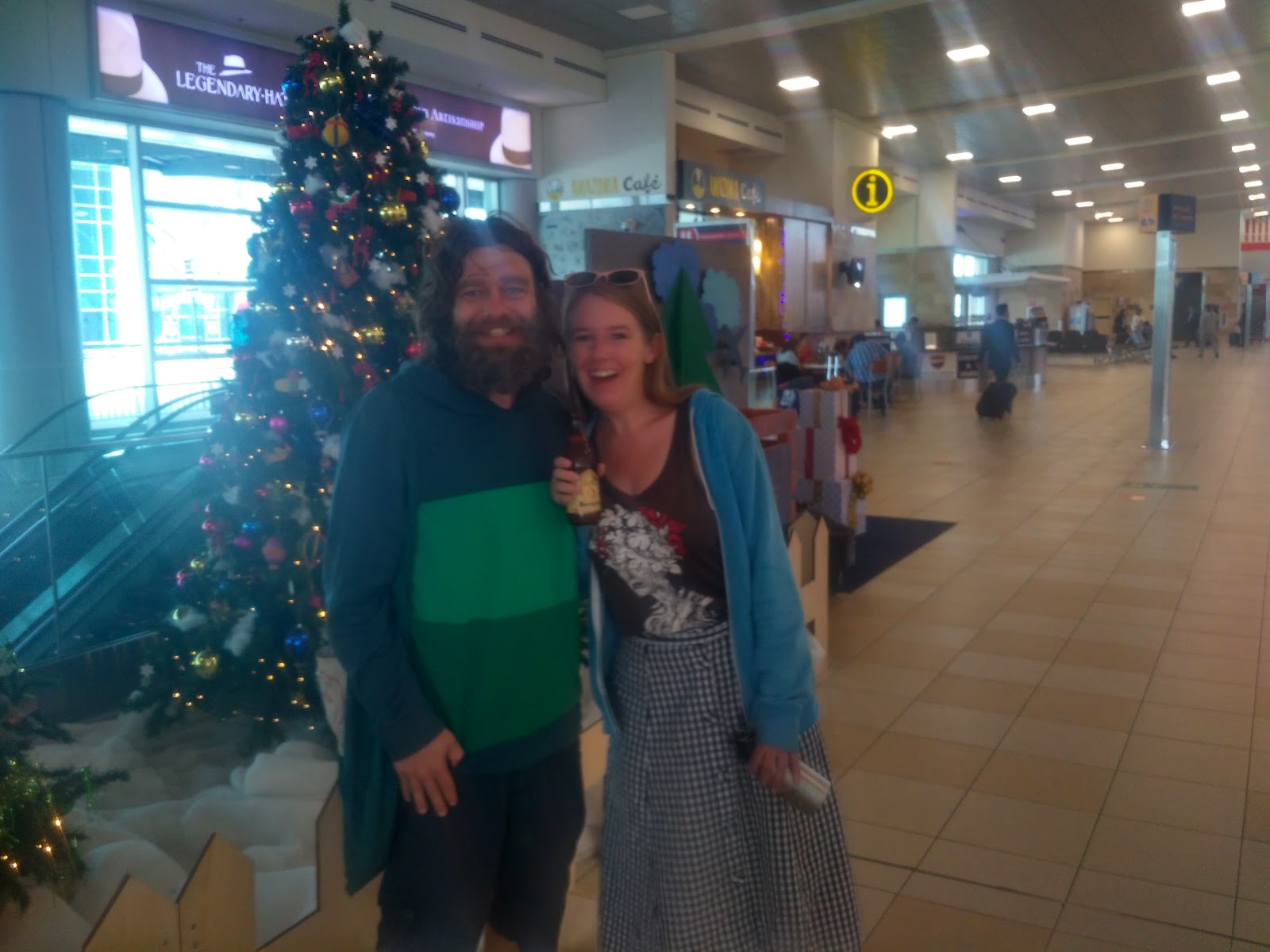
Before our final night in Quito we said a sad goodbye to the last of the family.  It had been a real treat to spend so long with them, and their presence for a couple of weeks did lots to stave off any creeping homesickness.  Fortunately for us, the next month or two of travel will be full of visits and meetings with a wide variety friends and family in a wide variety of destinations.

On our final day in Ecuador we made a quick final visit to our dentist (who had very kindly opened the office on a Saturday, the day after she returned from her Christmas holiday).  From there it was straight to the northern bus terminal where we got a ride to Tulcan, about five hours north on the Colombian border. (As with just about every bus terminal in Ecuador, there were multiple cute puppies preparing to travel with their owners, a fact that Sarah reminded me I ought to point out).

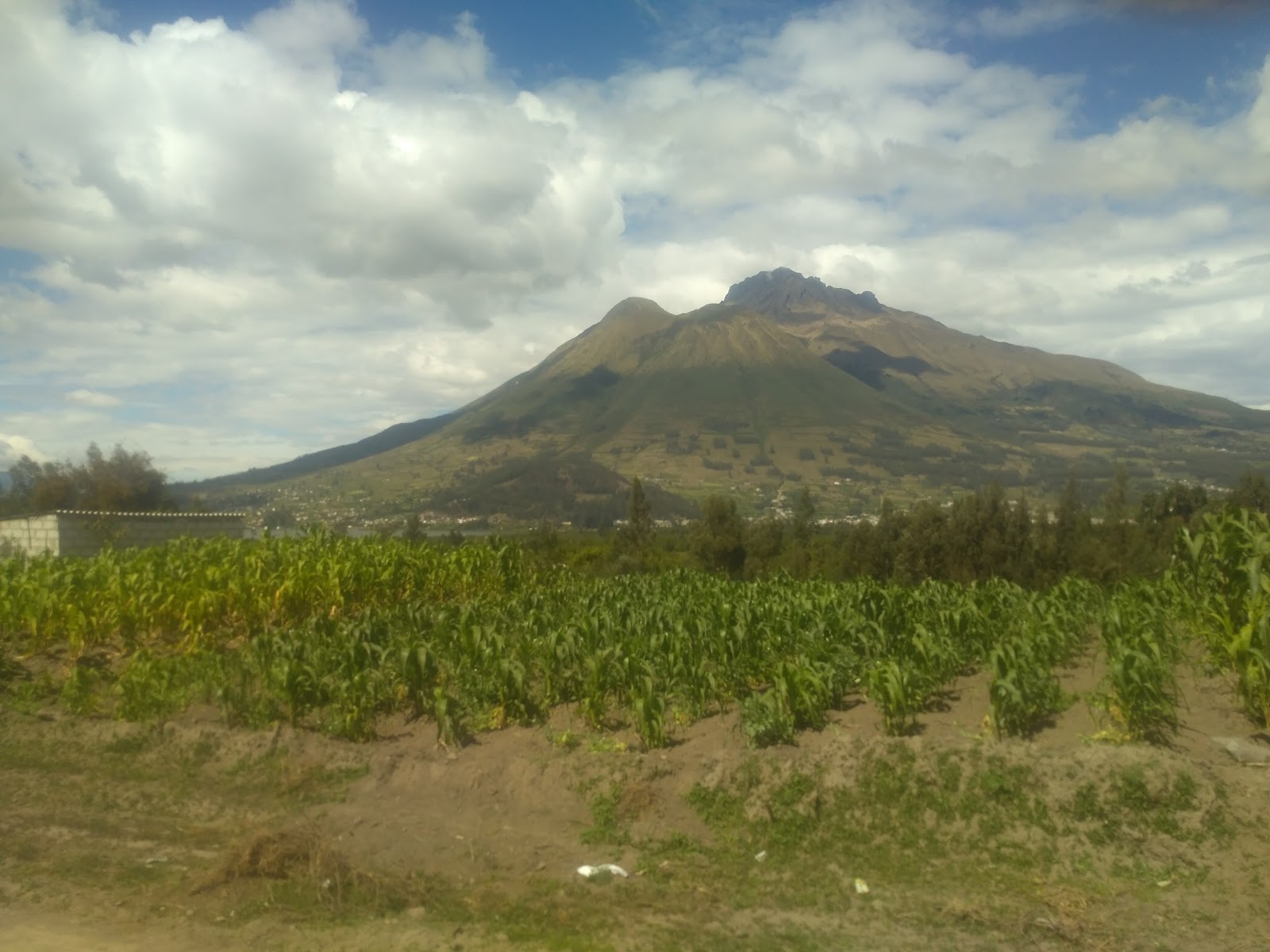
The trip was very pretty.  Big snow capped volcanoes and seemingly bottomless chasms passed by during the first half of the trip, changing to mountainous semi-desert for the second half.  We arrived in Tulcan just before sunset, which gave us just enough time to explore the city's cemetery before crossing the border.


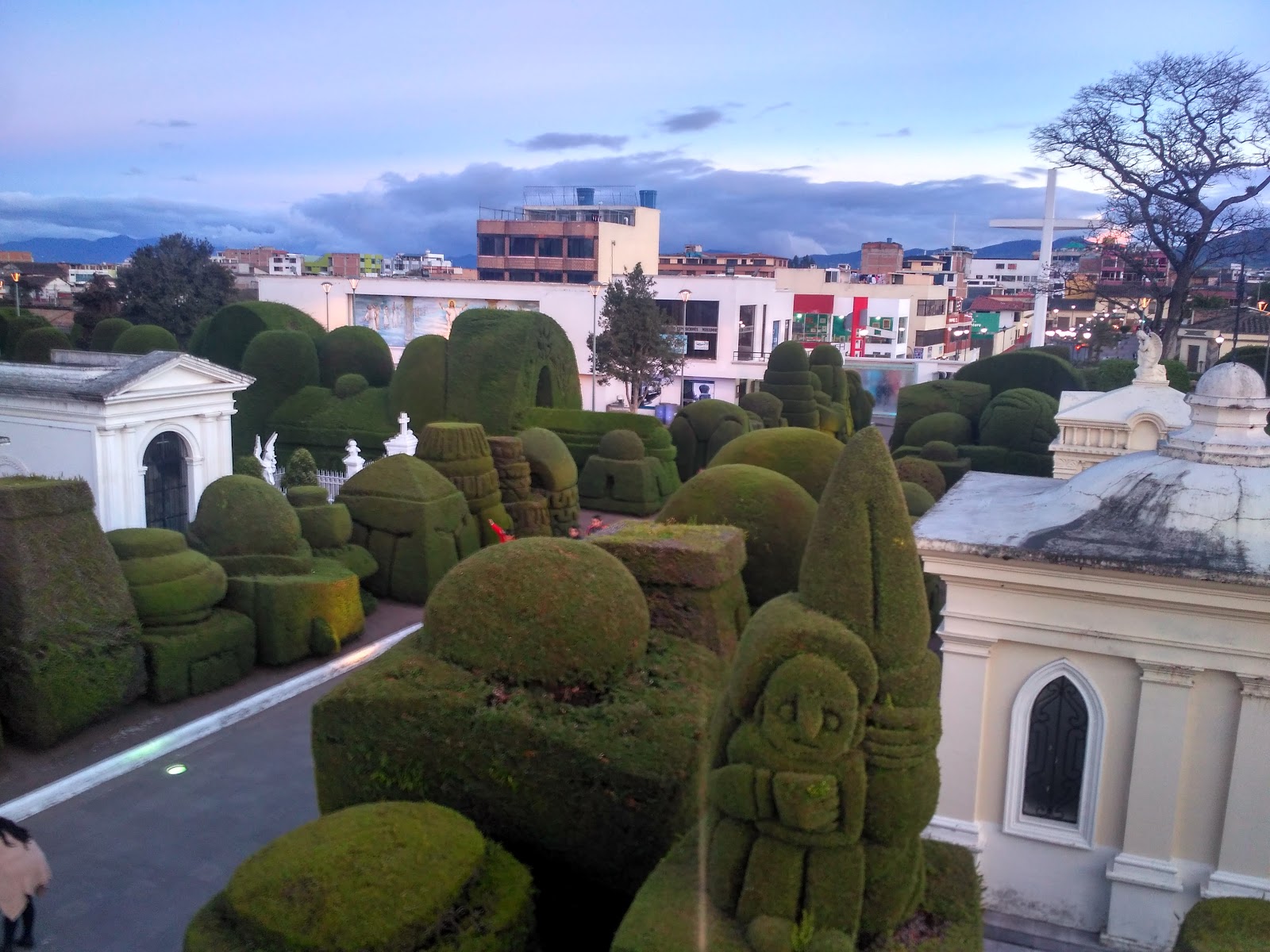
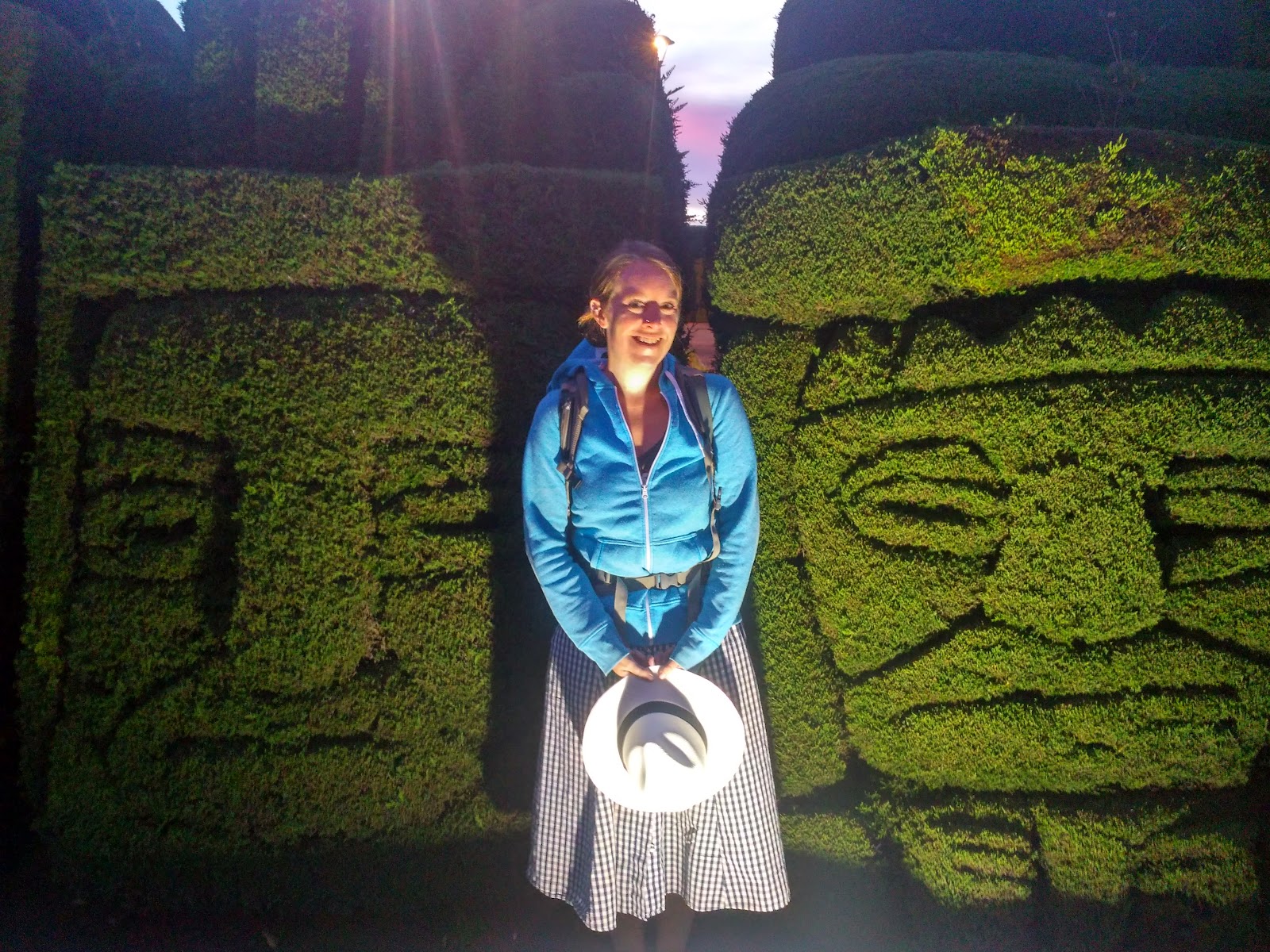
Why, you ask, would we want to explore a cemetery at dusk?  Because, as we'd learned by reading a travel guide on the bus while headed there, the Tulcan cemetery contains a huge (some say the biggest, though I have my doubts) collections of topiary in the world.
It was an honest to goodness tourist attraction, with dozens of people climbing on top of the crypts (they had stairs and handrails that actively encouraged this!) to take photos of the decorative gardening with the setting sun and 4700m volcano in the background.

At the border things were busy.  We were joined by dozens (hundreds?) of Venezuelan migrants headed south.  But the numbers may have gone down a bit from their heights in the preceding months.  And the Ecuadorian government had expanded the opening hours from 07:30-16:30 to 24 hours.  And they'd constructed temporary facilities (showers, sunshades, vaccination clinics) to help them along their way.  So even with the half hour of computer problems, it was only just over an hour until we got to the almost empty Colombian immigration hall.

As a Canadian I had to pay a “reciprocity fee” imposed by the Colombian government to match the Canadian biometric information collection fee that Colombians have to pay to enter Canada.  But I knew to expect this, and the immigration officers were very nice about it, even giving me a discount when they didn't have change for my 205,000 Colombian Peso payment of the 201,000 Colombian Peso fee.

Once through we tried and failed to find a collectivo (shared minibus) heading north to the town of Ipiales.  In fact we couldn't even find a taxi. We asked the border officials how to get into town and they took us for a little walk and found us a private car with two young men getting in.  It's sometimes a bad idea to get into unofficial taxis. And often (in South America at least) to get into a taxi with anyone other than the driver. And areas of Colombia near the Ecuadorian border are described as “avoid all non-essential travel” by the Canadian and NZ governments.  But then the ride had been recommended by a police officer and a representative of the UNHCR. So we decided to go with it, and had a quick and pleasant trip, chatting with the guys and listening to their loud and cheerful music as we approached Ipiales, our first stop in Colombia at around 21:00.

Monday, 21 January 2019

Towns 'n' Tortoises

Before I get on to telling you about our final couple of days in the Galapagos, I'll start this entry telling you a bit about life aboard the Beagle and some bits of the cruise I forgot in earlier entries (or whose chronology has [already!] escaped my memory).

We were a total of eleven passengers a naturalist-guide (mandatory for visits to Galapagos National Park) and five crew. Given that the normal contingent was around fourteen passengers and eight crew the ship was very comfortable and roomy.  It had been fitted with a desalination plant sometime in the past thirty years, so you could have long, hot showers whenever you liked.

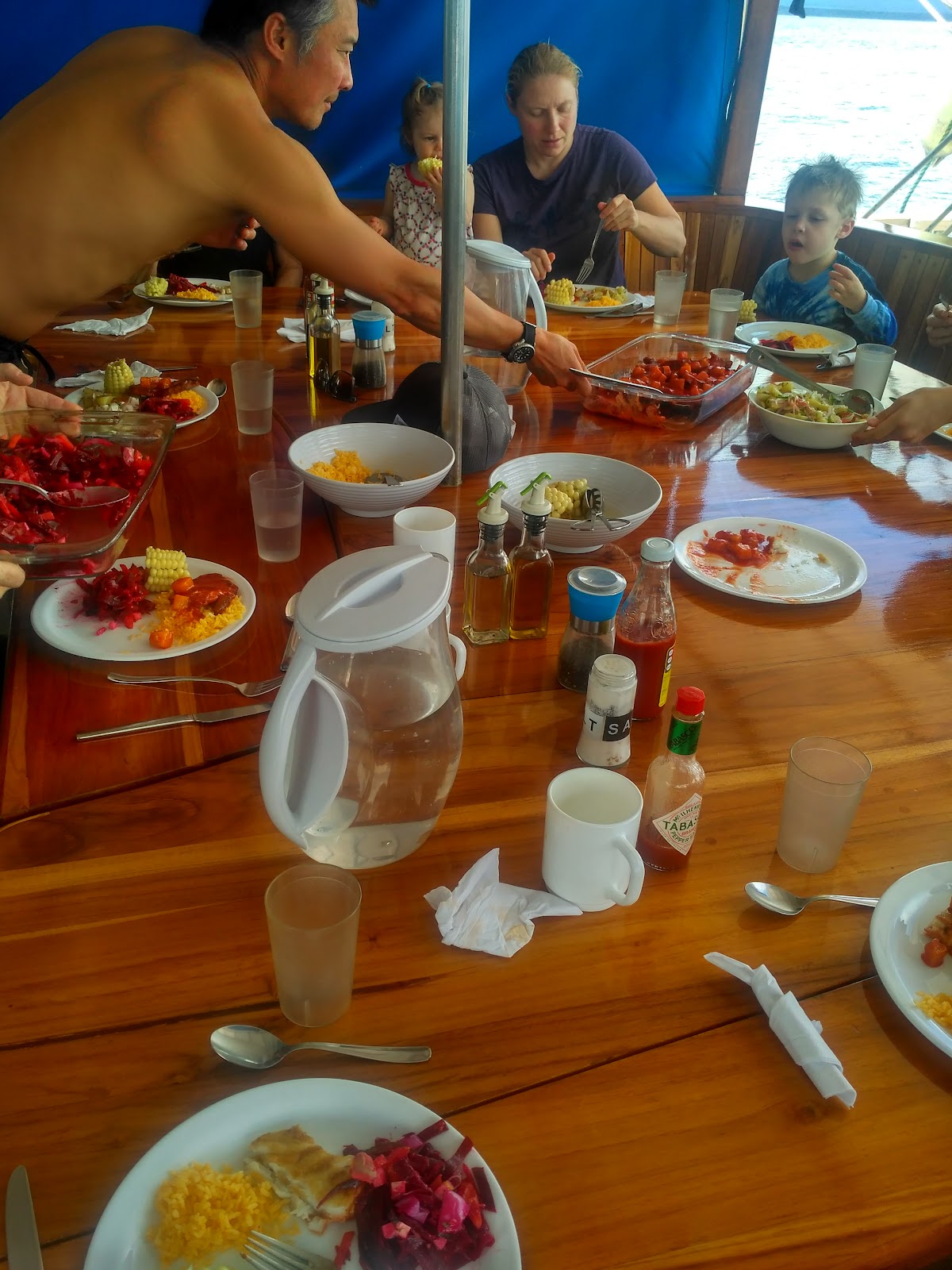
Adding to the sense of luxury were the meals.  Simply having three meals a day was more than Sarah and I were used to, but the chef prepared huge quantities of delicious food, plus snacks every time we returned to the ship from ashore.  I know for sure I gained back much of the weight I'd lost since the Amazon boat trips had finished fattening me up a couple months earlier.


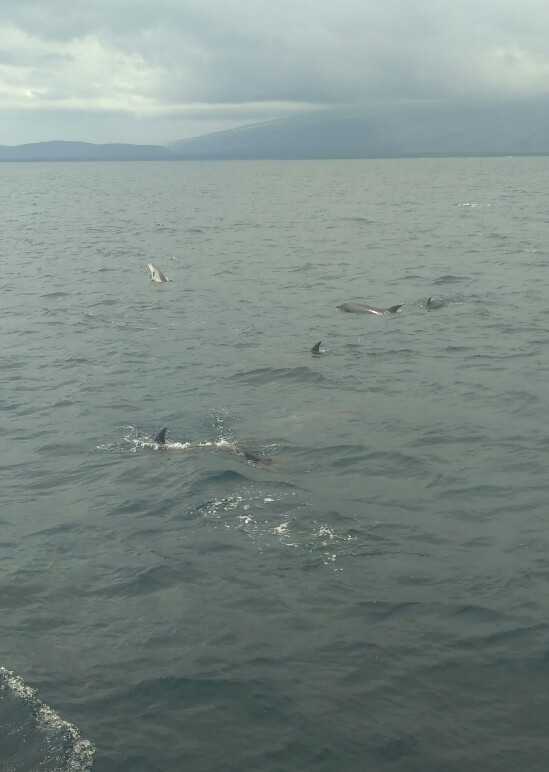
While sailing between anchorages I'd spend time playing games with my nephew Dante or just scanning the waters around the ship for excitement.  At one point Sarah and Melanie spotted a marine iguana out swimming maybe 10km from the nearest land. This is much farther out than the they'd usually be found, so this hardy fellow was christened Adventure Guani.  On another occasion we suddenly found ourselves surrounded by a pod of maybe fifty dolphins. They'd swim alongside, racing faster than the ship could move, leaping out of the water seemingly just for the fun of it (or maybe they were showing off?) Sitting with Dante in the netting that connected the tip of the bowsprit to the hull, looking straight down into the dolphin-filled water beneath reminded me of doing almost exactly the same thing when I was his age.


l
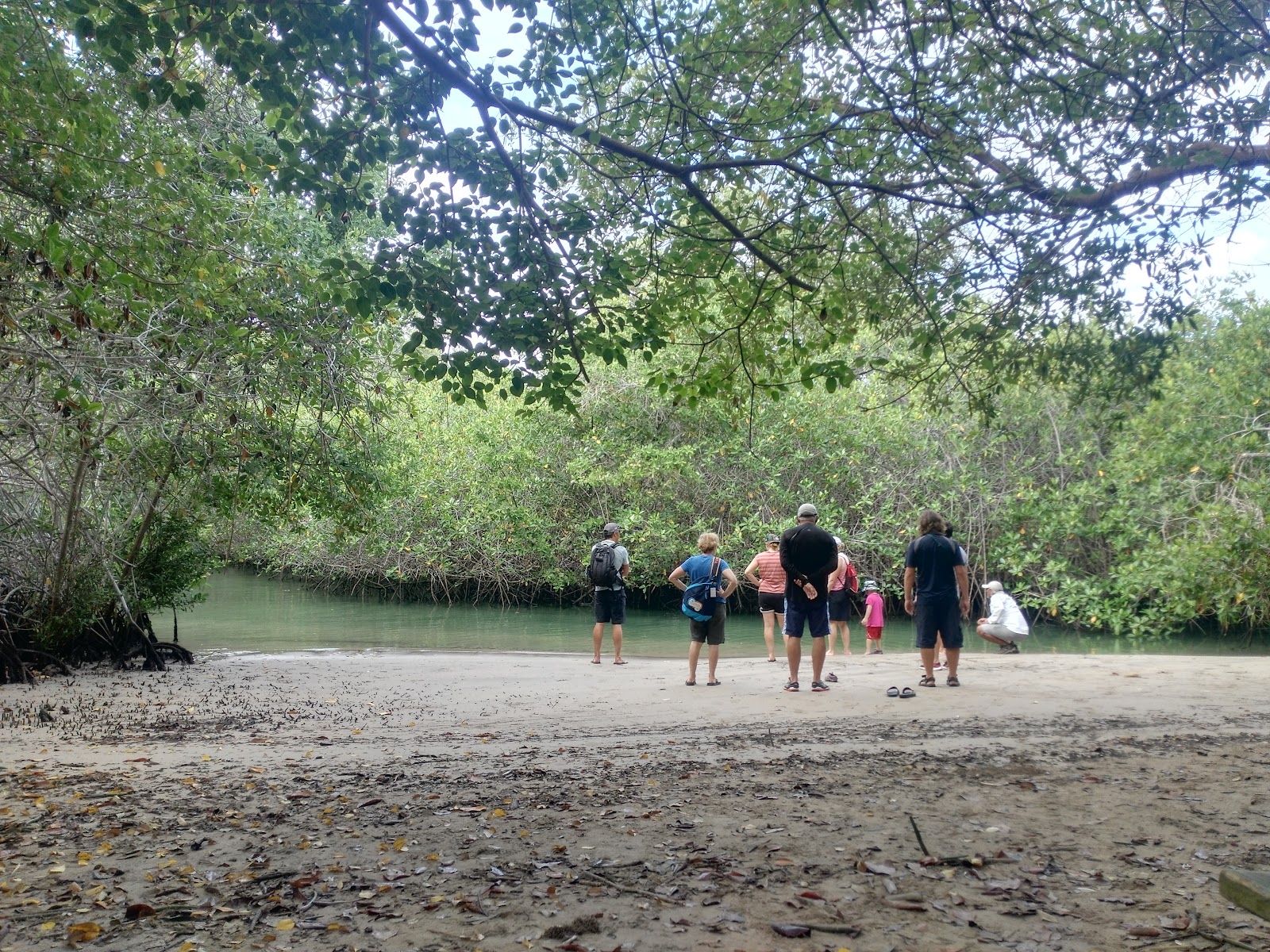
Both of our last two days in the islands were spent in the inhabited areas.  The first, in Puerto Villamil at the south end of Isabella. It actually felt like just about any little seaside vacation town. Except if you took a bus about five minutes outside of town along the coast you'd find yourself on a trail where you could meet marine iguanas and a giant tortoise and go swimming off a little beach in a mangrove forest through the canopy of trees out to the ocean where the waves started to break and where sea turtles cruised in close to shore for a visit.


It gave you a good feeling of what it would be like to visit the islands by taking ferries between their few settlements and taking short trips in and around them: pretty amazing, but still not a patch on the experience you got on a sleep-aboard ship that could transport you to the really wild parts of the archipelago.

If you headed inland from Puerto Villamil, meanwhile, you'd reach the giant tortoise breeding centre.  Adult tortoises are big and sturdy enough that none of the introduced animals bother them, but eggs and young ones are subject to all manner of threats, both direct (e.g. being eaten by rats) or indirect (e.g. being trampled by cattle).  There were hundreds of tortoises at the centre, ranging from tiny newborns just 10cm long through tea kettle sized young ones a year or two old, and on up to full sized adults weighing up to 600kg. A quick bit of mental arithmetic suggests that getting your foot stepped on by one of these guys would be worse than having it run over by a car!


In its twenty or so years of operation, the centre has released over two thousand adult tortoises into the wild.  But believe it or not, they still face threats while they're in the centre. In 2017, 123 baby tortoises (weighing up to about 5kg each) were stolen from the centre one night, packed aboard a private yacht and spirited out of the Galapagos for sale to animal collectors.  They supposedly fetch $7000 apiece. Who on earth wants a giant tortoise in their house? Especially when it's going to outlive you by probably no less than a hundred years!?

We had a couple of celebrations in the Islands as well.  On New Year's Eve, Melanie and her husband Ka-hung and I went into town in Puerto Ayora, the Galapagos largest town, with a population of about 27,000.  It was amazing how much it had changed in the previous three decades. In 1989 it was a sleepy fishing village with maybe a couple of shops that had one or two racks of postcards or t-shirts.  Now it was focused almost 100% on the tourist industry. The lively waterfront was packed with souvenir shops, restaurants and hotels. There were half a dozen ATMs in town. There was even a brewpub for heaven's sake!  (One of two breweries in the islands. I'm sad to report that both of them produce pretty poor beers :-( )
All of the locals were out on the main streets dressed up in their finest, joined by hundreds of tourists from the boats out in the harbour, some of which were 50m super yachts, while others were small cruise ships which probably accommodated a couple of hundred passengers.


The annual fireworks display had been cancelled (probably permanently) due to its (predictable) negative effects on wildlife.  But there was still plenty of colour around. A local New Year's tradition has people burning a papier mache effigy representing all of the negatives from the previous year as they head into the next one.  I think historically these were pretty nondescript, but in 2018 superheroes were popular forms, so we saw such wonders as an almost life-sized Spider Man strapped on to the back of a motorbike driving down the street.


But really the best celebration of all was the one that was the main reason for our all being in the islands together: my dad's seventieth birthday.  We had cake and champagne and so forth, but the best part was just being in such a wondrous place with the whole family, something I don't get to do often enough.

All good things must come to an end of course.  On New Year's Day, we took the panga ashore one last time into Puerto Ayora.  From there we took a bus back to the north end of Santa Cruz Island, then a short ferry trip back to Baltra Island, where the airport is located and where we'd started our trip (incidentally, this whole process seems to be run with an almost deliberate inefficiency, s seemingly to ensure that as many of the island's residents as possible get some kind of work out of it).

We said a fond farewell to the crew and our guide Tommy, had our bags thoroughly checked to make sure we weren't trying to take any of the islands home with us (they're pretty fussy… not even rocks are permitted, but one guy a few years back was caught with three land iguanas in his suitcase!)   And then it was back to the mainland with us.

I feel so lucky to have visited such an amazing and beautiful place as the Galapagos not once but twice.  I was a little worried before this trip that things would have changed too much, that “you can never go back again”. But I'm happy to say that the Galapagos Islands are just as wondrous as ever, and (outside of Puerto Ayora I guess) the only major difference was that this time I got to share it with an even bigger, happier family.


Saturday, 19 January 2019

Guaniland

The second part of our Galapagos odyssey took place almost entirely on and around Isabela, the largest of the islands and one that was entirely new to us, even the five who visited back in 1989.

Although it has a sizeable town at its southern end, much of Isabela is as remote and wild as the Galapagos gets.  It's 120km north to south, and our guide Tommy reminded us of the story of a group of Ecuadorian marines who decided to make the ~25km journey across as a training exercise.  They didn't tell anyone locally where they were going. So harsh were the volcanic landscape and the climate in the highlands that twelve of them died and the remains of five have still not been recovered (I've tried to find further discussion of this story online, but failed.  However it's entirely plausible, so I'll leave it here).

This wildness was abundantly evident in our first morning, as we took a zodiac ride along the base of huge tuff cliffs supported by volcanic dykes and punctuated at the north end by a perfect volcanic cinder cone.


Along the base of the cliffs we spotted the usual sea lions and marine iguanas.  We also got a look at the Galapagos’ endemic (and the world's only) flightless cormorant.  They're really almost fully adapted to life in the water, able to dive down to 70m in search of their food.  They're big fans of octopus, but going after such tough prey sometimes backfires and they sometimes end up being a meal themselves if they pick a target that's too big and strong.  They're obviously still competent on land as well. Their stubby wings are useless for flight, but are good enough balancing devices that we saw one shove a metre long marine iguana off a preferred roosting spot that the big lizard had occupied.


After the zodiac ride we returned to the same spot with masks, snorkels and fins to visit all ggof these animals, plus a few more in situ.  The cormorants looked so graceful and playful under water. Like the sealions on our previous trip, they took to playing with our snorkelling gear, nibbling on my nephew Dante's fins and trying to pluck my dad's mask out of his hands as he washed it.  My brother in law Greg saw one repeatedly grab hold of a pufferfish, only to be repeatedly forced to let go as the fish swelled to many times its normal size. Proof that the defence scheme works!

As beautiful as the surroundings and as fun as the cormorants were, the highlight was probably swimming in clear teal water inside a wide, high-naved sea cave with hundreds of fish all around and numerous Pacific green sea turtles gliding gracefully around us.  Just outside the cave they were even more numerous, with about twenty(!) sitting resting on the shallow bottom. Apparently this is a place of safety from the orcas and tiger sharks that prey on them out in the open ocean.


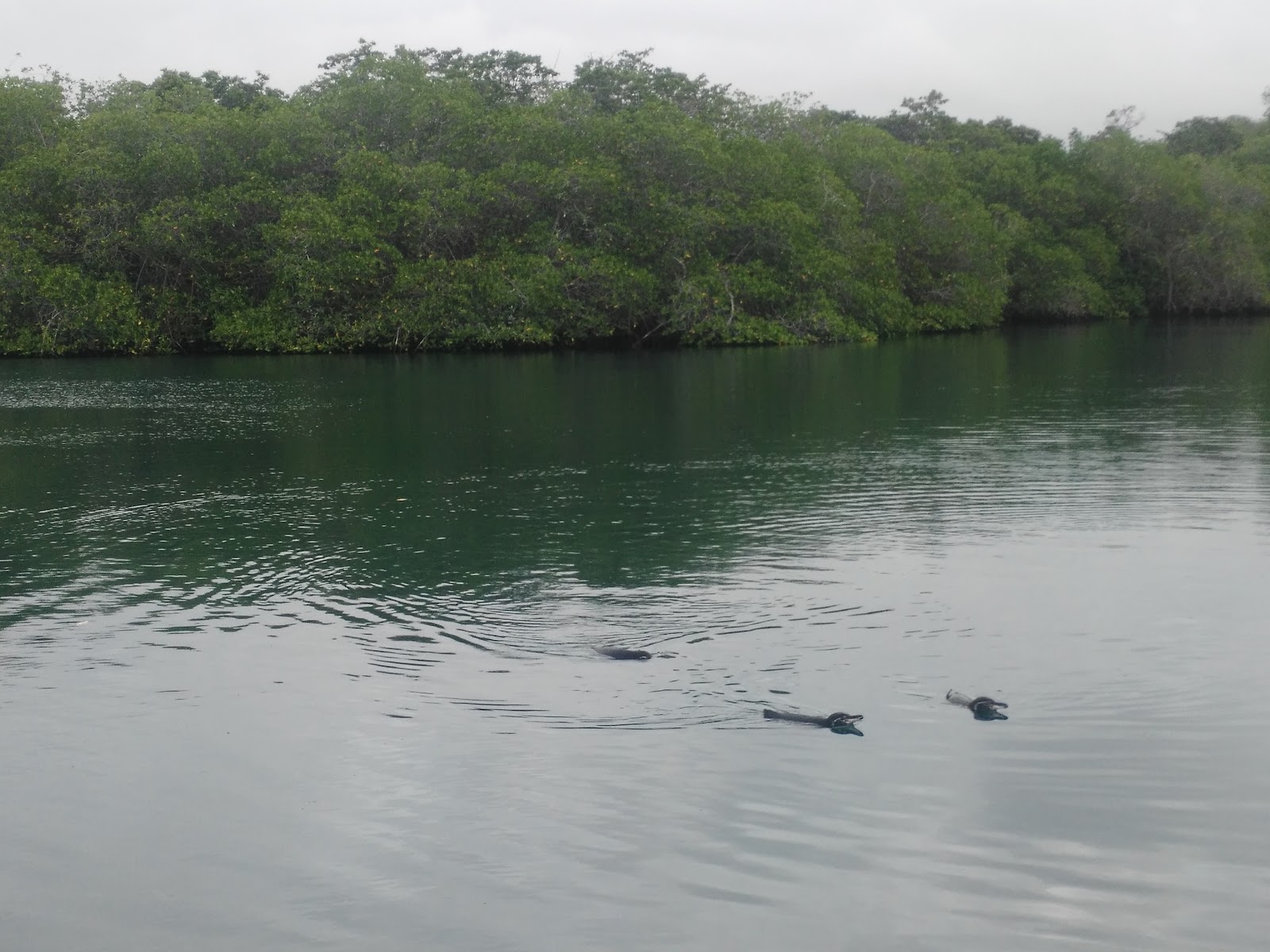
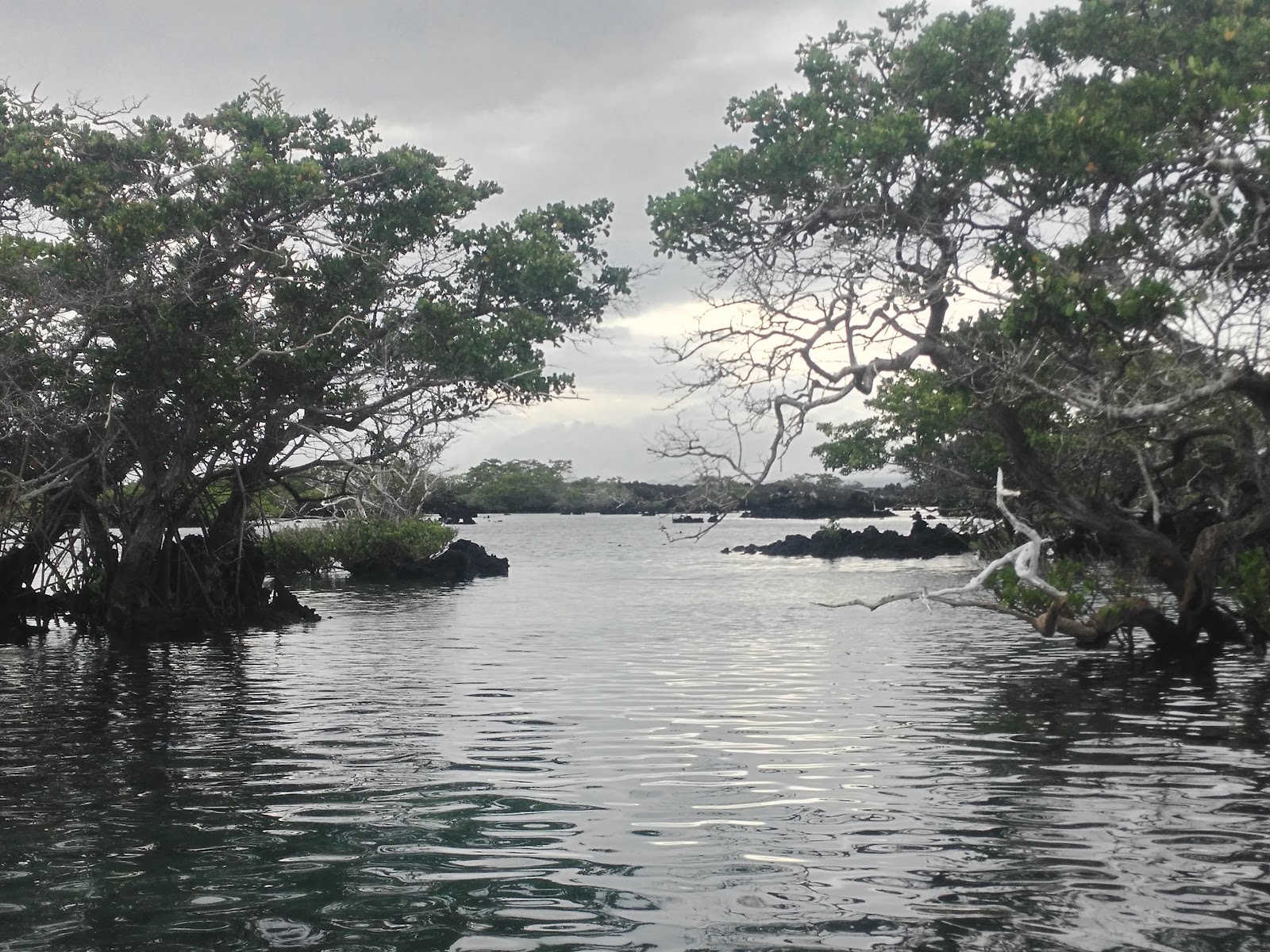
Across a narrow channel from Isabela lies the westernmost of the Galapagos, Floreana.  We spent the next morning cruising around the mangroves that had found a foothold at the edge of this newest Galapagos Island's lava flows.  We were up super early, and as a result had crystal clea, dead flat water for viewing more sea lions, sea turtles and an especially weird treat: Galapagos penguins bobbing next to and zipping beneath the mangroves.  Where else in the world could you possibly witness such a spectacle? (I think NZ is about as close as you could manage, but there's still about 800km from the northernmost spots frequented by little blue penguins and the southernmost mangroves).


We also did a little snorkelling just away from the mangroves.  It was nice, but absolutely paled in comparison to the spot we went to later in the day.

Our guide Tommy obviously saw that we really enjoyed our time in the water, so had asked the captain to take us to a spot he remembered from one of his first (out of hundreds!) tourist boat trips out away from his home on Santa Cruz Island.  We often had companion boats at the anchorage spots, but this time we were all alone.

From the surface the spot looked black and rugged, like many spots where the lava meets the sea.  But under water it was a whole other world. It was a series of narrow, shallow channels that connected larger, deeper pools in the lava.  The rocks were black and white and yellow and pink. It felt like swimming around a giant mansion, exploring its mysterious rooms and hallways.

The fish weren't quite as numerous as in some spots, but the sun was shining and the  water was crystal clear. The only impediment to vision was the fresh water that flowed through the porous lava into the ocean, sometimes blurring your view with its different refractive index.  In one spot, Tommy dove to the bottom and sipped pure fresh water that had a layer of saltwater floating above it.

I loved cruising around the nooks and crannies, wonderstruck each time a new bit of undersea magic was revealed.  Only to pop my head above water and see nothing more than dark rock with small, unremarkable bits of water around the outcrops.

The very best part was what we called the Turtle Bowl or the Turtlequarium.  Duck through a narrow channel no more than 50cm deep and suddenly you were in a circular pool 20m across and 8m down.  Inside were maybe a dozen sea turtles ranging from “little” ones maybe 60cm long to huge old monsters 1.5m from head to tail.  They lazed on the bottom, glided through the transparent water as though flying through the air and on several memorable occasions raced one another in loops around the bowl, showing off speed and agility that their size and usual calm behaviour belied.

I think we spent an hour and a half in the water there.  I could have spent all day. This was definitely the most memorable outing from the ship in our whole trip for me.

We had one last day  in the wild west of the islands.  We'd already seen plenty of marine iguanas.  But hadn't yet met any of their equally bulky landlubbing cousins.  And we hadn't yet seen any of (arguably) the islands’ most famous residents.  In maybe 45 minutes ashore we saw many goldenrod coloured land iguanas and four giant tortoises, one that had “parked” itself in a semi-subterranean “garage” so that you could only see its rear half, one that was parked in the middle of the trail, entirely undisturbed by a dozen humans strolling past a metre or two away, and two others that looked to be engaged in some sort of race (they're surprisingly quick when they want to be!)


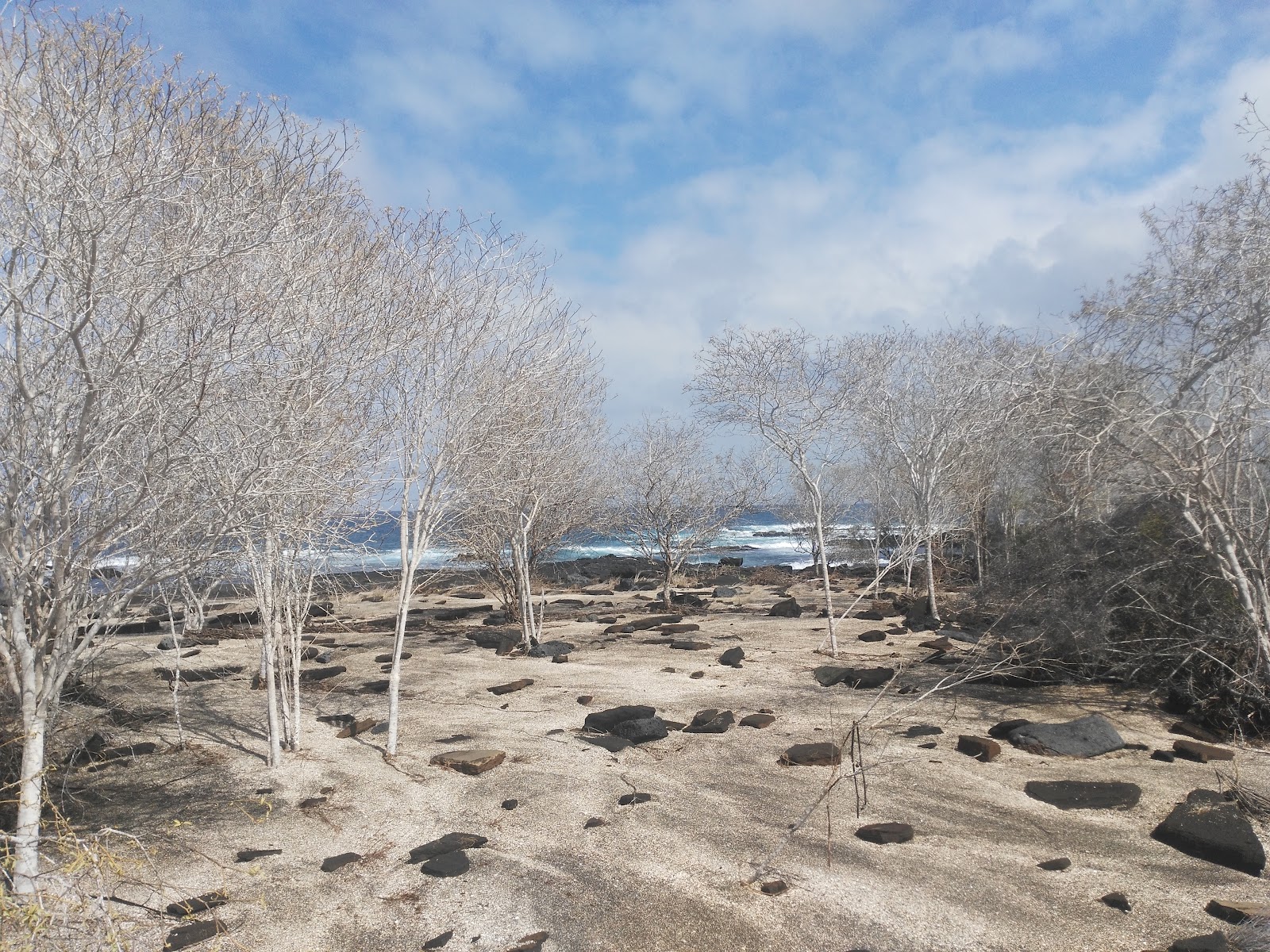
That afternoon we went for a walk around Punta Morena, exploring a huge lava flow.  Despite being several hundred years old the rock was still viciously sharp and you most certainly didn't want to trip while walking amongst it.  The fascinating thing about this area was the small, green freshwater oases that dotted it where air pockets or sections of lava tube had collapsed.

In one of these improbable spots a huge, decades old conger eel lived, the big-fish, apex predator in a very small pond.  At another three flamingos (relatively new Galapagos migrants) swooped in for a visit, delighting my niece Gwen (whose middle name is Flamingo) and her brother Desmond.


We went for one final swim as we waited for the Panga to navigate its way into then small inlet in the bay to pick us up and take us back to the ship (via a quick tour of a point where huge marine iguanas and little penguins shared the space peacefully).


One final anchorage at a bay that has been used and graffitied by passing ships for over a century (there's a reliable fresh water source there).  A cruise around the bay, including a visit to (still!) more penguins and some blue footed boobies. And then it was time to head back towards (if not precisely TO) civilization.

And what better way to leave the wild west than over some wild seas? The swells weren't quite the 10m we'd had in the Drake Passage on the way to Antarctica, but like there, Sarah and I were the only ones up and about, while everyone else was seasick or tending to spouses or children who were.  We were likewise the only ones awake when we neared Puerto Villamil, two hours late because of the rough seas.

Friday, 18 January 2019

Three Decades Later: Return to Galapagos

It's probably going to be tough to write about our trip to the Galapagos without just making the whole entry a string of superlatives. It is truly one of the most amazing places I've ever been.

I first visited the Islands on a week-long cruise my family.  I was returning again, almost 30 years later with even more family.  My two sisters, their husbands, two nephews, an 18 month old niece and, of course, my mother and father, who had arranged the family holiday as a celebration of my dad's seventieth birthday.  I'm still amazed to think that I'm now older than my dad was during our first trip back in 1989.

We flew to the Galapagos’ one major airport on Christmas day.  Our arrival was a bit chaotic, but our guide was waiting or us, and we'd soon enough paid our national park fees and caught a bus down to the boat in Baltra habour.  Astonishingly, the boat, a motor sailer named The Beagle was the same boat we'd been on in 1989 (though it's captain, ownership and name had all been changed in the meantime).


A quick ride in a zodiac (locally called a “panga”) and we were all aboard and steaming out of the harbour.

I was rather surprised that we got to go ashore that afternoon.  We took the zodiac out again to a small but lovely white sand beach on Santa Cruz island. We took a walk to the lagoon behind the dunes and plenty of splashing in the Pacific, complete with a visit by several spotted eagle rays that seemed happy to cruise around the human swimmers, coming as close as a metre or so to my nephew Dante.  This got us well primed for the wildlife spotting walks and snorkelling expeditions that made up most of our wondrous week in the Islands.

We motored all night, crossing the equator on calm seas as we slept (the first time we'd been in the northern hemisphere since Macapa in Brazil, about three months earlier!

Our first stop was Genovesa (Tower) Island.  We woke up to find The Beagle anchored in the wide, round bay inscribed by the rim of a volcanic caldera, bringing back memories of Deception Island off the Antarctic Peninsula.  And just as in Antarctica, the bird life on shore was absolutely phenomenal. Completely free of introduced mammals, on Genovesa you (quite literally) have to pay attention to avoid tripping over masked and red footed boobies.  While blue footed boobies are the Galapagos’ most famous variety, I actually think the red-foots are prettier and Sarah liked the masked ones as, she said, their wide slightly goofy faces and waddling walk made it look as though they'd just told a terrible dad-joke and were asking for affirmation of their avian comedy.


We also saw a rare short-eared owl on the hunt.  This species isn't uncommon elsewhere in the world.  But the ones in the Galapagos at unique in that they've taken to hunting during the day, and we actually saw this guy catch and carry off one of the thousands of storm petrels that wheeled and soared just offshore.

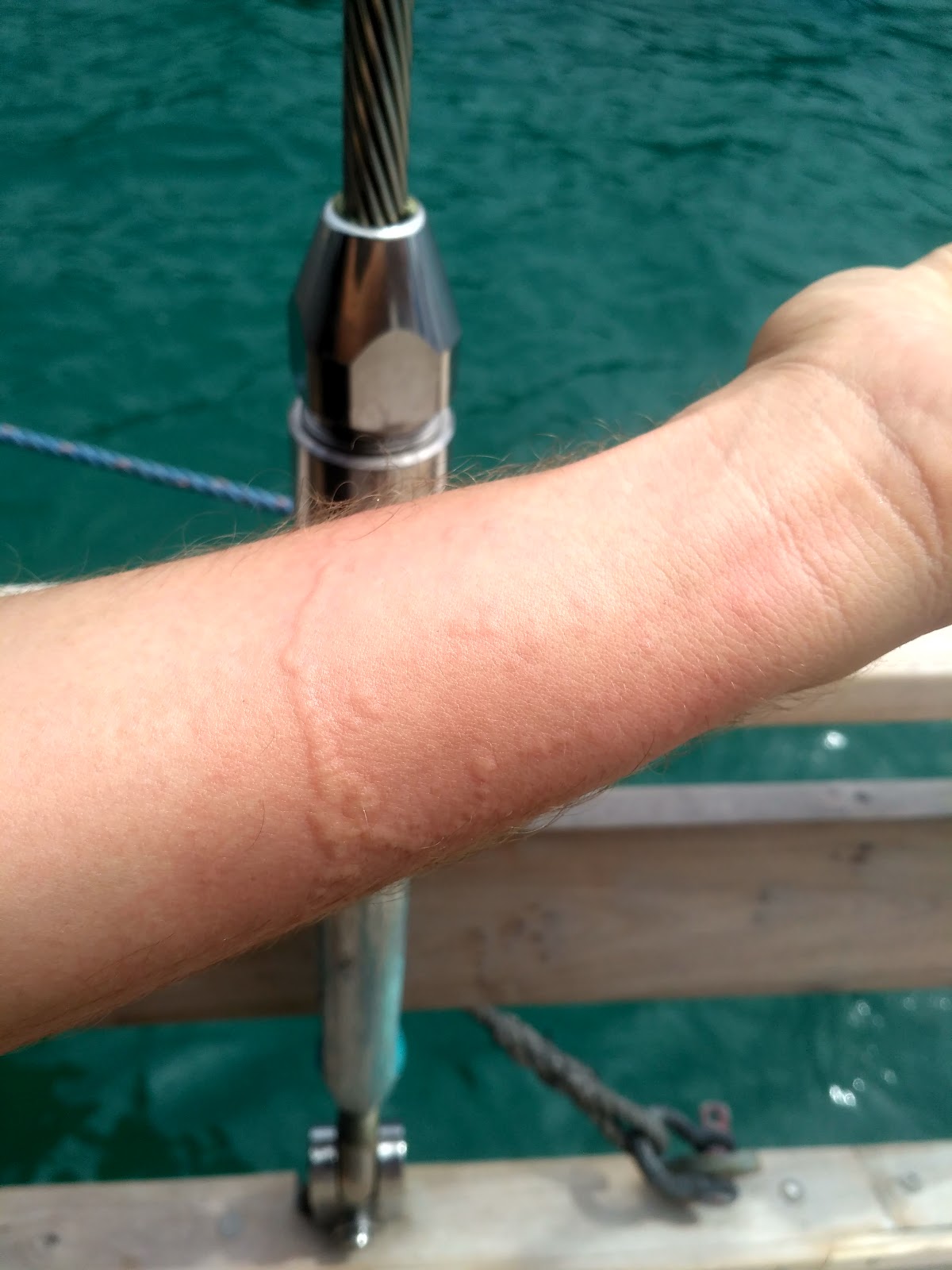
Some of my strongest memories from 1989 came snorkelling around Genovesa.  We saw a huge school (I remember it as being a couple of hundred, but probably it was more like fifty) of hammerhead sharks swimming beneath us in the depths of the caldera.  I was really hoping the new visitors would get to see something similar, but it didn't turn out that way. In fact, the snorkelling trip turned out decidedly unpleasantly. We'd seen some pretty stuff when, fifteen minutes in, my mom complained of being stung by something.
I felt one or two painful little zaps on my arms as well, but decided they weren't that bad and just to try to ignore them.  Apparently everyone else was getting stung as well, and by the time most of them had escaped back into the zodiac we must've swum into a good big patch of invisible jellyfish, because I was quickly convinced to head back myself after several more good stings, receiving even more as I scampered (you can't really scamper while swimming, but that's how it felt) back aboard myself.


Back on the ship, we treated our wounds with vinegar but everyone, especially my sister Melanie, had some good bright pink blisters on their bodies. Our guide Tommy told us that jellyfish are uncommon in Galapagos waters, and that these were likely visitors brought by the warm el Niño waters (which, except for the stingers, made swimming in the Galapagos even more pleasant than I remembered it being).

That night we sailed to Santiago Island, another one that we'd visited thirty years previously.  We went for a walk ashore and once again, memories flooded back. I'd been telling Sarah about the marine iguanas on Santiago for years, knowing that she'd love them and, unsurprisingly, she did.  They have blunt snouts, drooping eyelids and mouths that look like they're in a constant state of sleepy contentedness. This fiits in well with their generally lazy behaviour when on land, just sitting on the black lava, warming themselves in the powerful equatorial sun before diving into the cool water to munch (exclusively) on seaweed.


There weren't quite as many iguanas on Santiago as I remember but there were far more sealions basking, like the iguanas, on the warm rocks before diving in to swoop and play in the waves as they crashed into the rocky shore and shot up through the remains of ancient lava tubes forming impressive surge pools and blowholes.  In one spot, water and air, pressurised from below found its way up through porous lava to bubble and “breathe” underfoot in time with the waves

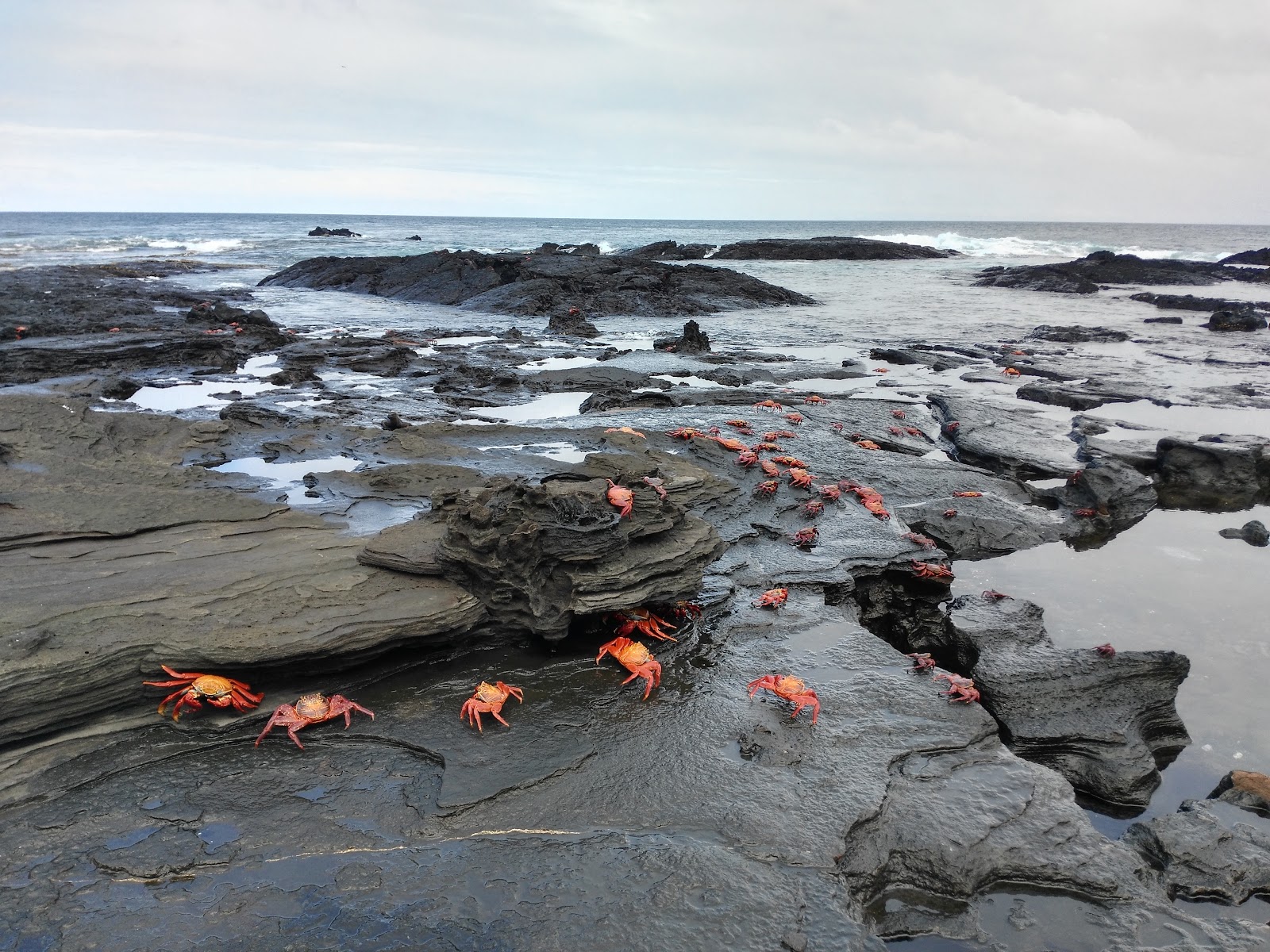
While there weren't the scores of oceangoers  as on Genovesa, my dad still delighted in the shorebirds (oystercatchers, night herons, stilts) that were kept company by the iguanas and by dozens of brilliantly coloured Sally Lightfoot crabs.  I love these both for their appearance and their behaviour which seems more appropriate to flocks of birds or schools of fish than crustaceans. They'll sit there silently, all seeming to stare at you with their stalked eyes until they get a bit nervous and back (or actually sidle, since they're crab walking) away.  Then one would be startled by something and they'd all scuttle rapidly off, like geese taking flight.


That afternoon we departed Santiago and spent the full day on the water, two of the sails unfurled for the long journey up and around to the western side of Isabella Island.  When sailing in the Galapagos you're almost always in sight of one island or another. Many of them are dozens of kilometres across, and their volcanos range up to 1800m in height, so there's always at least a hazy vision of one on the horizon.  But this day was about the closest we got to sailing open ocean.

The water was dark, but brilliant blue.  And even though we were well out to sea, there was still some excitement, as Sarah and Mel spotted manta rays in the distance, some even jumping spectacularly entirely clear of the water.  Another, perhaps two metres across, cruised (seemingly lazily, but actually at eight or ten knots) alongsjde the bow.

As we neared Isabella, it's dark (under rain clouds, also a result of the el Niño) and foreboding landscapes provided more awesome sights.


I still struggle to get used to the equatorial days, which are warm and sunny but, unlike NZ or Canadian summer days, end abruptly at 18:00, the sun plumetting quickly below the horizon.  Because of this and our anchorage for lunch, we completed our day's sailing down the west coast of Isabella in the dark, leaving its wonders to surprise us the following morning.