Showing posts with label Colombia. Show all posts

Thursday, 14 March 2019

Old Friends in the Old Town

As with Medellin, we were revisiting Cartagena.  We'd been with my family during our first visit around New Year's 2013.  We had company once again, but this time it was Raj, our Couchsurfing host from Dushanbe, Tajikistan in 2012.  Raj works as a doctor and had been attending a conference in Atlanta. He had some free time before returning to his family home in India and, to our absolute delight, chose to spend some of it coming down to visit us in Colombia.  We'd kept in occasional touch, but this would be our first reunion in over six years.

We were staying at an Airbnb in a residential neighborhood maybe twenty minutes from the tourist heart of Cartagena in its old city.  We walked along a busy road next to a huge empty lot on our way there for the first time, but discovered that it actually sat amongst lots of strikingly painted white homes connected by twisty narrow streets.

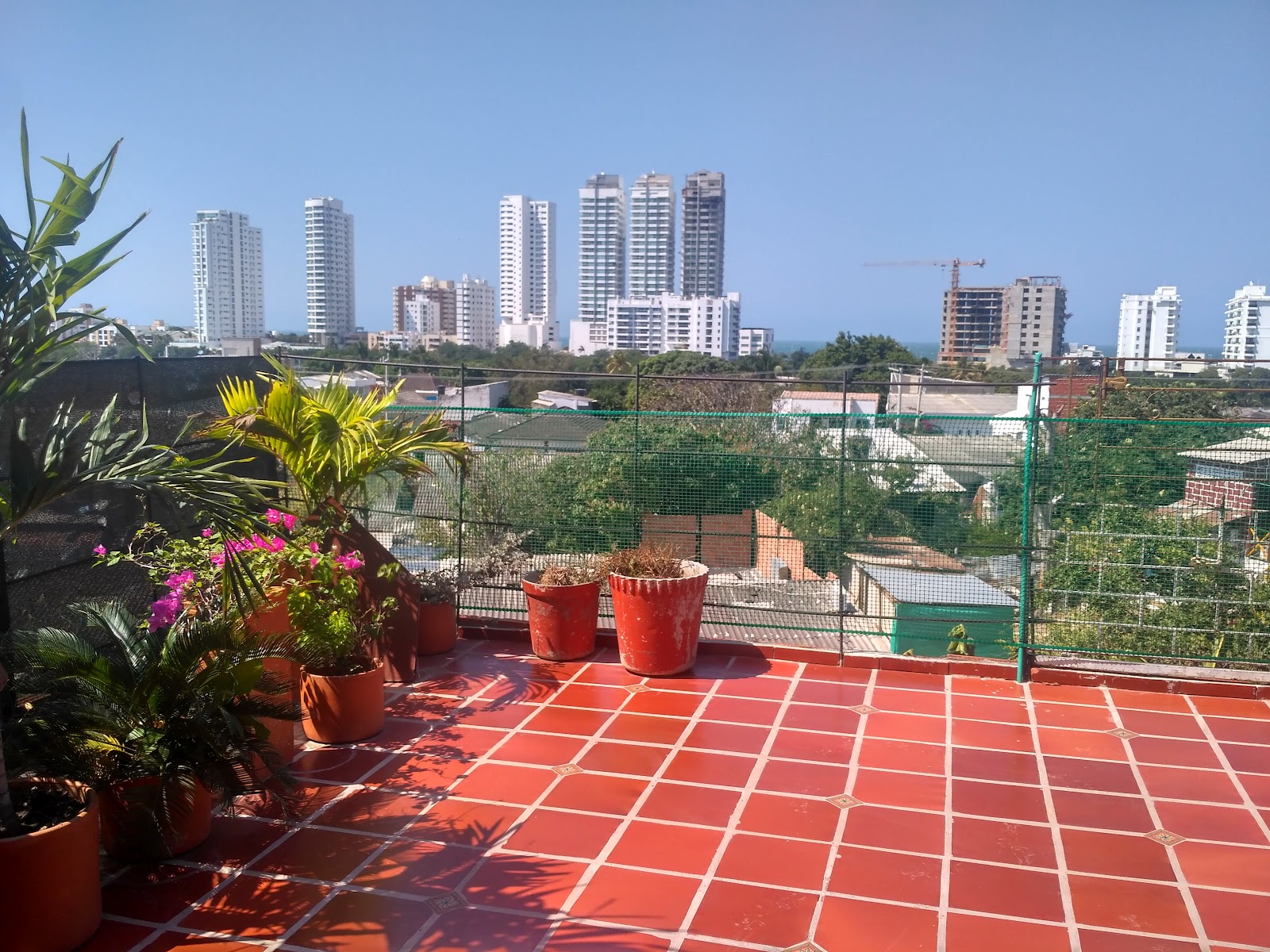
The place we were staying was a pleasant two bedroom apartment featuring a huge terrace outside with views of the ocean, the huge Castillo San Felipe and the old city in the distance.  We did a bit of shopping and waited for Raj's arrival. We spent our first evening catching up over dinner (we took turns cooking during our six days together) and making (very rough) plans for our next few days together.


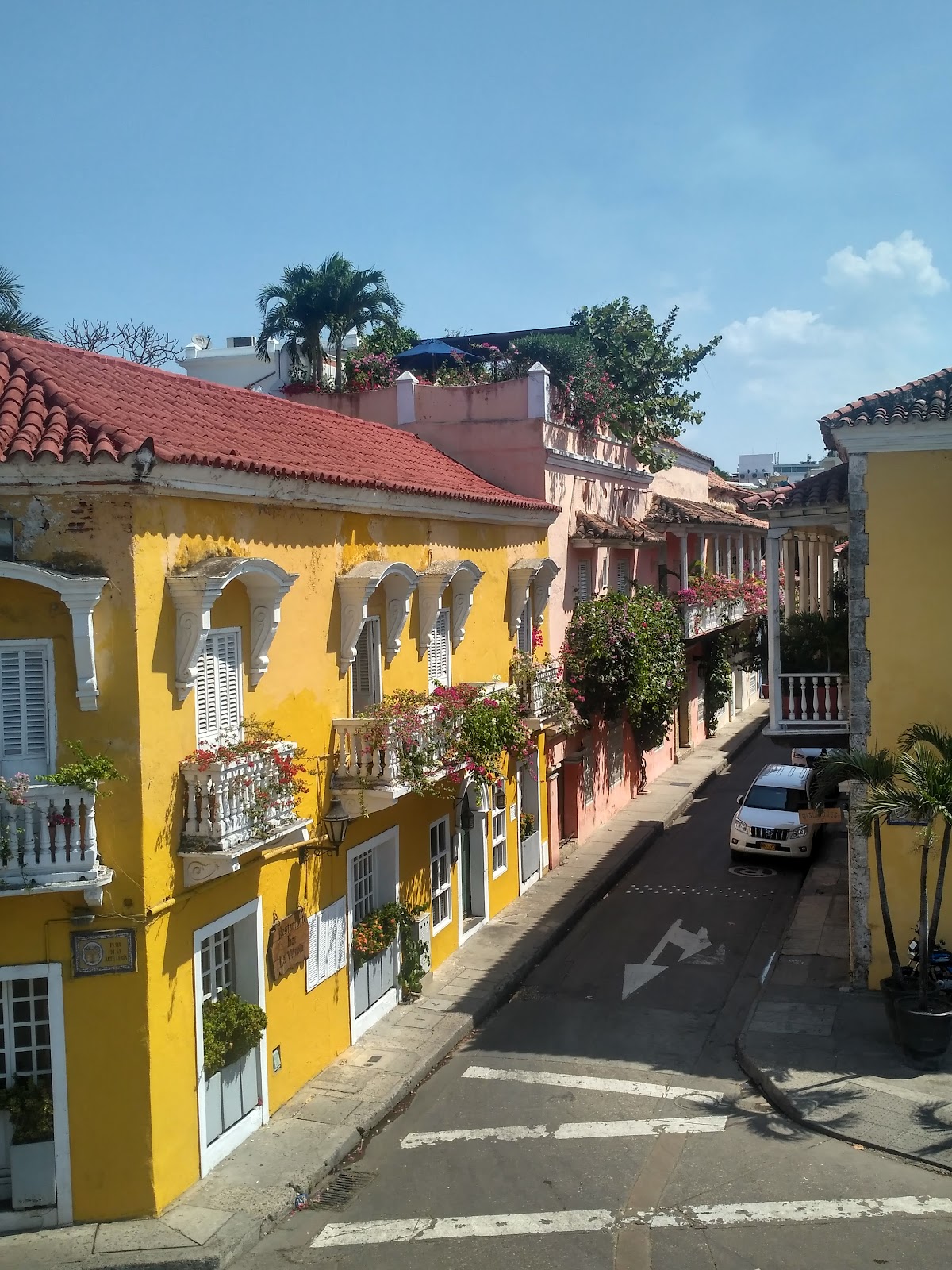
The next day we went into the old walled city for a look around. It was just as gorgeous as we remembered, and the pretty, done up section of town had expanded to include the residential neighbourhood of Gethsemani where we'd stayed during our previous visit (after saying goodbye to the family and vacating the fancy resort where we'd been staying).  The old city is full of brilliant colours, sixteenth to eighteenth century buildings and, even moreso than during our last visit, foreign tourists. In 2013, the memory of the Colombian civil war was still fresh enough that many chose to stay away, but by 2019 the cruise ships had descended and we spent a good chunk of the day amongst grey-haired throngs following little flags on extendable pointers.

We also checked out the city centre, where the old city meets the new, and enjoyed some tasty fruit juices and cheese pastries before heading back home for an afternoon on the terrace with a tasty, vegetable-heavy dinner and a few beers.


As it turned out, we weren't alone on the terrace.  It was shared with two other apartments, but in this case it was a few iguanas.  Raj attempted to photograph the one that came closest, but it seemed to climb a tall pot plant in a spiral, always on the far side from Raj, making for an entertaining little game of hide and seek.

The following day we set out to explore some of the huge, untouristed expanse of new Cartagena (simply NEW, not the ultra-modern parade of bright white beach hotels in Boca Grande district).  We took an Uber to the main Bazurto market. A lot of reviews online claim that it's dirty, dangerous and not that interesting. This is obviously a function of the city being inundated with cruise ship passengers who have never been to a market in a developing country before.  We found it to be a bit grubby, but lively, friendly and lots of fun to explore.
And unlike in the old town, you could just sit down at a juice stand, order your (delicious!) tamarillo and passion fruit juice, chat with the proprietor, hand him some money and be charged exactly what a non-tourist would. Indeed, just generally people around Bazurto seemed delighted to see visitors checking out their part of town and were amazingly solicitous and helpful.
Including when it came to locating a fabric store and selecting some material.  For what, you ask? Well, I needed some nice new clothes for my upcoming NZ citizenship ceremony and had decided to have them made in Colombia.  I'd found a tailor earlier and he'd told me to select some fabric and come back with it the next day.


We did this at Bazurto, then returned to drop it off at his shop in the old town.  It was no more than thirty square metres, but there were clothes and fabric everywhere, and half a dozen women working at sewing machines, while the head tailor, Vincente worked at his own machine in the back.  After he’d measured me up, I suggested returning in ten days or so to pick up my suit, but he seemed distressed at this prospect, worried that this would give it too much time to get lost in the small, but very busy shop.  We agreed that I'd be back in three days time.

On this day we also made a revelatory discovery.  The central park, near the clock-tower gate of the old city was busy with animals including lots of large iguanas and (this was the revelation) a mother sloth and her baby!  (This of course, implied that there was at least one other sloth in the park, and as it turned out there were at least two others, a young female and the male, which we never actually spotted).  We sat and watched the sloths for ages before finally heading home for the evening.


All three of us had, at some time in the past, taken Salsa lessons.  And seeing as we were now in (arguably) the home country of Salsa, we decided we might do well to refresh our memories before hitting the city's dance clubs for an evening.  We took a ninety minute group lesson, during which Sarah and Raj made decent progress and I got comfortable with precisely one step (out of six we learned), spending most of the rest of the lesson trying to get pack in time with the music, stumbling over my feet and laughing at myself.  “Try again with a couple of beers,” was the instructor's advice.

That afternoon we'd decided to head to the beach. We just hadn't decided which beach.  The ones in Cartagena itself are okay, but not the white-sanded, turquoise-watered beaches that you think of when you think “Caribbean Sea”.  Such places exist near Cartagena, but they're a bit far from the city and are reputed to be crowded and packed with people selling overpriced goods and services you probably aren't interested in.  Eventually we decided to visit one of these, Playa Blanca, anyway.

We got a (very good value) forty minute Uber ride out there and found its reputation to be entirely well founded in all respects.  It was JAM packed with people. And there had been parking attendants banging on our car windows trying to pull our driver into their lots.  And there wasn't a metre of beachfront that wasn't filled with a restaurant, bar, cafe or guesthouse. There were lots of people offering massages, drinks, oysters, etc.  But they weren't particularly pushy. And most importantly, the beach was gorgeous. And the water was clear and warm. We ended up spending a couple of pleasant hours under one of the only (and curiously under-occupied at that) trees on the beach.  We found a speedboat ride back to town with a minimum of hassle and negotiation. And as it turned out the bouncing, splashing trip back with 22 other tourists, three crew and four hundred horses on the back of the boat turned out to be possibly the funnest part of the whole day.


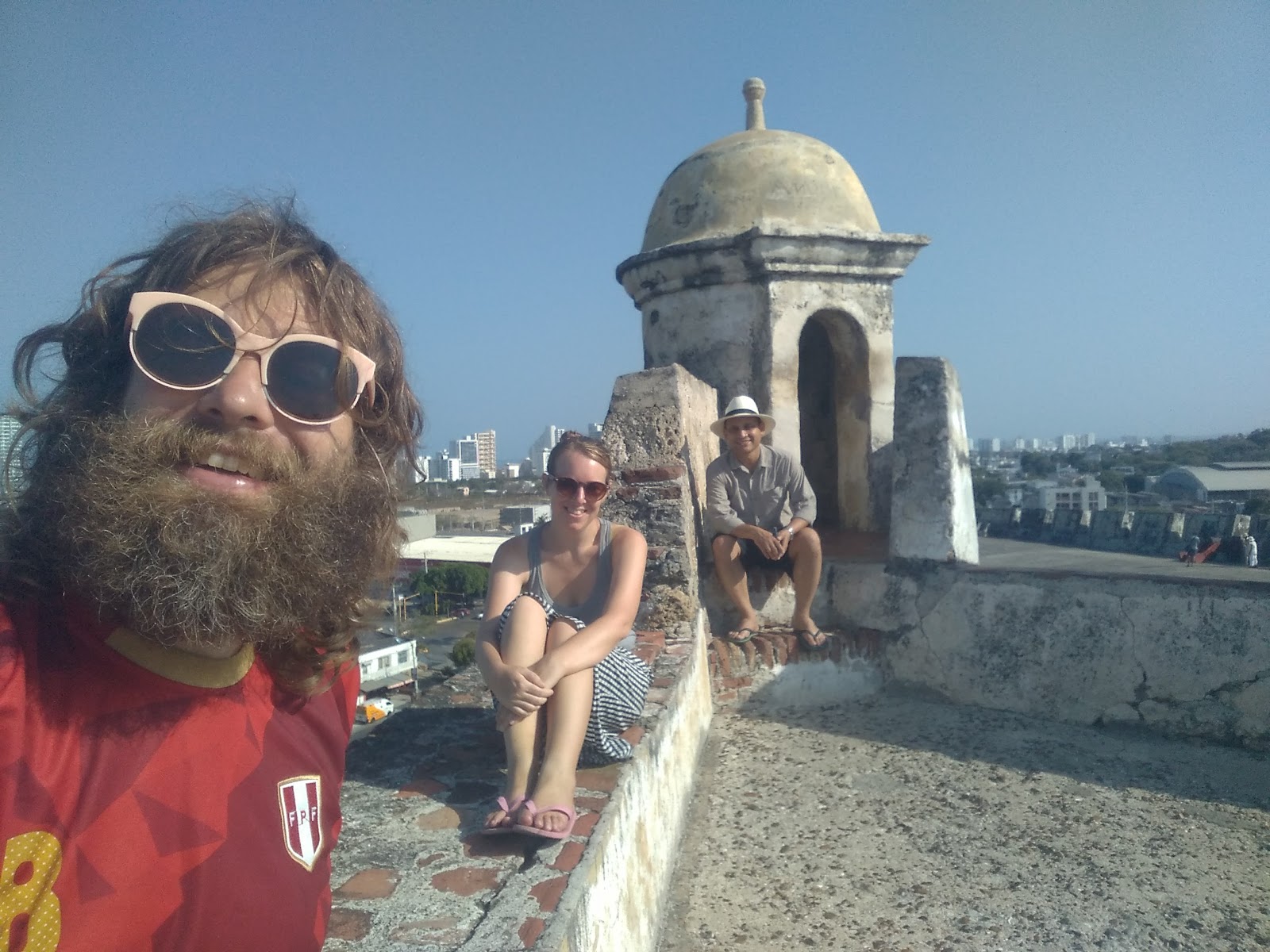
The next morning we woke early and went straight to Castillo San Felipe.  It seemed super busy the previous evening, so we'd skipped it and come back, finding it all but empty just after opening.  It was a pretty cool place, and reminded me surprisingly of the fortifications in Luxembourg city, which, though in an entirely different setting, were completed at roughly the same time and were (like the Castillo, even though Cartagena is a port city and was attacked by both the British and the French by sea) designed to defend the city from attack by land.  


We had one more short visit with the sloths and iguanas in the park before deciding to head home (via a barber where Raj had his hair cut) for a restful afternoon.  Because, of course, this was Raj's final night in Cartagena and we still had yet to put on our dancing shoes and hit the salsa club.
Most of the best known ones, even for locals, are in the old town.  We picked one out at nine o'clock. It was quiet, but looked a likely spot and had inexpensive drinks so I could take the dance instructor's advice and have a few while we waited for things to get going.

The inexpensive Colombian rum isn't quite as good or as inexpensive as the Guyanian stuff, but it was still pretty tasty and a big glass with ice came to something like four dollars, so who am I to complain?

Sarah, Raj and I all had a couple of dances with one another, and everyone managed at least one with a (presumably, given our skills) patient local partner (tip for non-dancers, Merengue is waaay easier than salsa).  But by and large we spent most of our time sitting at the bar soaking up the festive energy of the crowd (even on a Wednesday!)
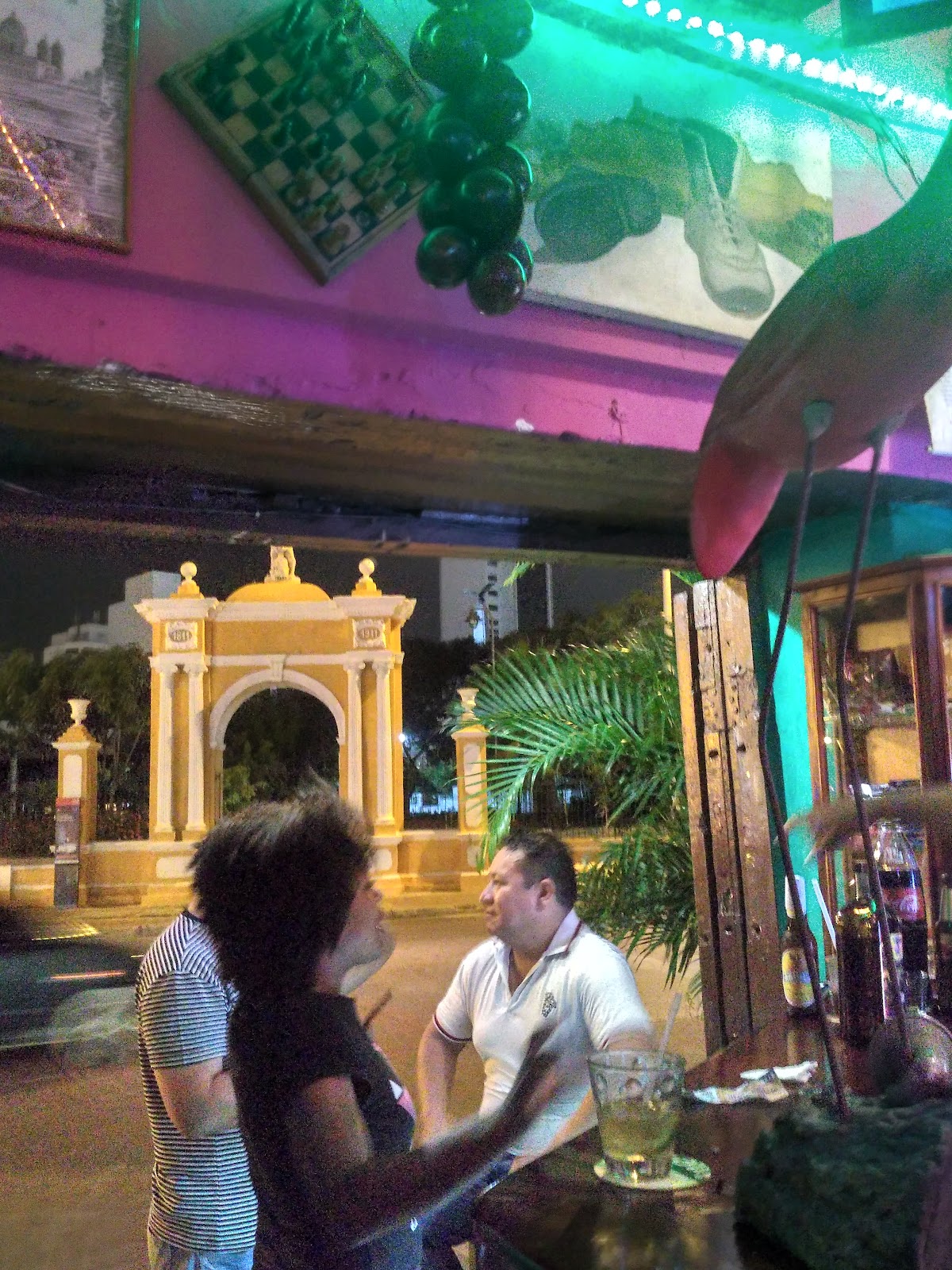


By the time we caught our taxi home we felt like we'd absorbed a good lot of Colombian culture (as well as rum) and could say our farewells the next morning with a fully satisfactory Cartagena experience behind us.

Our time with Raj was wonderfully fun.  It was great to catch up with him in person and to share our fond memories of Cartagena with him.  And of course it was all thanks to his deciding to spend his holiday with us!

Wednesday, 6 March 2019

Cafe y Cerveza y Memorias

We'd visited Medellin on our previous visit to Colombia, and it probably already ranked as our favourite city in the country.  Our second visit was very short, but it certainly cemented Medellin's place in our hearts.

We arrived early in the morning and after a walk, a metro ride (on the only subway system in Colombia) and another walk, arrived at our hostel.  We also had a wee bit of a nap before hitting the town again, this time going to the north bus station to procure tickets for our onward journey the following evening.

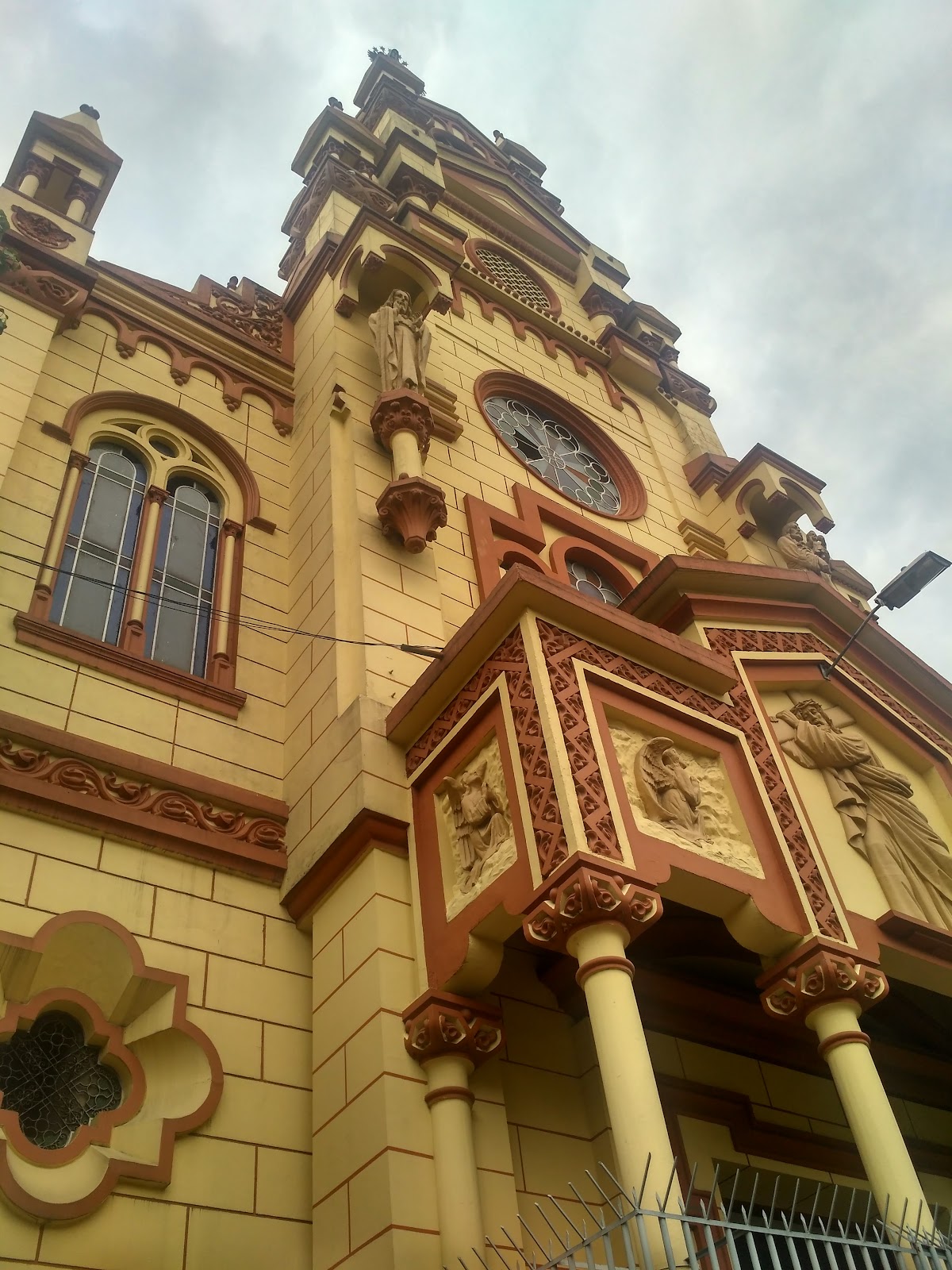
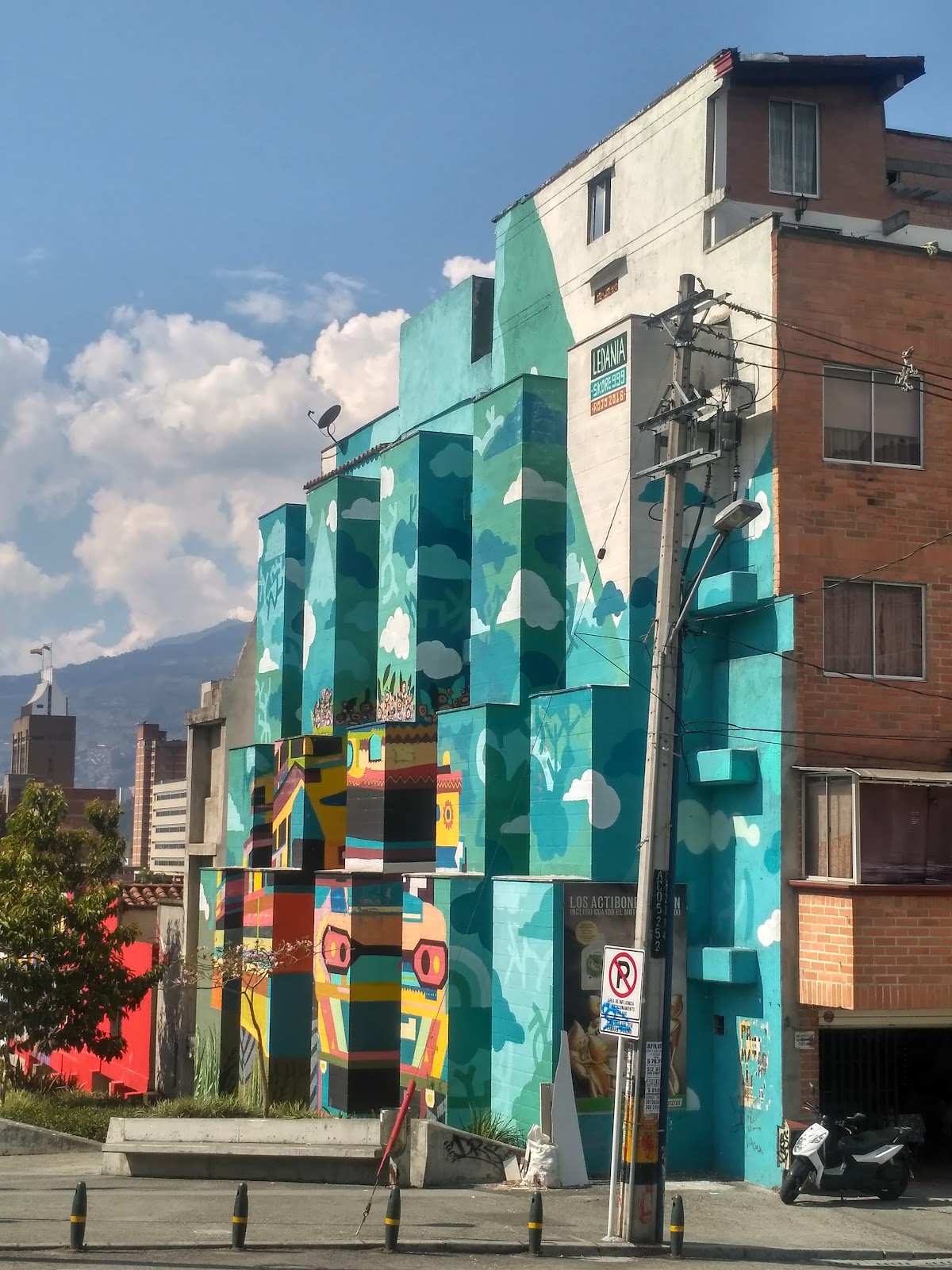
From there we recreated one of our favourite days in Medellin, walking alongside the metro tracks back into town.  We revisited the lovely botanical gardens, complete with big green land iguanas in amongst the trees. We revisited the venerable old Cemeterio San Pedro, whitewashed and filled with flowers.  We even walked down a side street to visit a particularly striking church and found ourselves having a blackberry milkshake across the street at the exact same cafe where Sarah had enjoyed one six years previously.  South American blackberries are bigger than those elsewhere and have a subtle earthy/herbaceous flavour that distinguishes them.


By the time we'd walked all the way back to our hostel, we had to almost immediately head back out again to make good on our plans for the evening.

We'd met Valentina through Couchsurfing after I'd searched for members in Medellin who had an interest in beer or brewing.  She very kindly agreed to show us around some of her favourite breweries in Medellin.

But before we even got going with the breweries we started with a couple of coffee spots.  We met Valentina, her sister Laura and her girlfriend Laura at Rituales, a cool cafe in a neighborhood that was packed full of bars, restaurants and so forth, almost all of which have sprung up in the past five years.  Sarah had a filter coffee, while I had a flat white, which was quite possibly the best coffee I've ever had in my life. And for good reason! The coffee works directly with growers in the hills outside of Medellin which, while technically part of the city, are quite separate from it, as they're poorer than the urban residents and receive pretty much no services from the municipal government.
The cafe roasts the coffee themselves and then takes it full circle by returning it to the farmers and giving them the opportunity to try the final product, a chance that almost no coffee farmers in Colombia ever get!  This means that they have the opportunity to taste the difference that different terroir, growing conditions and bean fermentation processes make, in turn giving them a better understanding of how to control, modify and improve their processes. And this higher quality coffee gets bought at a price 40% higher than the national marketing board pays, leaving everyone happy with the situation.  It was awesome that one of the company's founders took the time to explain all of this to us during our visit.


Following another cafe visit, which proved another exception to Sarah's observation that places that grow coffee (and Colombia in particular) drink lousy coffee, it was time for some beer.

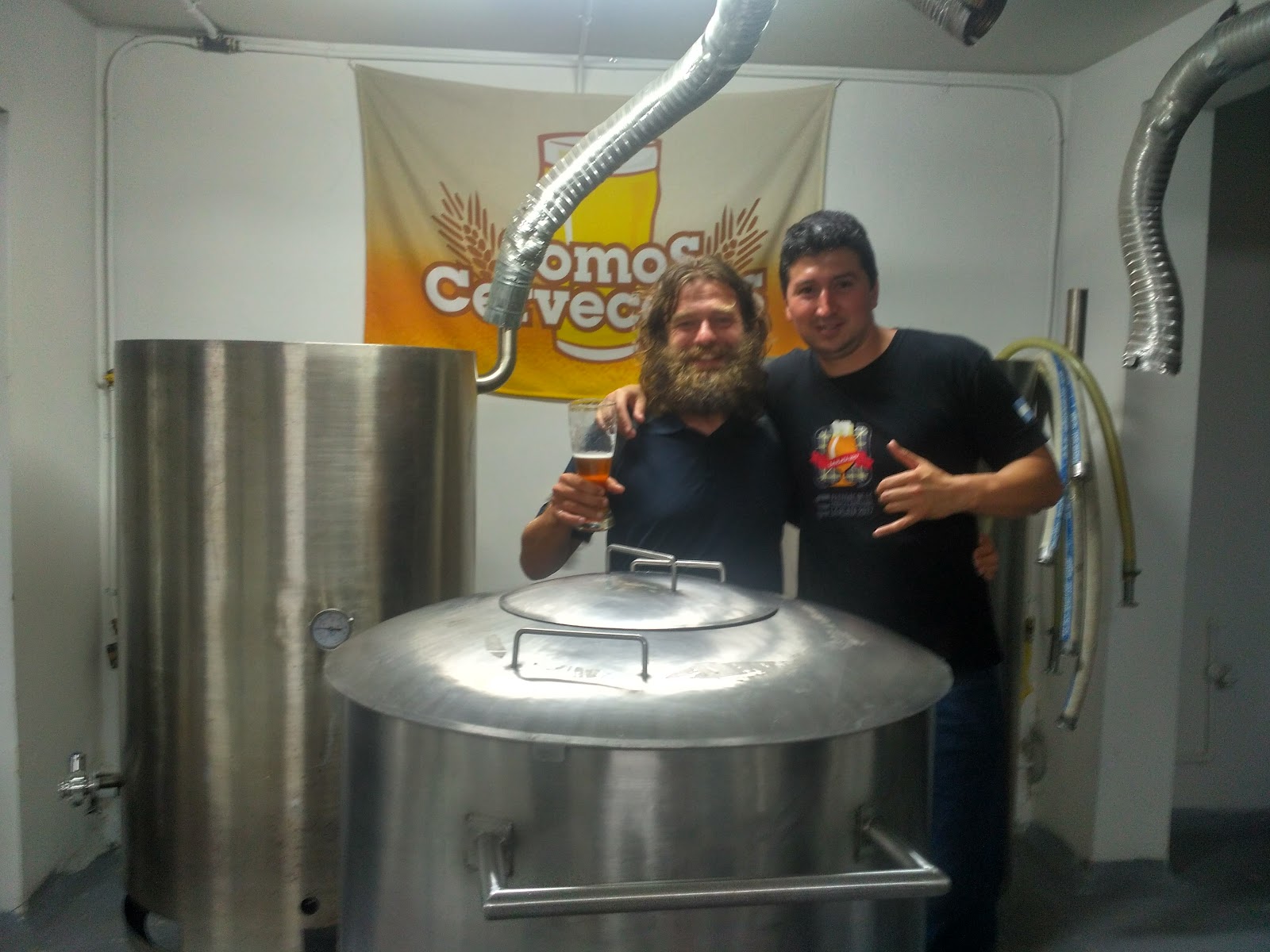
We visited two breweries, Cerveceria Libre and Madre Monte.  They were both little brewpubs serving tucked away in spots that we would've struggled to find on our own.  And I'm delighted to say that their beers were very good! Particularly memorable were the coffee stout at Libre, and the Berliner Weisse and Foreign Extra Stout at Madre Monte.  Despite the fact that it was after 22:30 at the time, the brewer at Madre Monte took the time to show us around the brewery (almost exactly the same size as Wild and Woolly had been back in NZ), and to chat about beer and brewing with me (my Spanish improved markedly with the clear context and lots of technical brewing terms that are the same as in English to draw on!)

The rest of the company was great too. We had a fabulous night out with Valentina and the Lauras, talking lots about beer and Colombia and Medellin and both her and our upcoming travel plans.


The second day of our whirlwind visit to Medellin began on a more sombre note, with a visit to the Museum of Memories, which documented and provided, if not closure, then at least sombre commemoration of Medellin's dark recent past.
I was familiar with the violence that racked the city when the drug cartels controlled the city, locked in a war with the government and justice system.  But I knew less about the times surrounding this, when Medellin was at inthe centre of mass migrations, and right wing groups sought to stem this tide by murder and arson, especially directed at the city's growing black population.  Nor did I realize how central a role Medellin played in the years-long war between the government, the conservative paramilitaries, the left wing guerillas and those who simply wanted a fairer, more equal society. The stories ofbsome of the hundreds (thousands?) of social justice activists and “communist sympathisers” who were disappeared or murdered were particularly poignant.

The museum was very well designed and presented but, unsurprisingly, left us feeling a bit melancholy following our visit.

We'd originally planned some specific activities for the afternoon, but decided that we'd just spend it walking down the vibrant corridor of the new LRT line and around the city's heart at Botero Plaza once we reached its end.

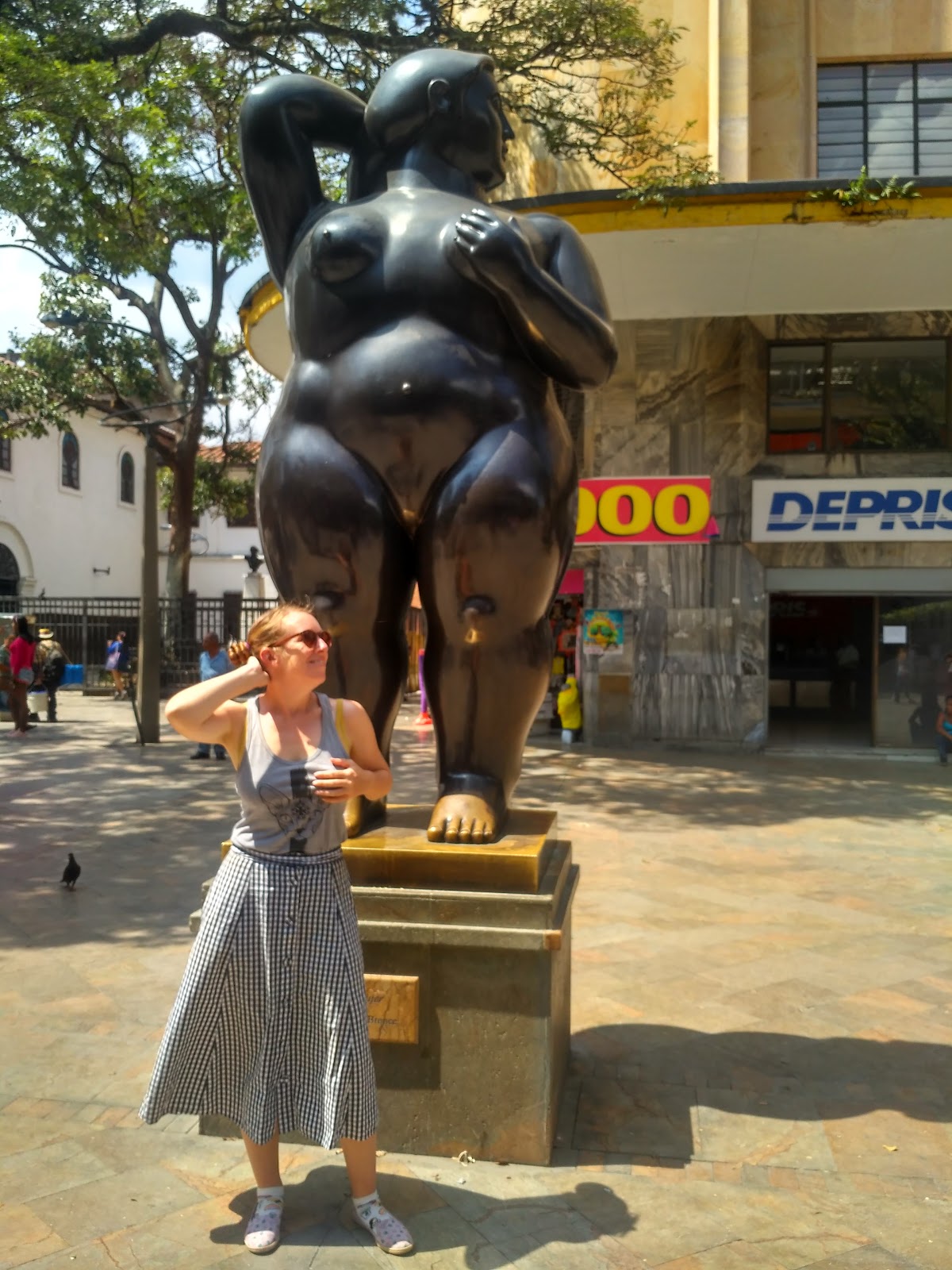
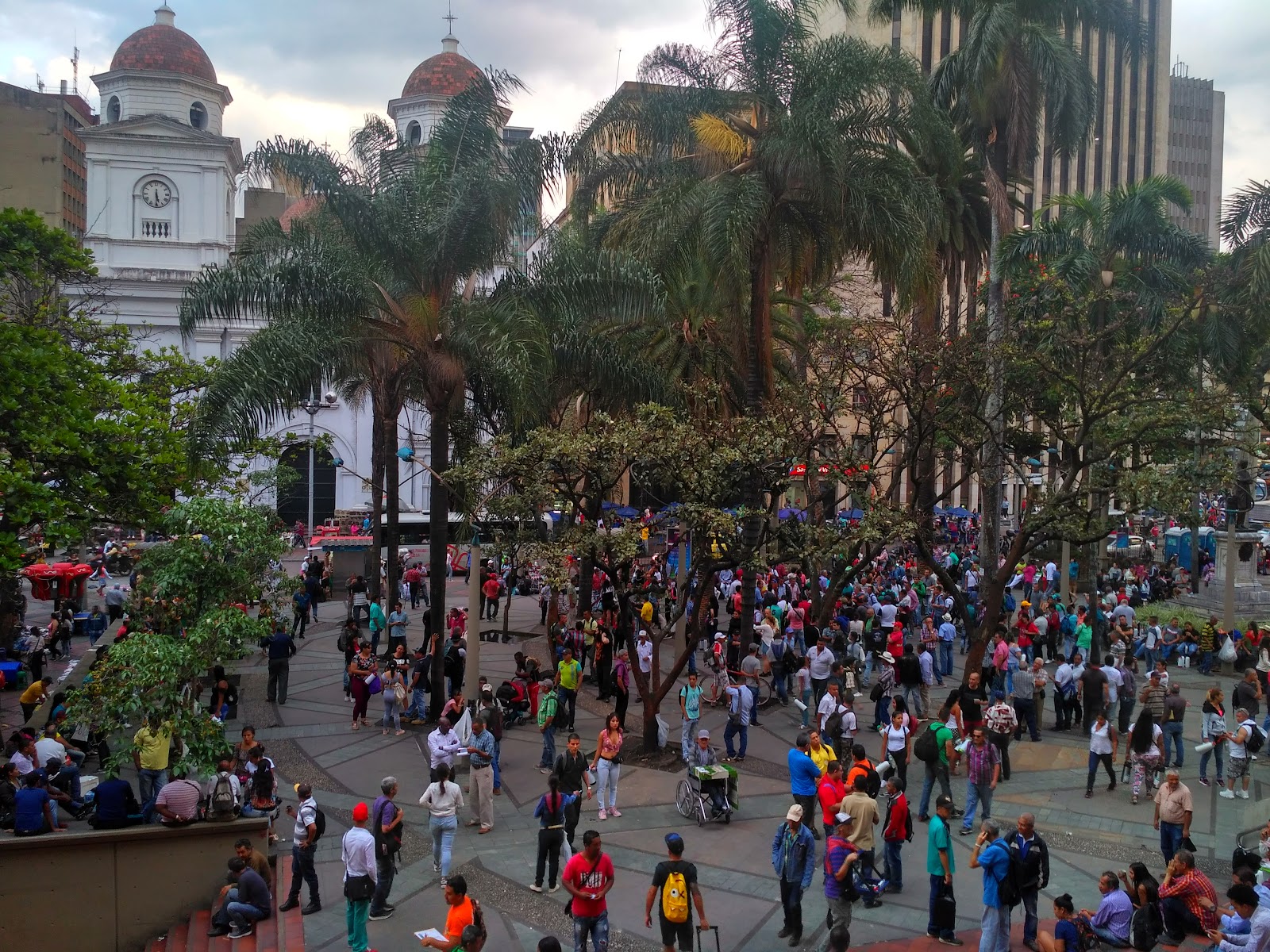
As an illustration of how Medellin has become safer (or at the very least more tourist friendly) you need look no further.  Just six years earlier, the square had seemed, if not precisely dangerous then at least pretty seedy and not the kind of place I'd want to hang around at night.  Now it was packed with visitors and locals enjoying a sunny afternoon and posing for photos with the many statues by the square's namesake artist.


The street with the LRT was also very pleasant to walk up and down.  It's entirely free of traffic (save for the trams of course) and full of pedestrians browsing a wide variety of businesses, including a fancy little dining district that was kind of reminiscent of the little court that Auckland bar Lovebucket sits at the back of.

And to top it all off we had lunch on the large patio of a bustling little restaurant which served perhaps our favourite meal in Colombia, with vegetarian soup, lots of salad, memorable aji (chili) sauce and delicious spicy beans accompanying our mains.


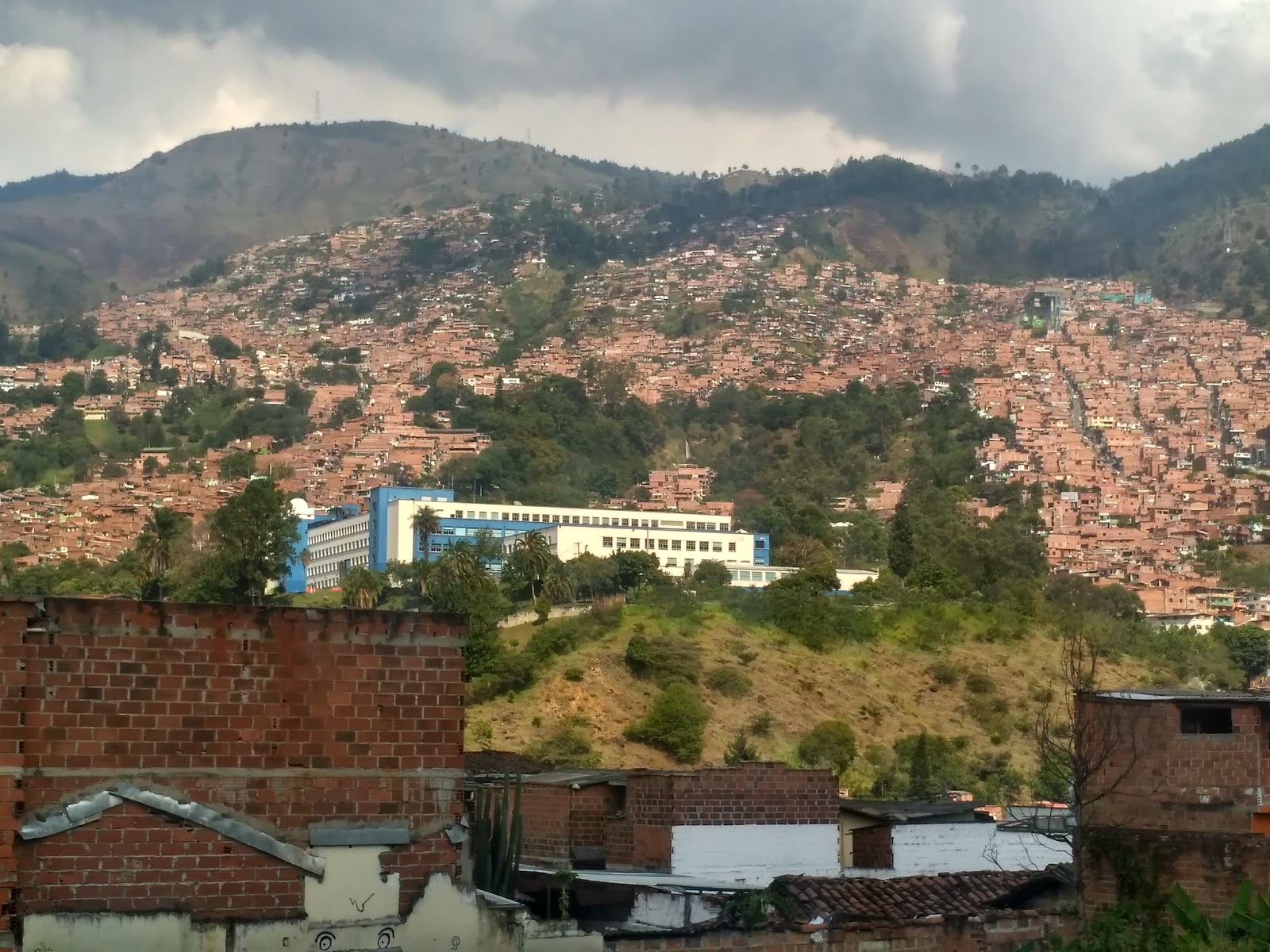
From there we rolled back down the hill to the metro and up to the northern bus station.  As the sun went down the lights came on in the neighbourhoods clinging to the sides of the valley high above central Medellin, looking like thousands of brilliant stars sending us on our way.

It was, I suppose, a little downhill from there.  A thirteen-hour overnight bus journey is downhill from most places.  But our time in Medellin had left about as happy as could be and excited for our trip up to the Caribbean coast.


Thursday, 21 February 2019

Blanco y Negro y Blanco

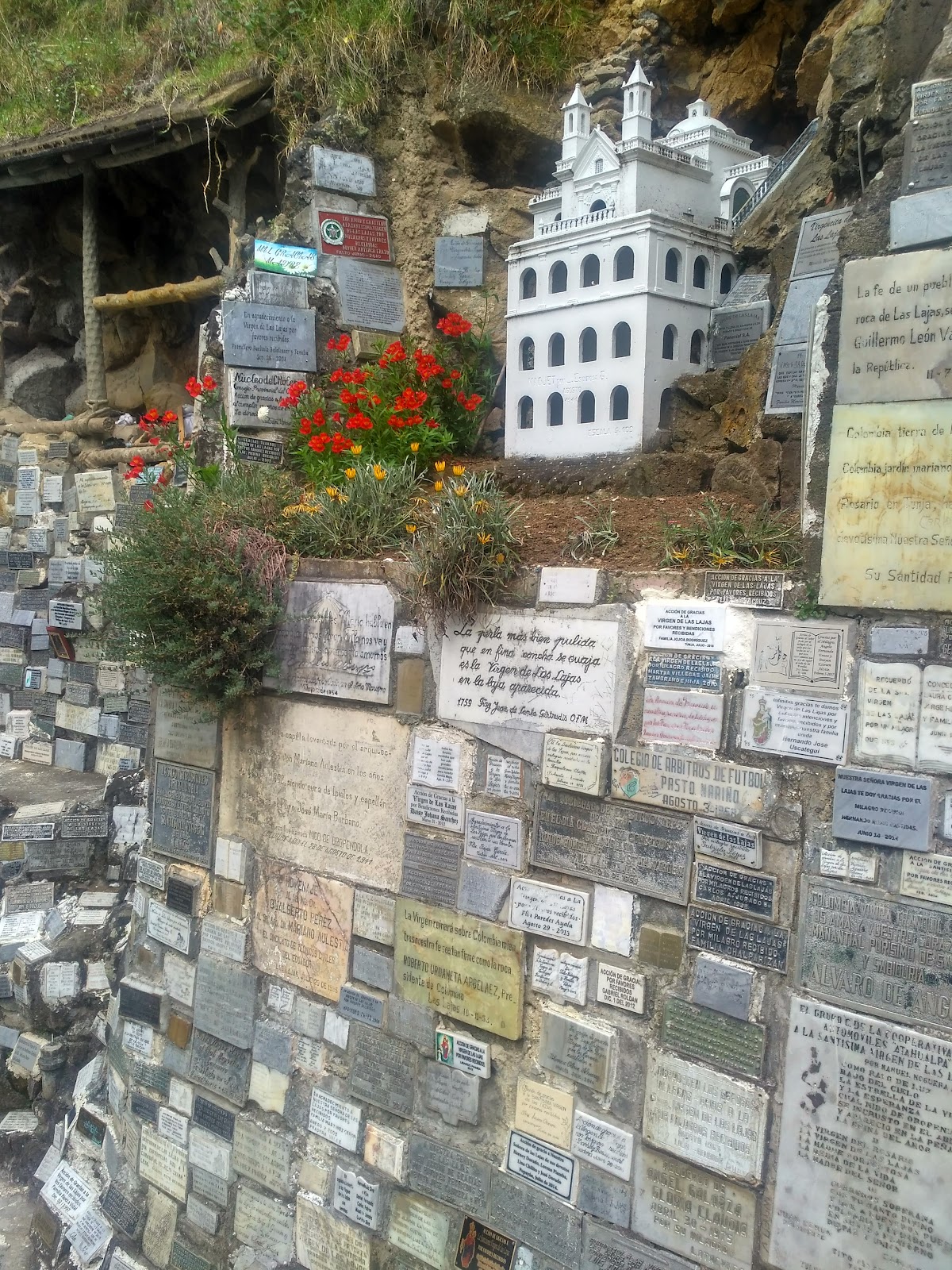
For Sarah's birthday Colombia put on quite a show for us.  It started with a quick visit from Ipiales to the Santuario de las Lajas, a spectacularly sited church in a narrow ravine a few kilometres away from town.

We knew it would be busy.  It's a major tourism and pilgrimage site for Colombians, but still weren't quite prepared for the long, winding road down to the church, lined fully on both side with souvenir shops and restaurants.  But despite the tourist focus and the crowds of Colombian tourists, it was well worth the visit. The church, built in 1958 on the site of a two centuries old shrine was pretty darned impressive.


Though that was only the first bit of a long and fabulous (birth)day.  From Ipiales we travelled three hours north by bus to the city of Pasto.  Given that it was the weekend of the region's biggest festival of the year we'd expected some trouble finding a room, but fully half of the hotels had space and we quickly found one with an adequate combination of low price and comfiness.

On our way up to Pasto we'd seen some of the neon coloured floats that are (one of) the highlights of the Carnival Blanco y Negro.

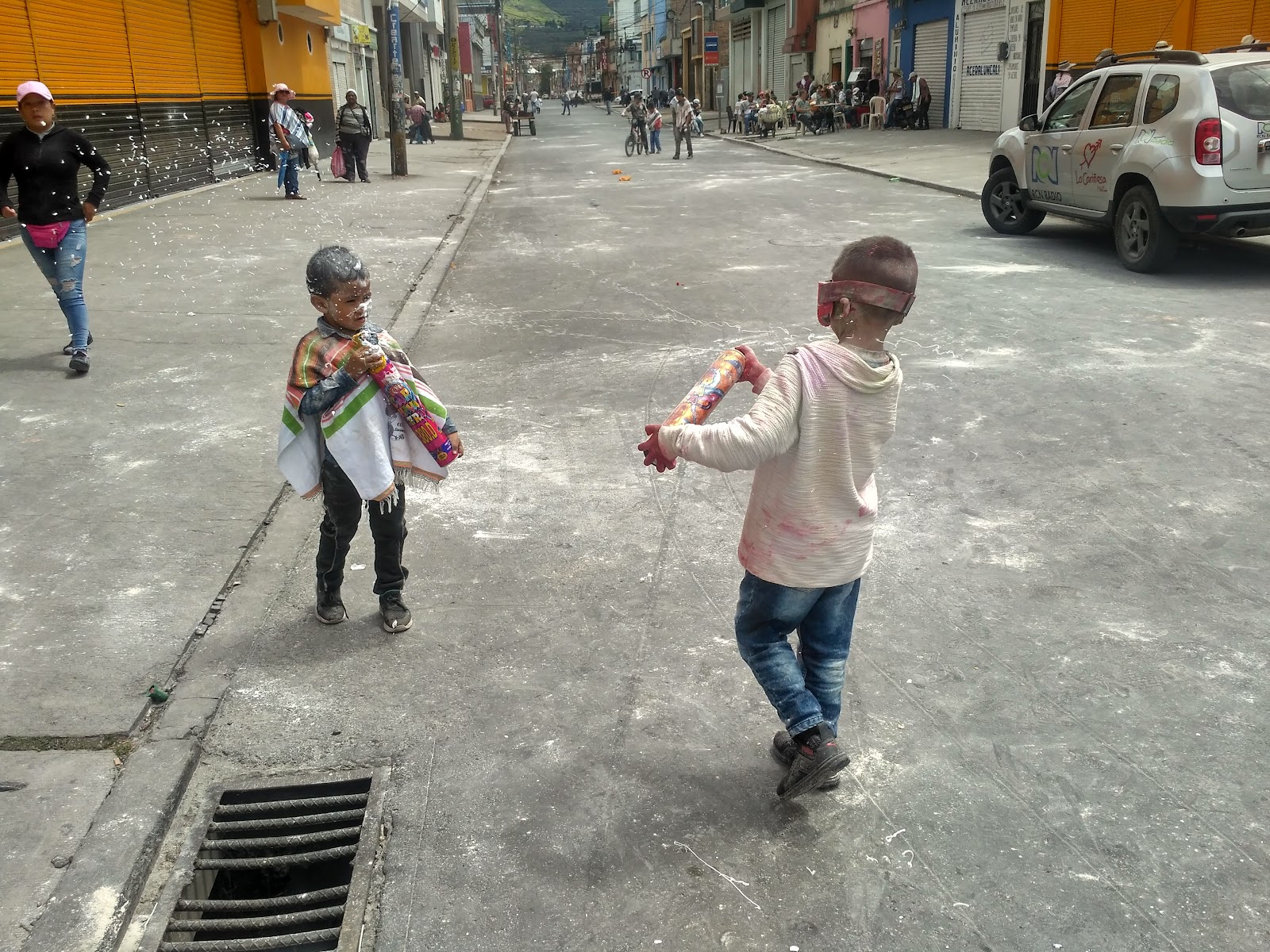
Originally a post-abolition celebration of unity, the highlights of the week long carnival are two days when the inhabitants of Pasto (not to mention heaps of visitors!) paint themselves and everyone around them first black and then white. Kind of like a monochrome version of the Hindu celebration of Holi.

We had missed out on the black day, but were in plenty of time for the white day parade, the very pinacle of the celebration.  As we made our way into the city centre and even at the beginning saw kids spraying one another with white foam (from 750ml aerosol cans specifically branded for the event) and exchanging handfuls of white talcum powder.


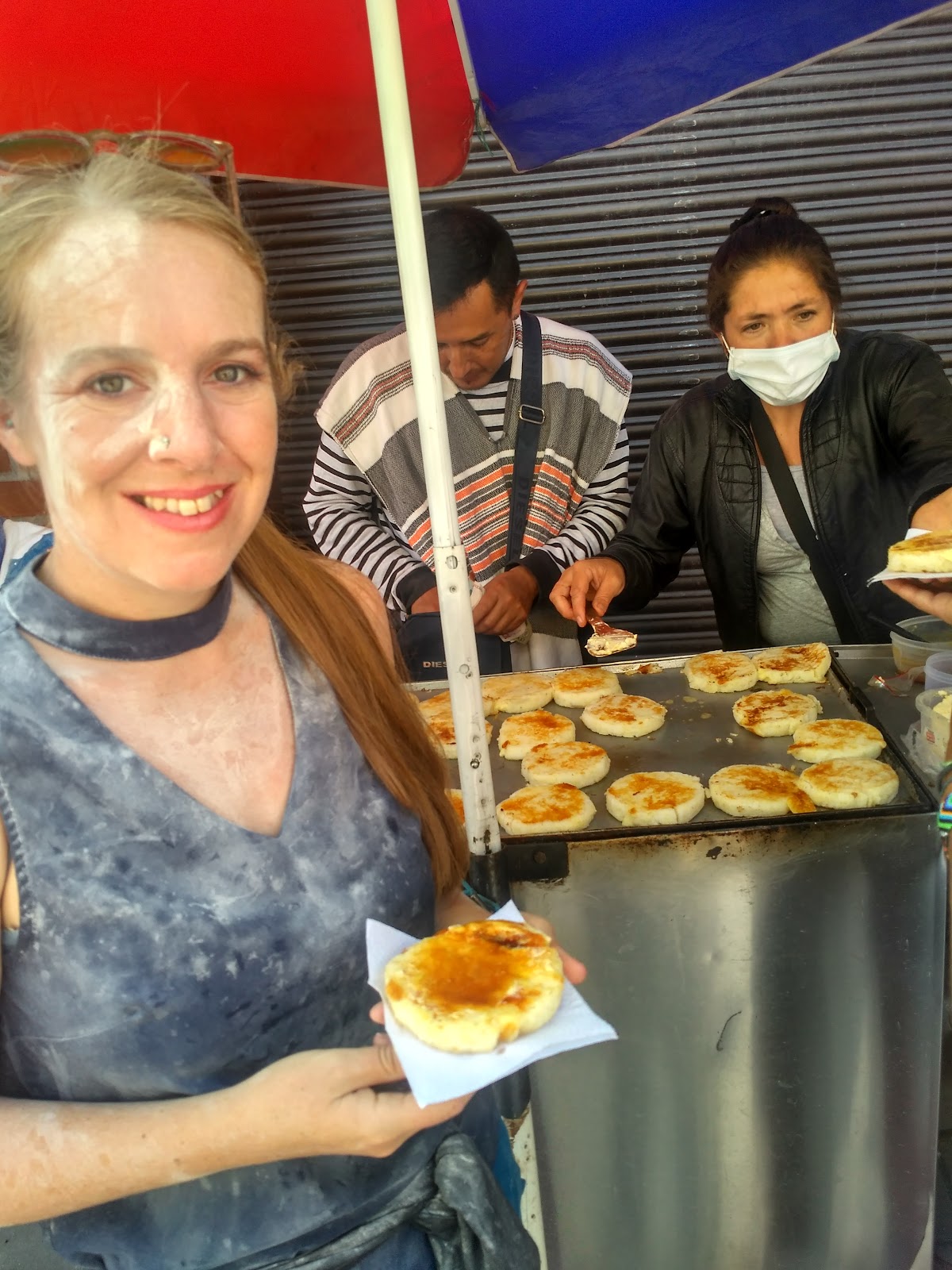
At the parade route itself we enjoyed watching the floats from afar and got into the action ourselves, being lightly dosed with white by a few bystanders.  We spent the next hour or so following the parade on a parallel route, ducking in to meet it now and then, eating some delicious cheesy arepas (basically thick corn and cheese pancakes) while the fun grew thicker around us.


At our final stop, near the parade's end, the views of the floats were great, Sarah got to.try on some of the participants’ costumes and we purchased several beers (also, inquired about, but decided against purchasing a bottle of rum or aguardiente).  As the parade came to its climax people warned of of the mayhem to come. “People go crazy with the powder when the parade finishes,” they warned us.

Go crazy they did.  The parade and floats had been great, but paled in comparison to the fun we had on the way home.  Sarah and I wandered back home through busy streets and squares that were absolutely chocka. At each square we were searched by (very efficient and professional) police before joining the throngs listening to the salsa, rock and Colombian folk tunes from stages that seemed to grow larger and larger as we continued our walk.


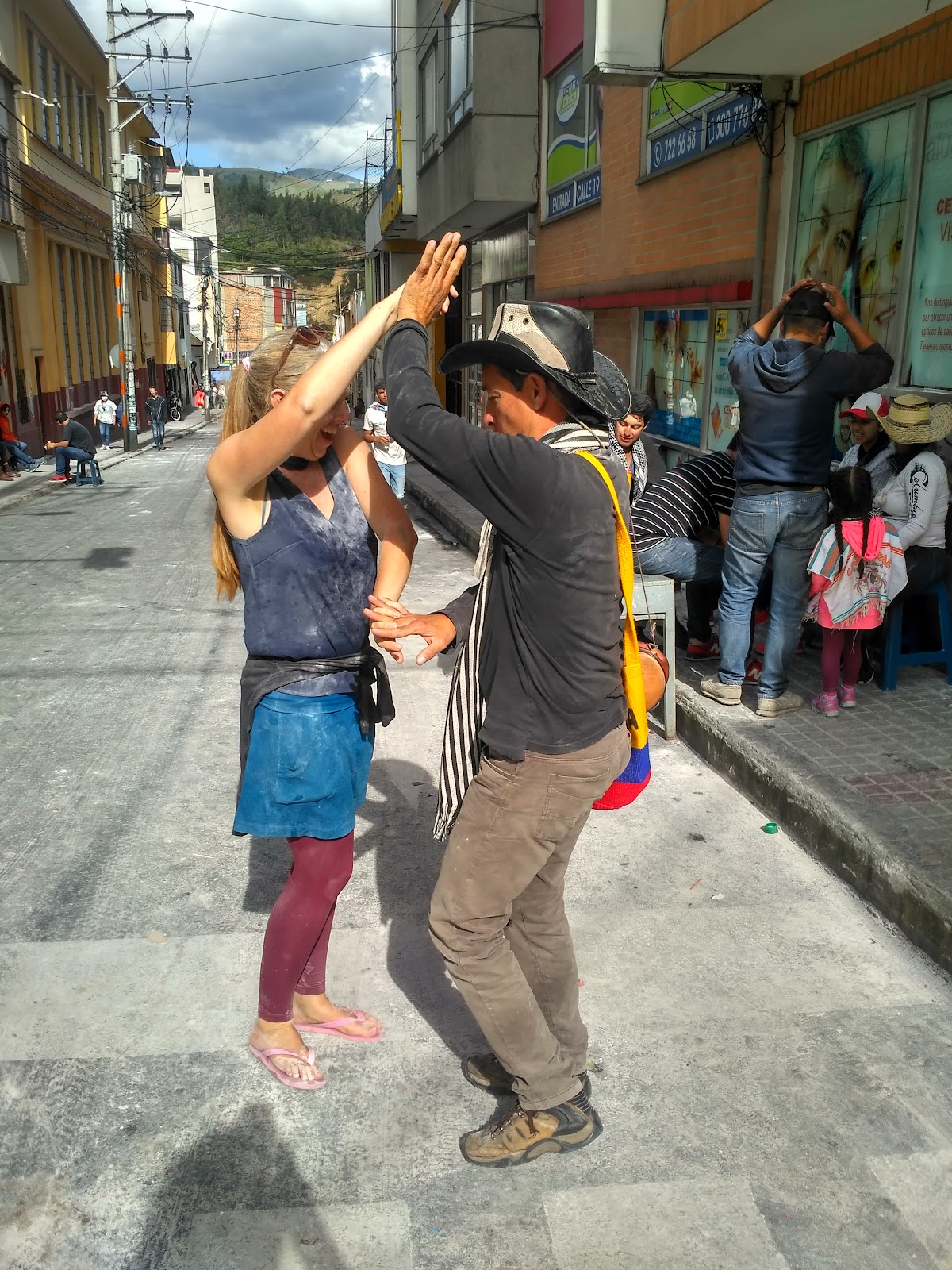
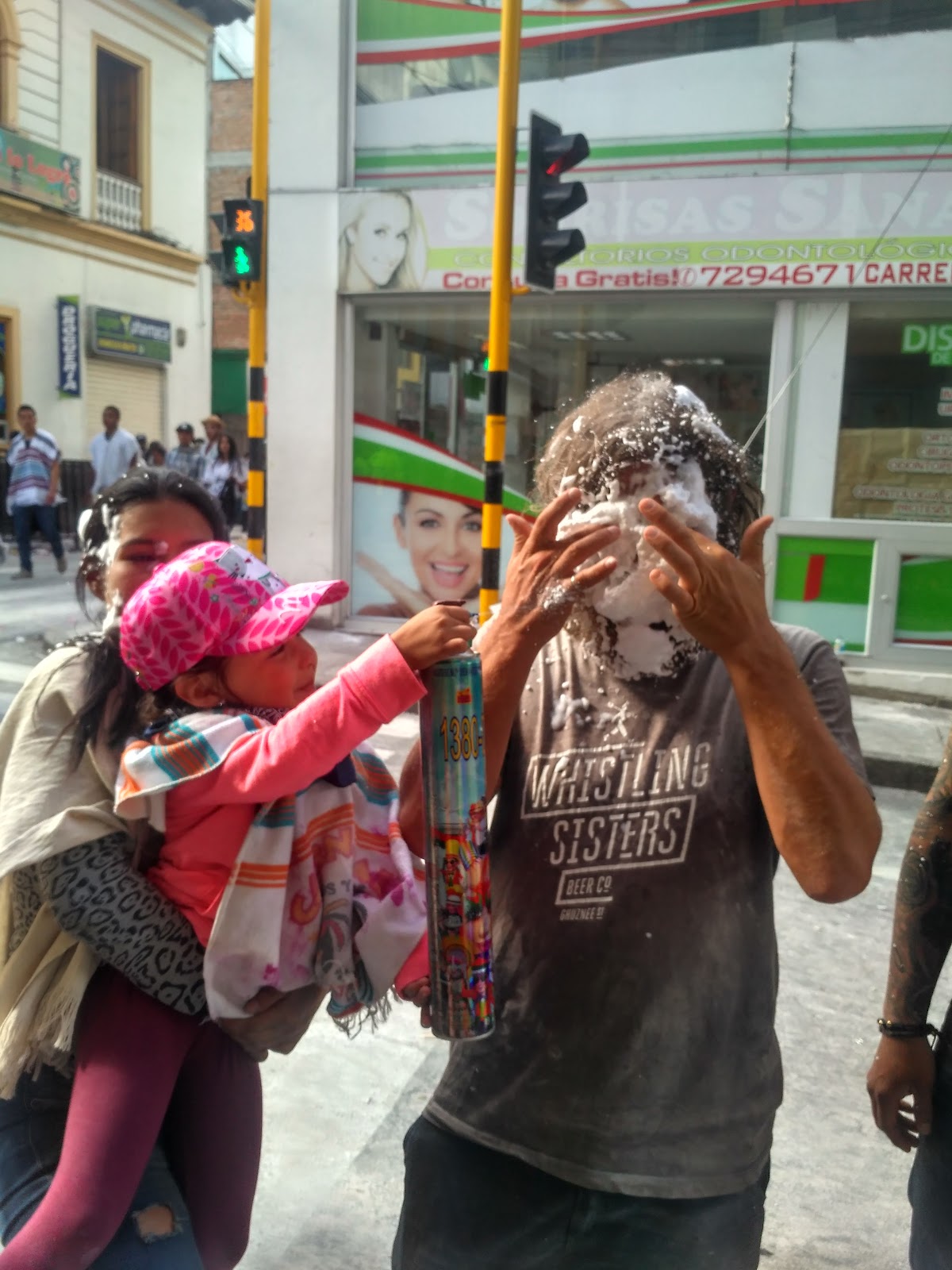
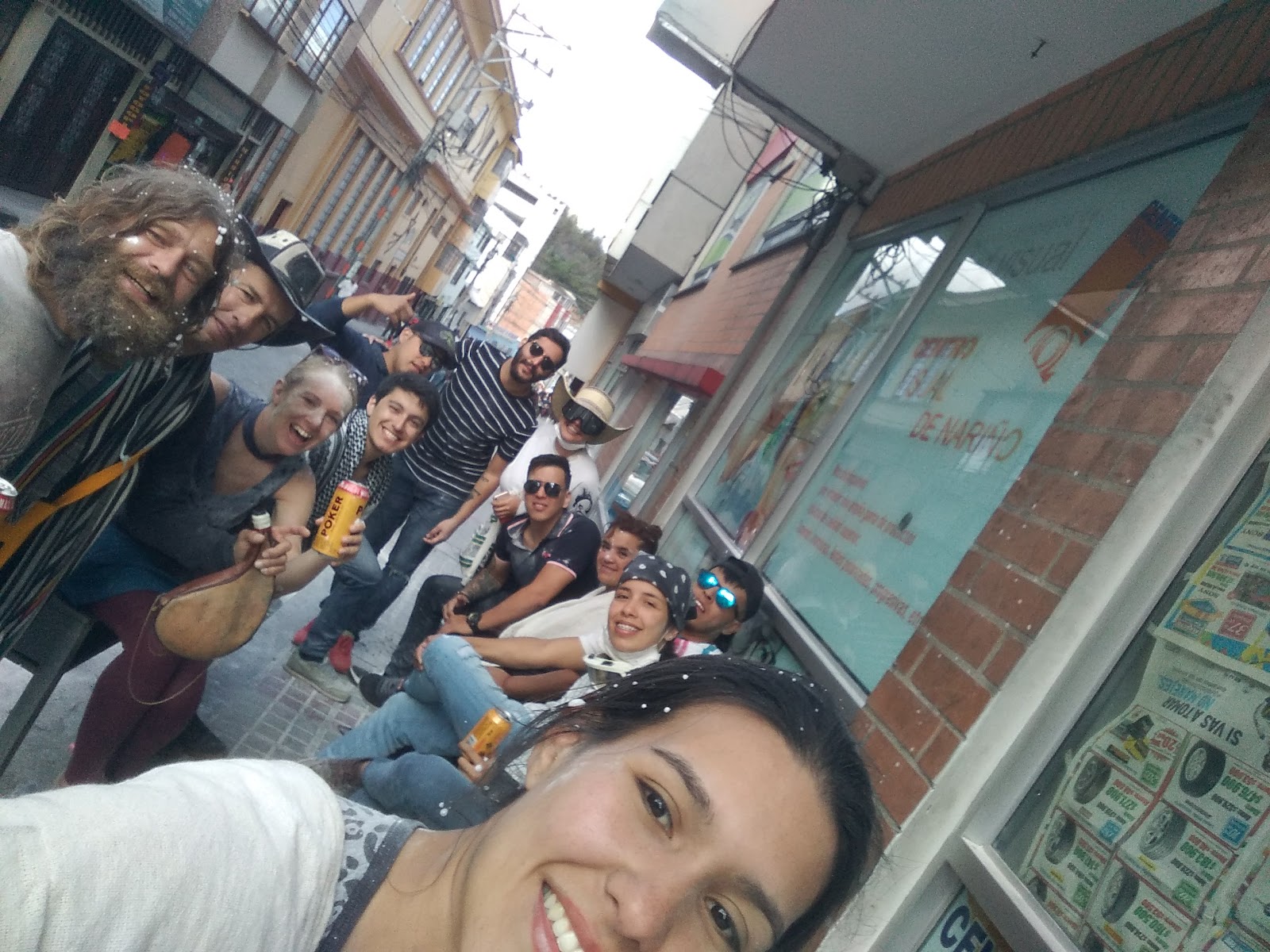
On the way we also stopped to join the fiesta with a few crews of Colombians who bade us join them.  With the most memorable of these Sarah and I danced salsa (respectively) with an uncle and niece from Bogota, I was throughly doused in foam by a four year old grand-niece and we had copious quantities of rum poured down our throats from a wineskin.  It was all we could do to extract ourselves before the minimum twelve PM deadline our new friends set us for parting from their dancing throng.


Our final stop on the way home was in the biggest and wildest square of them all.  We drank more beers, jammed to the tunes of the live bands, were thoroughly caked in talc, paid the extortionate NZ0.75 fees to use porta-loos, ate pancakes and sausages and arepas, paid the even more extortionate NZ6.00 fee to use an ATM, saw the sunset, and carried on dancing with the crowds until (not actually THAT) much later.

The whole experience was wild, manic, vibrant and entirely good spirited.  Ourselves and our clothes were completely covered in talc and weren't fully rid of it until multiple washings later.  


The next morning we joined a decidedly worse-for-wear crowd at the bus station as we drank (sweet, not that fabulous coffee), ate traditional Colombian breakfasts and bought tickets northbound to the city of Popayan, Colombia's second most renowned city of colonial history and known as Ciudad Blanco (White City).

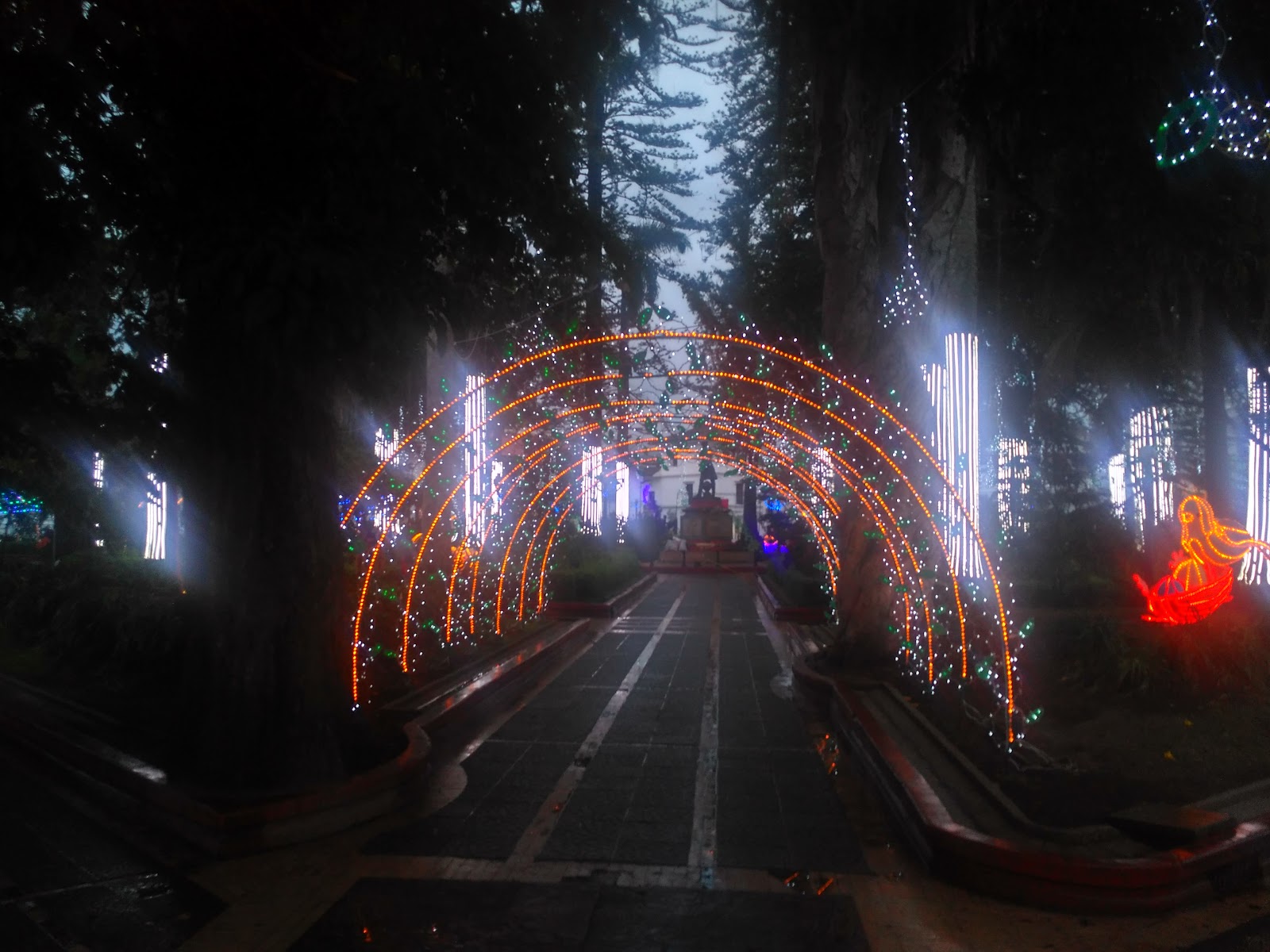
We ended up staying just outside the old town, so I went out for a walk in the drizzle to check it out as afternoon turned to evening.  I managed to find several fun displays of Christmas lights all over town, and had dinner with police officers and street cleaners at an impromptu restaurant run by two women out of a shopping cart.  But when it came to finding something to take home to Sarah, absolutely every shop and restaurant seemed to have closed.


It was only by getting lost (and slightly nervous for my safety given the emptiness of the city) and walking home along a busy suburban street that I managed to locate Popayan businesses that stayed open past 19:00 on a Wednesday.

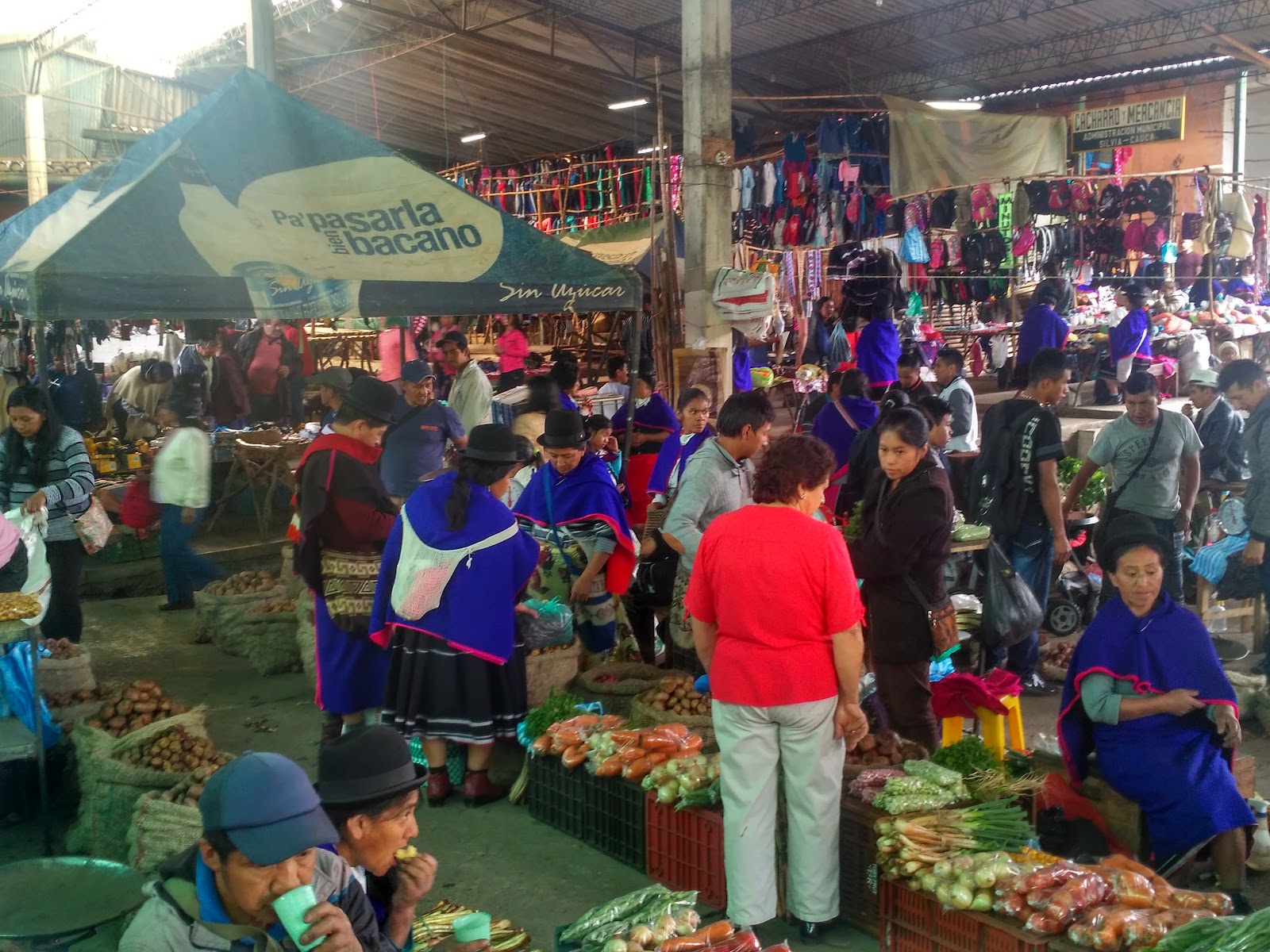
The next day Sarah was feeling a bit blah as a combined result of a cold, lingering effects of her wisdom tooth surgery and lingering post birthday party effects.  So I headed on my own to market day in the town of Silvia, an hour's bus ride from Popayan.

Silvia is where everyone from the adjacent Guambiano indigenous villages comes once a week to trade and sell their wares.  Traditional Guambiano clothing is very striking, combining a vivid indigo skirt with a black shawl, reversed to black three quarter length pants and an indigo vest for the men and topped off for both with a stylish narrow-brimmed black hat.


I wandered around the square outside and the market hall itself.  The wares were generally standard day-to-day food and hardware with a few fun additions: big blocks of panela (dark, molassesy flavoured sugar), hats (of course), and bunches of obscure looking medicinal herbs and salves.  Before heading back to Popayan I had a fabulous lunch of fried pork (basically super thick bacon), beans, salad, rice, soup and juice.


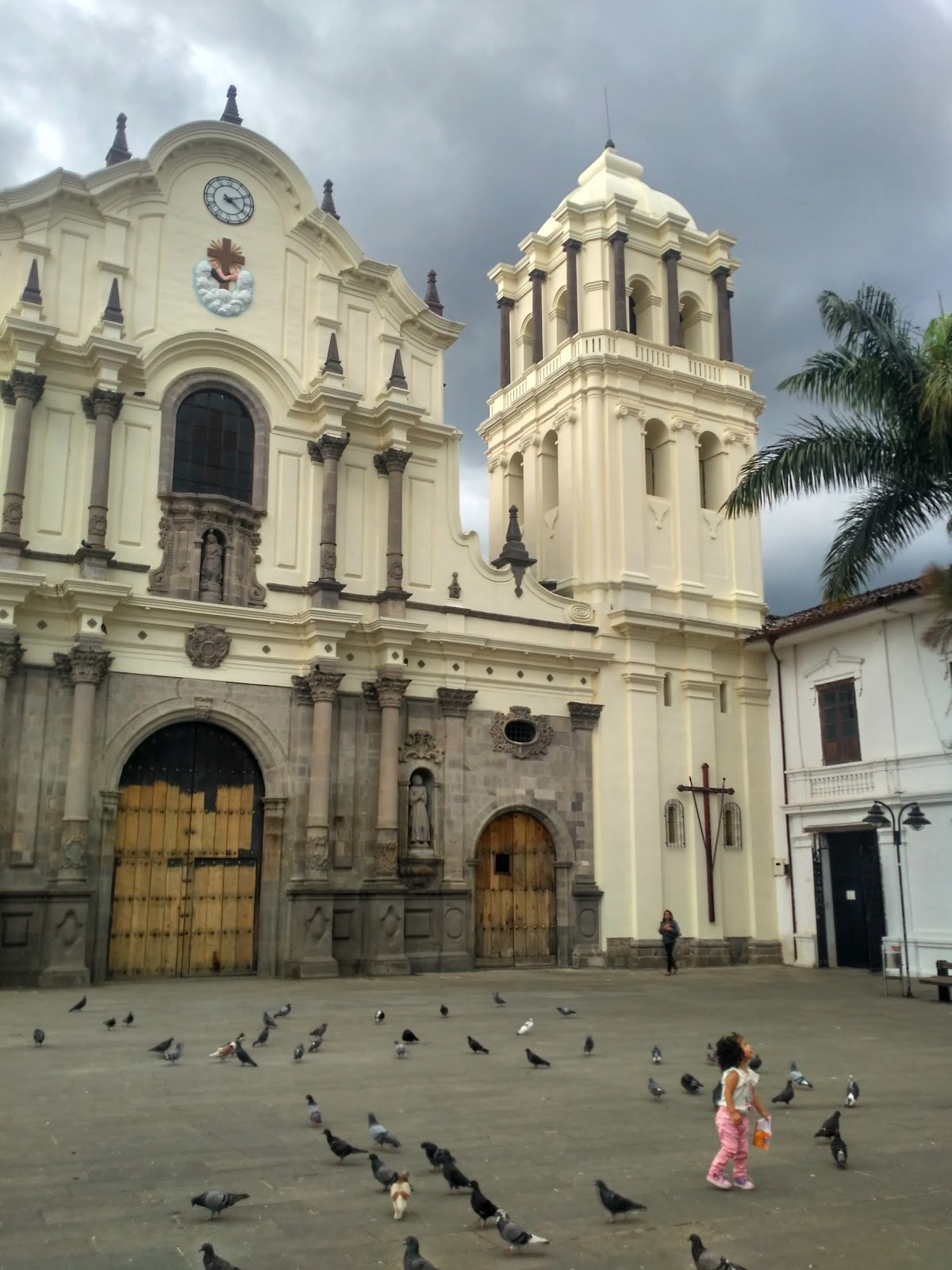
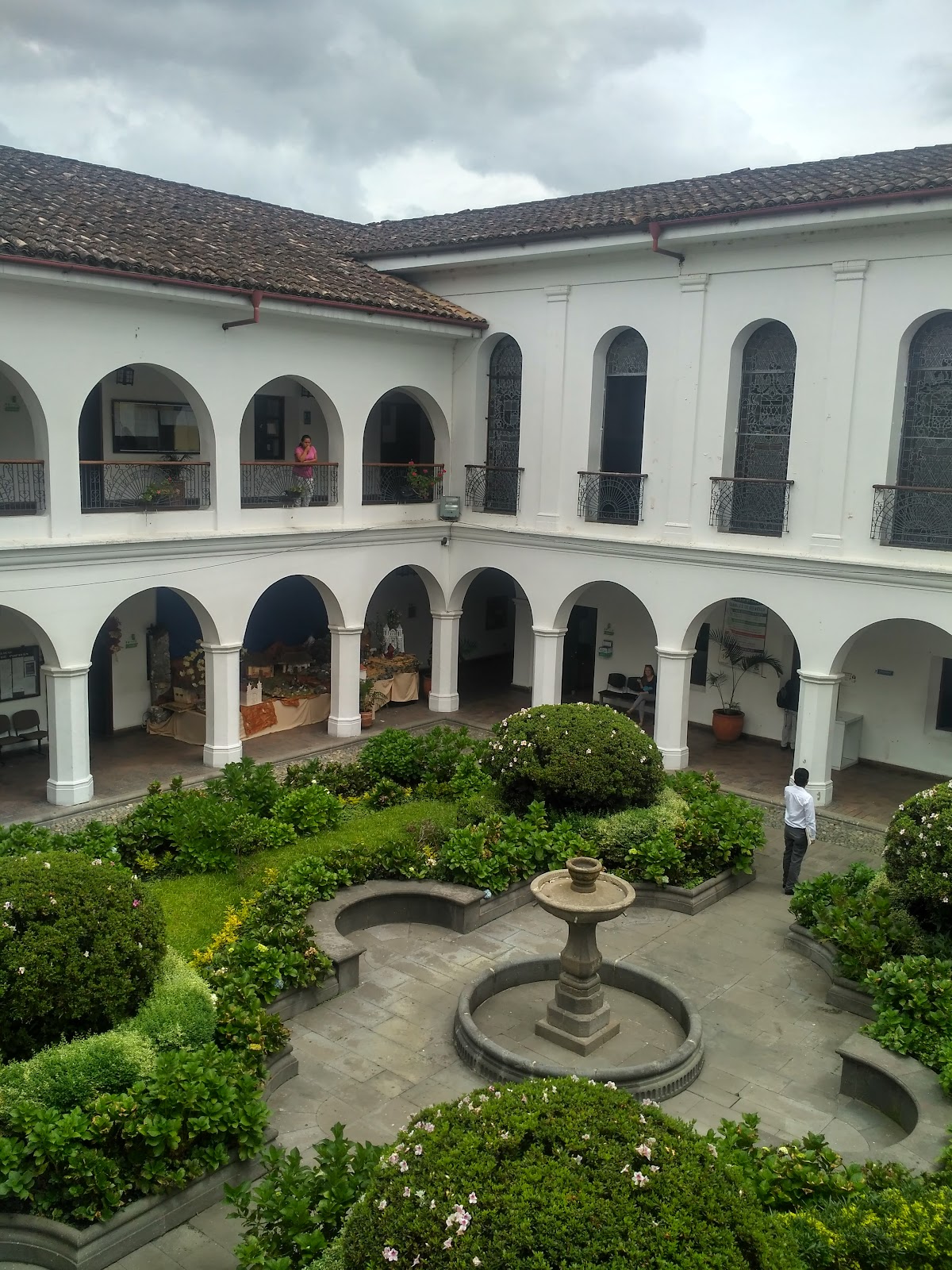
Our visit to Popayan concluded with (finally!) a nice daytime exploration of the city's old town.  It included lots of wandering around the beautiful whitewashed buildings, a climb up a nearby hill to enjoy views out over the city's tiled rooftops and a wander through the absolutely lovely town hall, which consisted of four or five of the grander old courtyard homes amalgamated into one pretty (if slightly labyrinthine) complex.  In the Popayan market
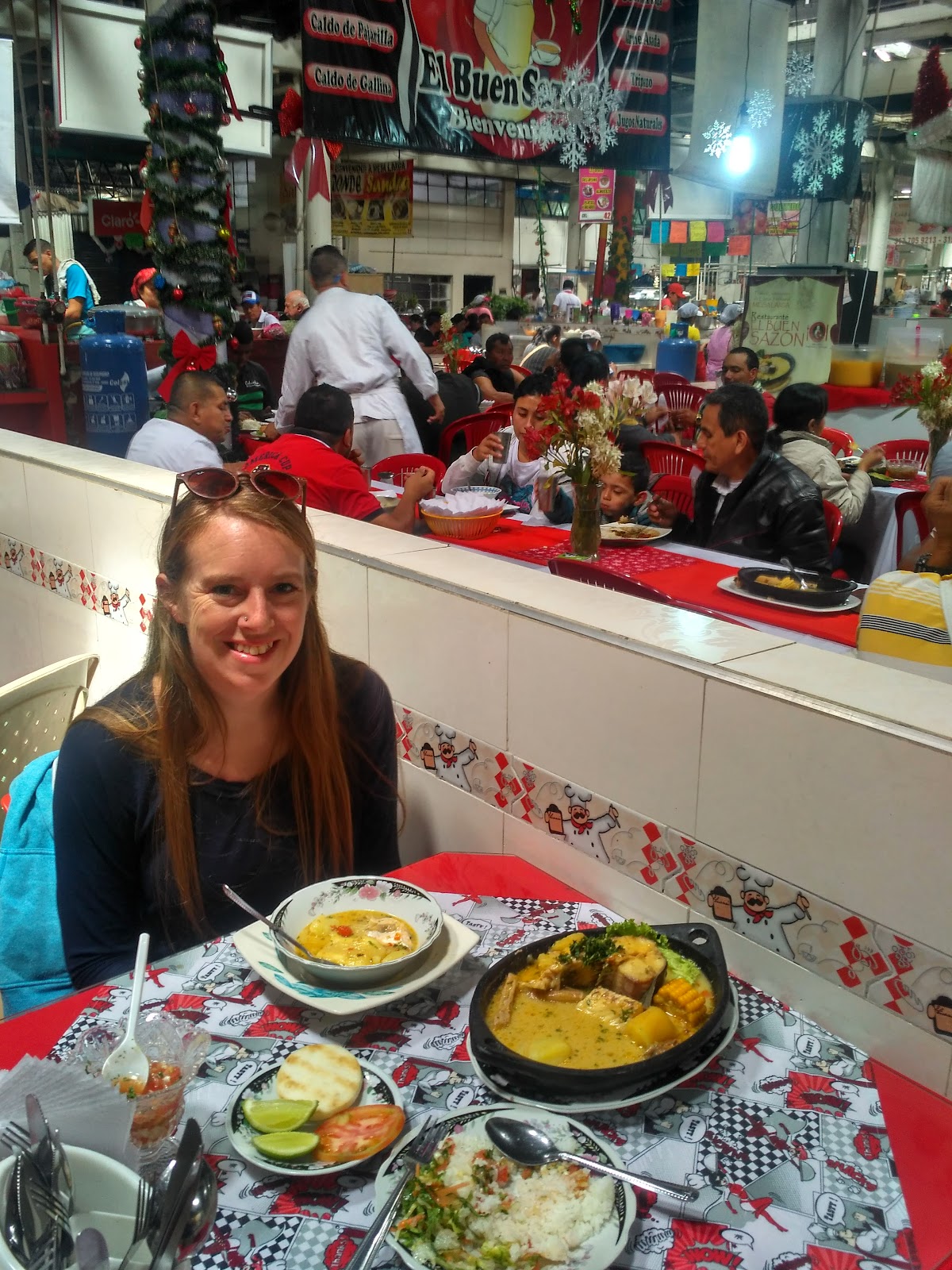
we had a spectacular late lunch of fish stew, which may even have eclipsed my previous day's in Silvia.  It was slightly muddy tasting river fish, but seasoned fabulously, with one portion plus included sides being more than enough for two.


We concluded with a shopping trip for some bus snacks before heading to the station to wait out our final couple of hours before departing on an overnight journey to Medellin.

One very notable memory of the wait was the arepa vendor on a bicycle who seemed to be circling our location, his recorded sales pitch blaring “arepas de choclo! Arepas de choclo! Bien caliente, Arepas de choclo!”. Maybe you had to be there, but so irritating was it that I have scarcely ever been more relieved to be starting an overnight bus journey.