Showing posts with label Albania. Show all posts

Wednesday, 11 September 2019

Grey Lorries Transporting Electricity

After saying farewell to the spectacular Accursed Mountains we spent a further six days in Albania.  The other tourist highlights of Albania are mostly concentrated in the southern coast, which apparently has spectacular beaches, more rugged mountains and sprawling towns full of highrise hotels geared towards mass tourism.

Seeing as it was now July and really starting to get to the pointy end of the busy season, seeing as we'd found the Montenegrin Riviera pretty uninspiring despite it's lovely natural surroundings and finally, seeing as it's a minimum eight hour bus trip to get there from our starting point in Shkoder, we decided to skip this area and concentrate our time in the centre and north of the country.

This was both good and bad.  With two exceptions there really wasn't anything particularly remarkable to see or do in this part of the country.  But it was nice to slow down the pace a bit and see the parts of Albania that were still only lightly affected by foreign tourism. 

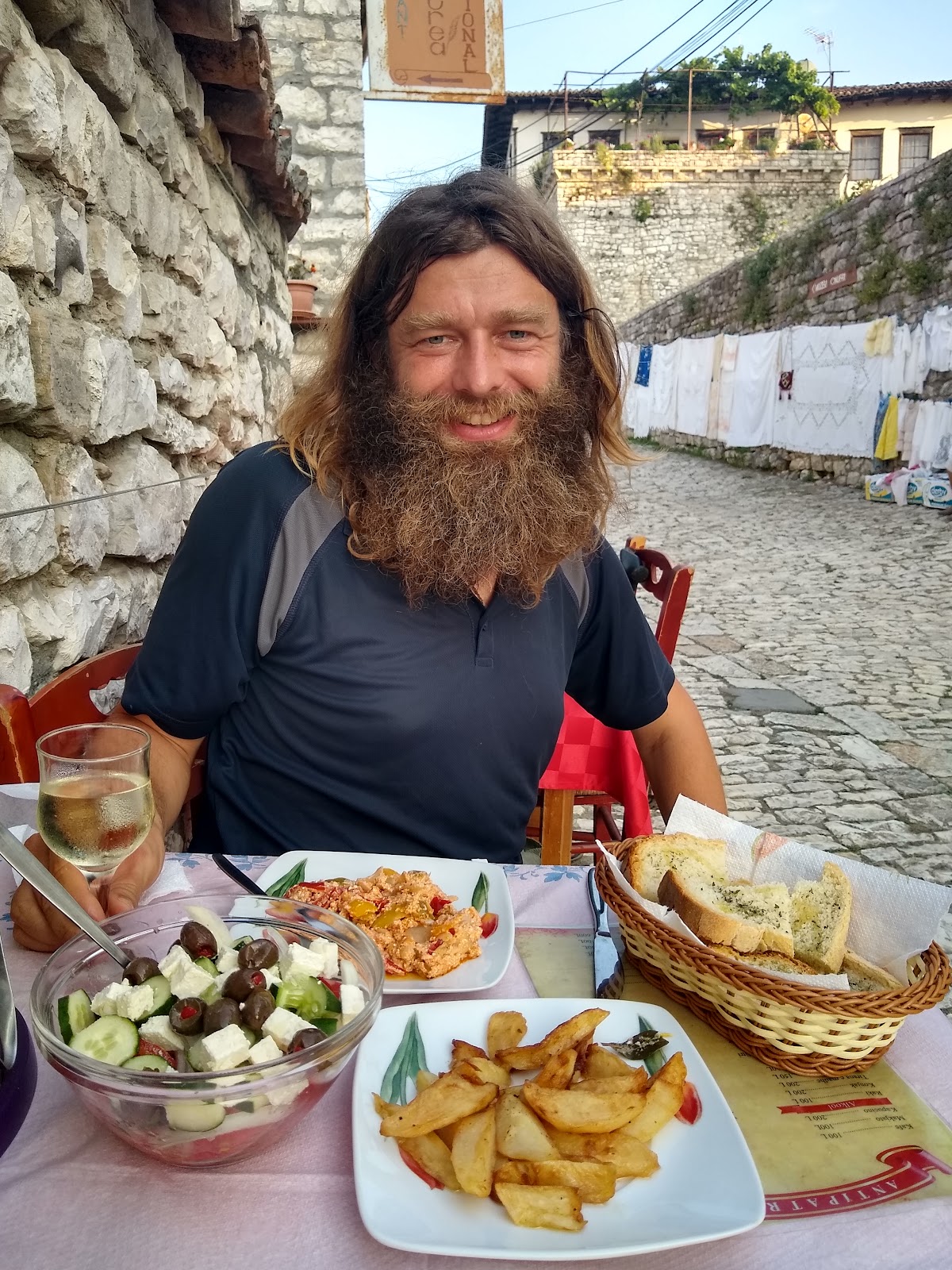
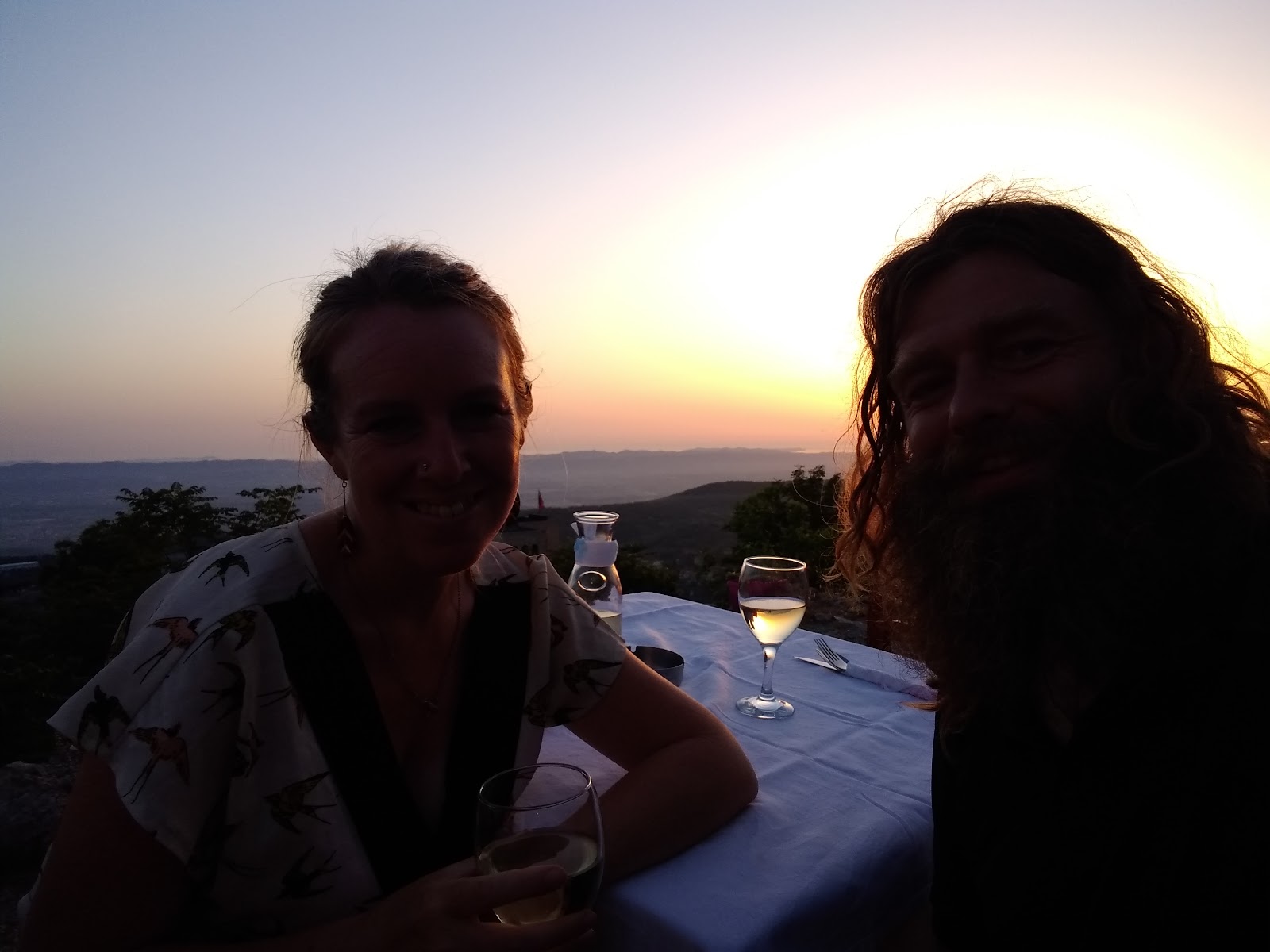
Berat is probably Albania's biggest destination for foreign visitors outside the northeastern mountains and the south coast.  It's a decent sized town with a pretty impressive old castle up on a hilltop far above. We enjoyed the walk around the fortress, especially because, unlike so many other fortified old towns we'd visited, it's still almost entirely filled with the residences of local people.  We had dinner at one of the few small restaurants near the entrance and climbed up on the walls to watch the sunset in one direction and the resident kids playing football inside the walls in the other.
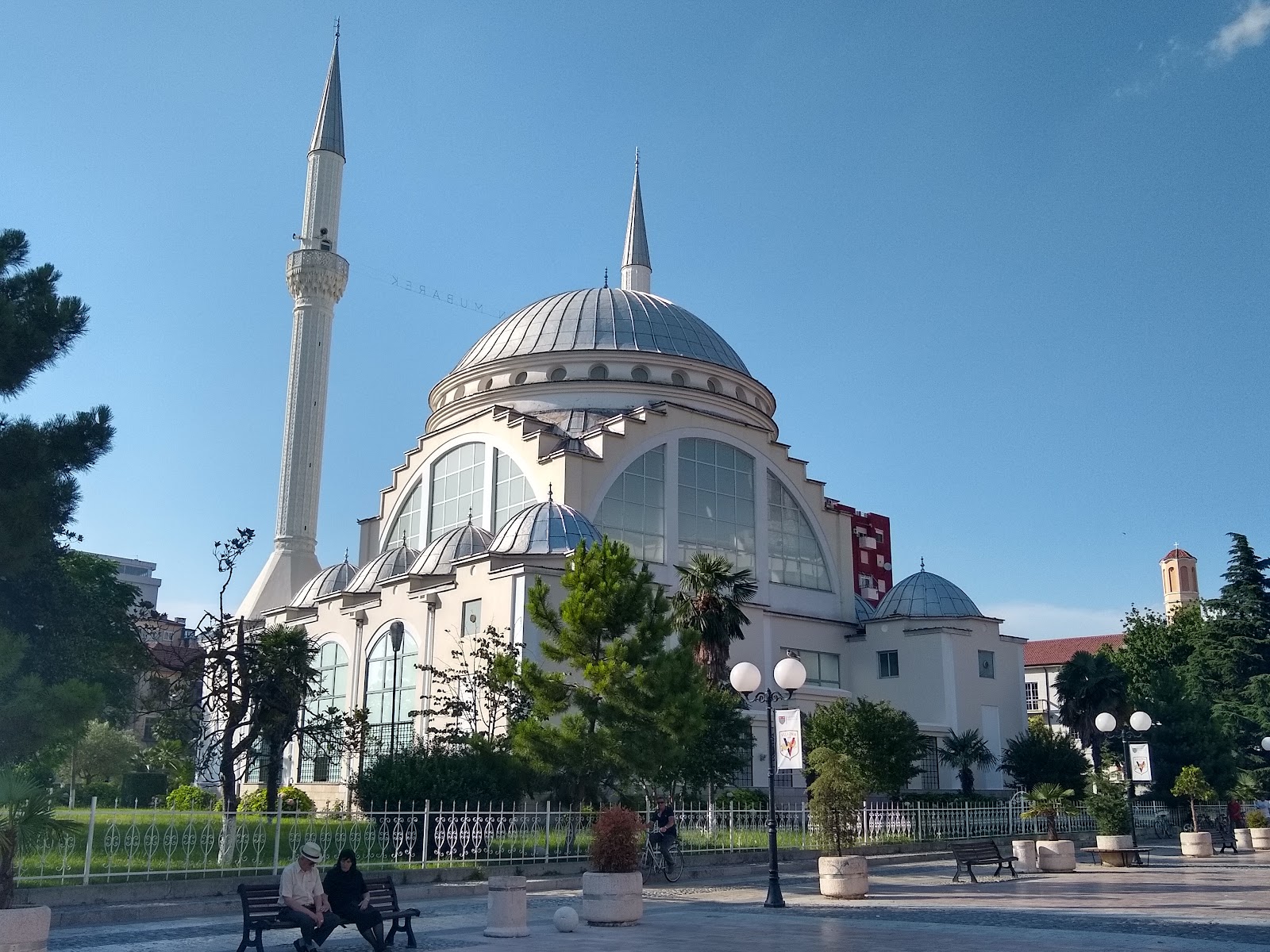
Down below are two lovely old neighbourhoods, one Christian and one Muslim draped on the hillsides of either side of the river.
Ever since we arrived in the country I'd been surprised by how many Christians (both Catholic and Orthodox) there were.  I'd always assumed the country was almost entirely Muslim. On census forms about 75% of the population are followers of Islam.  In actual fact, most of the country is pretty secular and for most people their religion is as much cultural as spiritual. It's interesting that there seems to be much less animosity between the religions in Albania than anywhere else in the Balkans.  Instead the big thing there is nationalism, language and ethnicity. The key thing isn't what religion you are, it's that you are Albanian.  Sarah read somewhere that the national religion of Albania is "being Albanian," and I can see exactly what they mean.




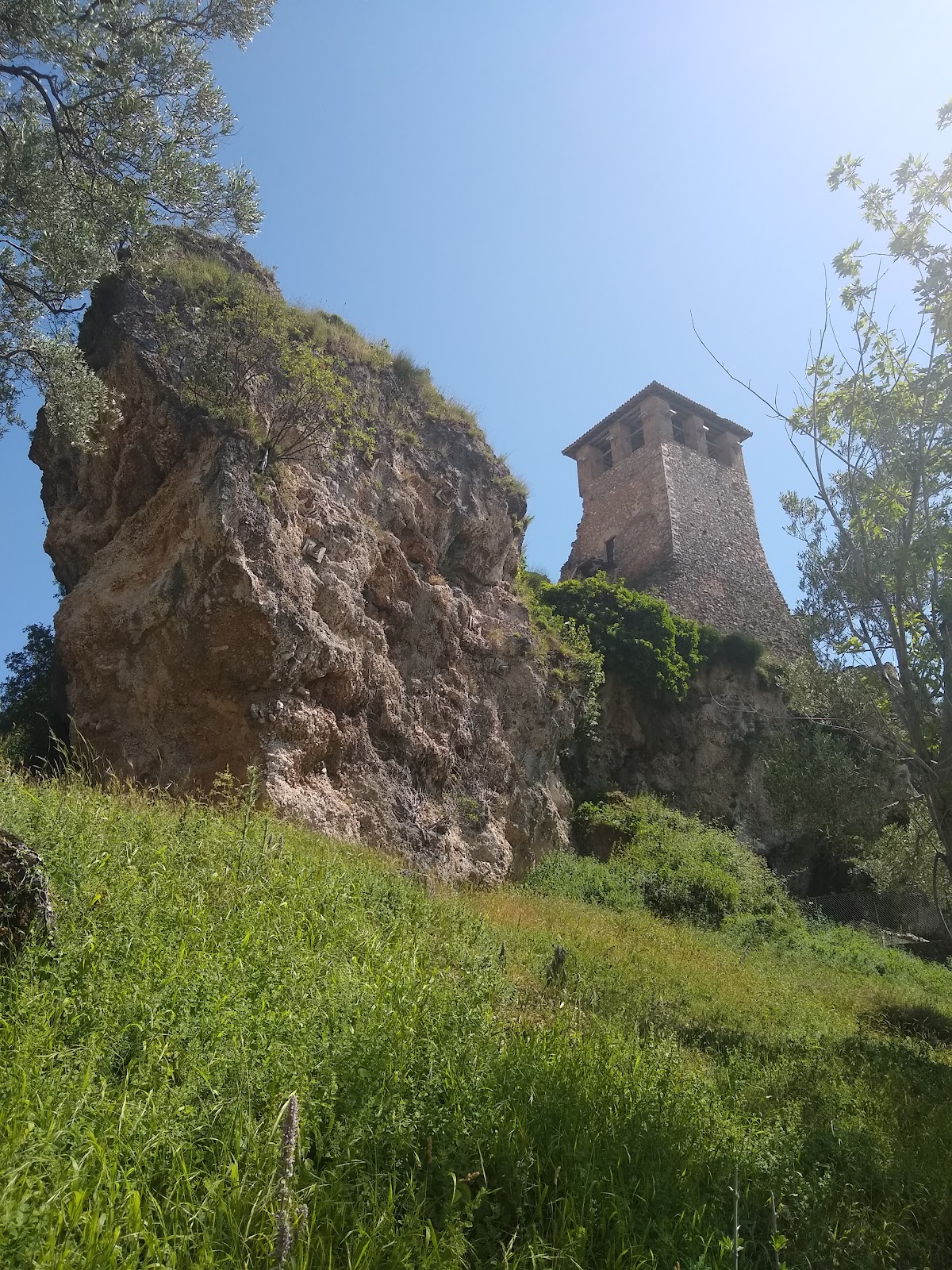
This was particularly obvious when we headed back north past Tirana (again) to the small city of Kruje.  Kruje was the site of Albanian national hero Skanderbeg's redoubt, from where he led the resistance to the Ottoman invaders in the 15th century.  There's an interesting contrast here to almost every other Muslim majority country. In Morocco (for example) the people who brought Islam to the country are revered heroes and saints.  In Albania, the leader who fiercely resisted the bringers of the new religion is the national icon.  

Skanderbeg's fortress was only modestly interesting (and much what remains today is actually Ottoman) but the views from our accommodation at the high point of the castle were great.  The castle looks out over Tirana, the Adriatic and mountain passes that lead to the inland plain that the capital sits in make it supremely obvious why this was such a great spot for a castle.


Also fun was visiting the 1982 Skanderbeg museum.  It was mostly signed in Albanian (which is actually distantly related to English, but only very distantly, being one of the earliest to split from their common Indo-European ancestor).  And lots of the artifacts were reproductions or modern things such as statues and paintings. But seeing how people view their national icons is often an interesting way of looking into their culture.

Meanwhile, on the other side of Tirana we spent a night in the small city of Elbasan.  Elbasan has pretty much zero points of tourist interest. There were a couple of old castle walls that might have been cool had we not been thoroughly castled beforehand.  But really the best thing about Elbasan was that the place we stayed was right in the middle of a very residential, infrequently visited Albanian neighbourhood. So we spent a good while sitting in the garden relaxing in verdant splendour and eating watermelon (in the southern Balkans it was watermelon season, and I think from that point on we probably ate roughly 0.6 watermelons a day).

In addition to watermelon, as we were preparing to depart Elbasan we treated ourselves to a Bugaçe.  An Elbasan breakfast speciality, it's pretty much a flatbread (kind of like a paratha) fried in butter, smeared with cheese, covered in spicy salt and stuffed inside a bun.  The lady asked if we wanted a whole or a half one. At this point I had no idea what we were in for and ordered a whole. Yummy, but boy it was a lot. We didn't finish it 'til dinner that evening.


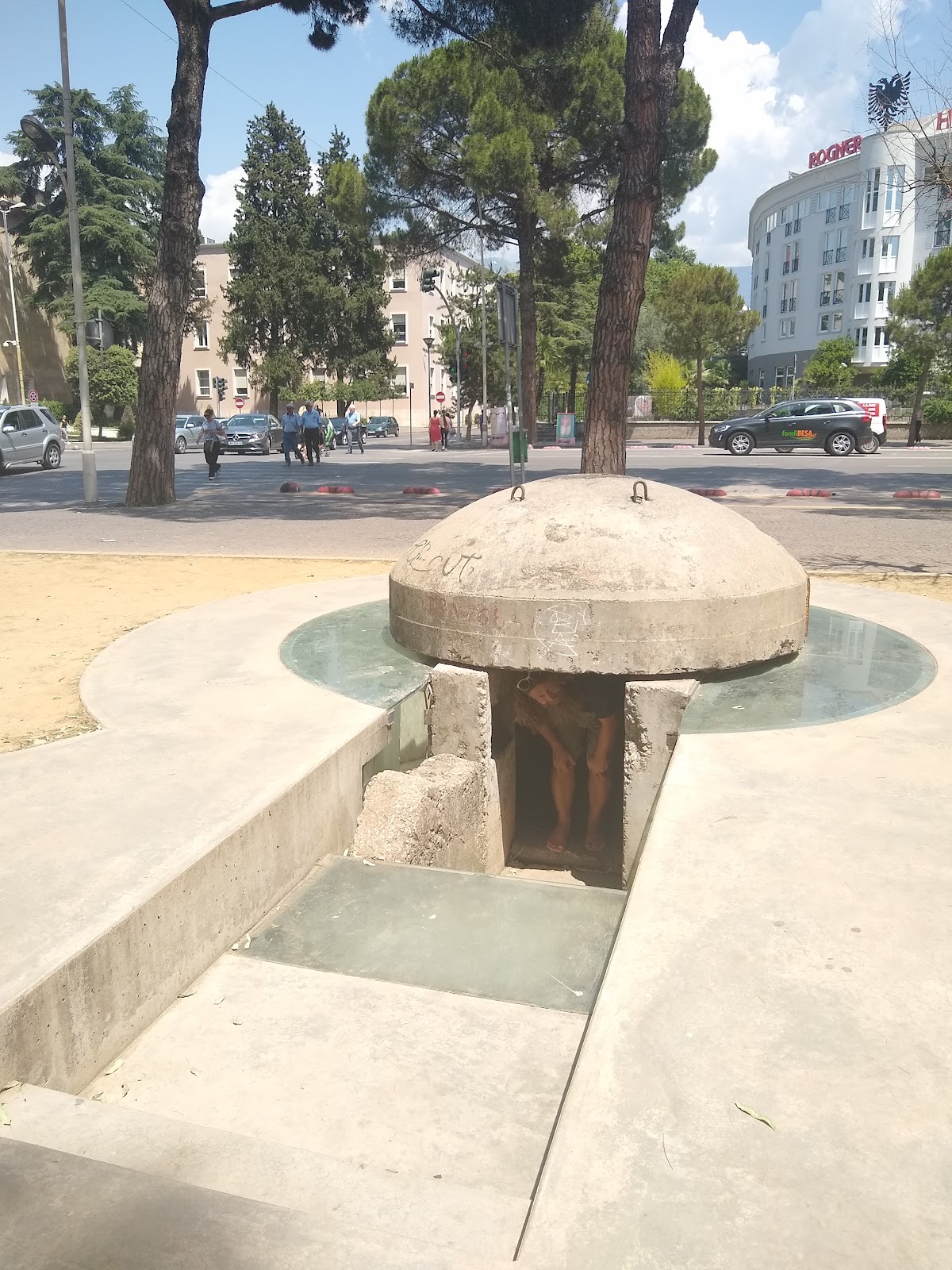
After passing through Tirana twice we returned to the capital for an actual visit as our final stop in Albania.  There are a few points of interest in Tirana. The most famous one is its bunkers. These are actually scatterered all over the country in their thousands, but unsurprisingly Tirana is where they're at their densest.  During it's communist period, Albania first aligned itself with Stalin, then after he proved inadequately zealous, with Mao, then finally gave up on the entire world becoming an isolated dictatorship with no allies to speak of.  Albania's dictator, Enver Hoxha, was so paranoid about foreign invasion that he had thousands of little concrete bunkers built all over the country. Apparently the engineer who designed them proved their efficacy by sitting inside one while it was bombarded by a tank.  This very resilience of course maybe makes them very difficult to remove, so they remain. Some have been converted to art galleries or storage spaces or mini-museums, but most just sit as nature slowly, slowly takes them back.



The other big item on our agenda was the national museum.  It was actually a pretty good one. The early history of the area was fun to learn about (the Albanians claim descent from the Illyrians, infamous pirates and home of Pyrrhus, who gave Rome a good scare in the days of the Republic, only sent packing after his Pyrrhic Victory).  And of course there was a big Skanderbeg section (made a bit redundant by the museum we'd already been to in Kruje). But the very best bits were the Orthodox Church icons (dozens of gilded gems of medieval religious art) and the section on the period of the dictatorship, which sadly we only barely scratched the surface of, as it was quite story focussed and all of the stories were in Albanian.  I particularly liked the fact that relatively few of the exhibits were behind glass or otherwise restricted, and visitors were trusted to look as closely as they liked (a real treat with the icons!) and behave sensibly.
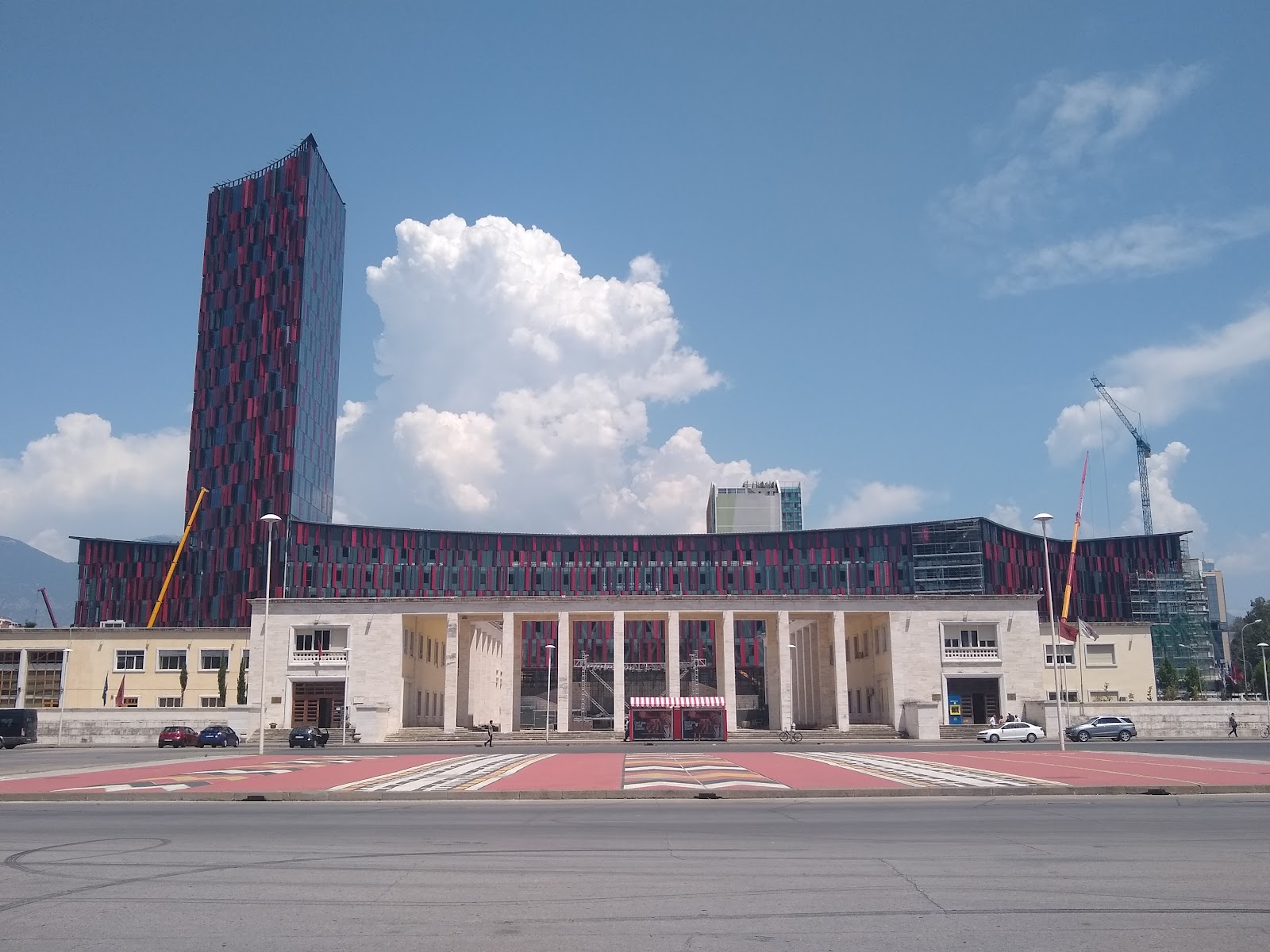


Outside of the big tourist draws, Tirana was just a very surprisingly pleasant city.  If you'd asked me to guess, I would have expected that it would remain perhaps the greyest and grimmest of the former eastern European communist capitals.  But actually, more than any other I've been to, its replaced, demolished and renovated its architecture from that era. Around the few square kilometres at the centre at least, you almost never see obvious memories of the time unless you go looking for them.

We went to a brewery with a huge (bunkerlike!) underground beer hall.  They only had one of their four beers available when we visited, a Helles that had obviously been contaminated with the yeast from their hefeweizen, but it was actually really good for all that.


We spent a fair while at our comfy hostel, much of it talking to an Okinawan born-again Christian who had, for very unclear reasons, spent eight months in Tirana.  If this sounds unpleasant, it actually was, kind of surprisingly, not. He mostly asked questions and seemed genuinely interested in the answers and not in doing any conversion (he seemed truly gobsmacked that neither Sarah nor I have any desire to have children, and disappointed that I'd never had any sort of supernatural experience).

And finally, we didn't spend long enough in cafes.  These are probably the very best thing about Tirana.  Not only are there tons of them (we're talking North African densities) but they're almost all modern and welcoming, with a mix of male and female patrons.  And serve some of the most reliably good coffee in the Balkans, if not all of Europe.  

We were torn as to whether we should depart Tirana (and Albania) super early and have some time in our next destination that day, or leave in the afternoon and arrive at night.  We eventually chose the former and had a very smooth and pleasant trip up to the border of Kosovo. I don't think the Albanian authorities even looked at our passports, so we said farewell, leaving Albania with no physical proof that we'd actually ever been in it.
  

Monday, 2 September 2019

Accursed Mountains!

When I first started considering a visit to Albania five or six years previously, I'd envisioned it to be the last untouristed spot in Europe.  The Balkan Tajikistan, or something similar at least. While that may have been (in fact probably was) the case in 2013, things have changed in the intervening years.  The popularity of southern Albania's beautiful beaches has exploded and tourism has come to the rest of the country as well.

So it was that we showed up in Shkoder, the country's fourth largest city, just across the border from Montenegro, with a reservation for a hostel that would have stacked up with NZ's best.  Except for the fact that beds cost €6 per night. We set about trying to plan a circuit through Albania's northeastern mountains, which has historically required a bit of logistical work, as it involves three different minibuses, a 3 hour lake ferry, a 23km walk and spending nights in small mountain villages.


But this journey is now firmly on the tourist trail, so the woman at reception made a few phone calls and produced integrated tickets which set us up for the first three legs of the journey to the town of Valbona.  "The bus will pick you up around 06:30 at our other building around the corner. You can have breakfast there first".

Lake Komen is an artificial lake, the result of a hydroelectric dam, but its construction created another convenient navigation route through the rugged mountains of northeastern Albania.  We were amongst the last to board, but this just meant that we were amongst the first to plop ourselves down at the bow of the boat as soon as it left the dock. The weather was actually sort of mediocre for our trip, mostly cloudy (though at least it was high cloud).  Nonetheless, it was a really lovely trip. So much so that we even considered making the trip again in reverse on our way back.


Indeed, our plans changed a number of times while on this trip.  Insofar as we actually had plans. Valbona isn't so much a town as a long stretch of farmhouses along the floor of a valley (which, I am going to here and now christen a Valllage).   When we arrived in Valbona we really had no idea what we'd be doing or where we'd be staying. So we just stayed on the minibus most of the way up the valley and hopped off at a place where we saw one guesthouse and where the map showed a few others in the near proximity.

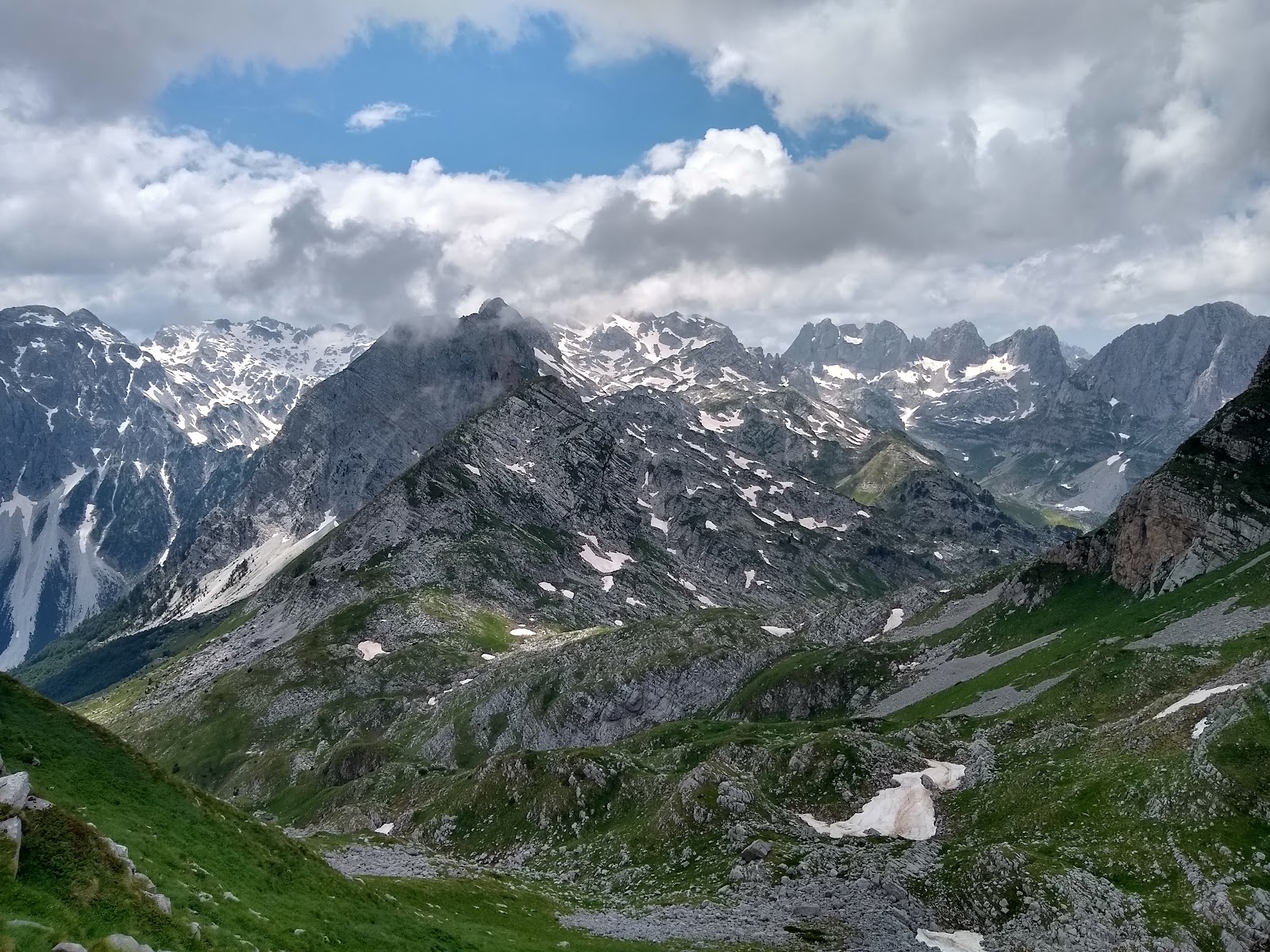
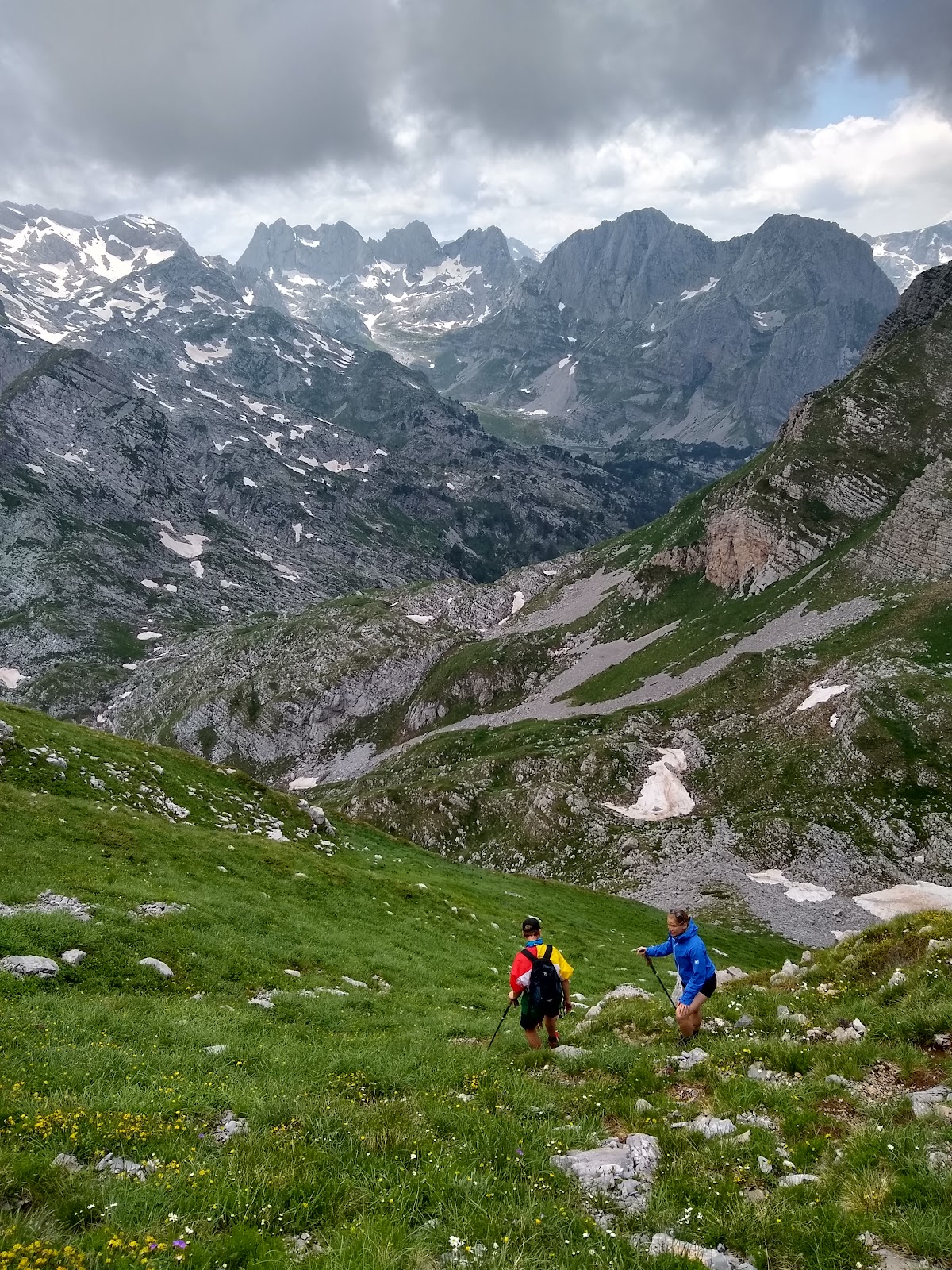
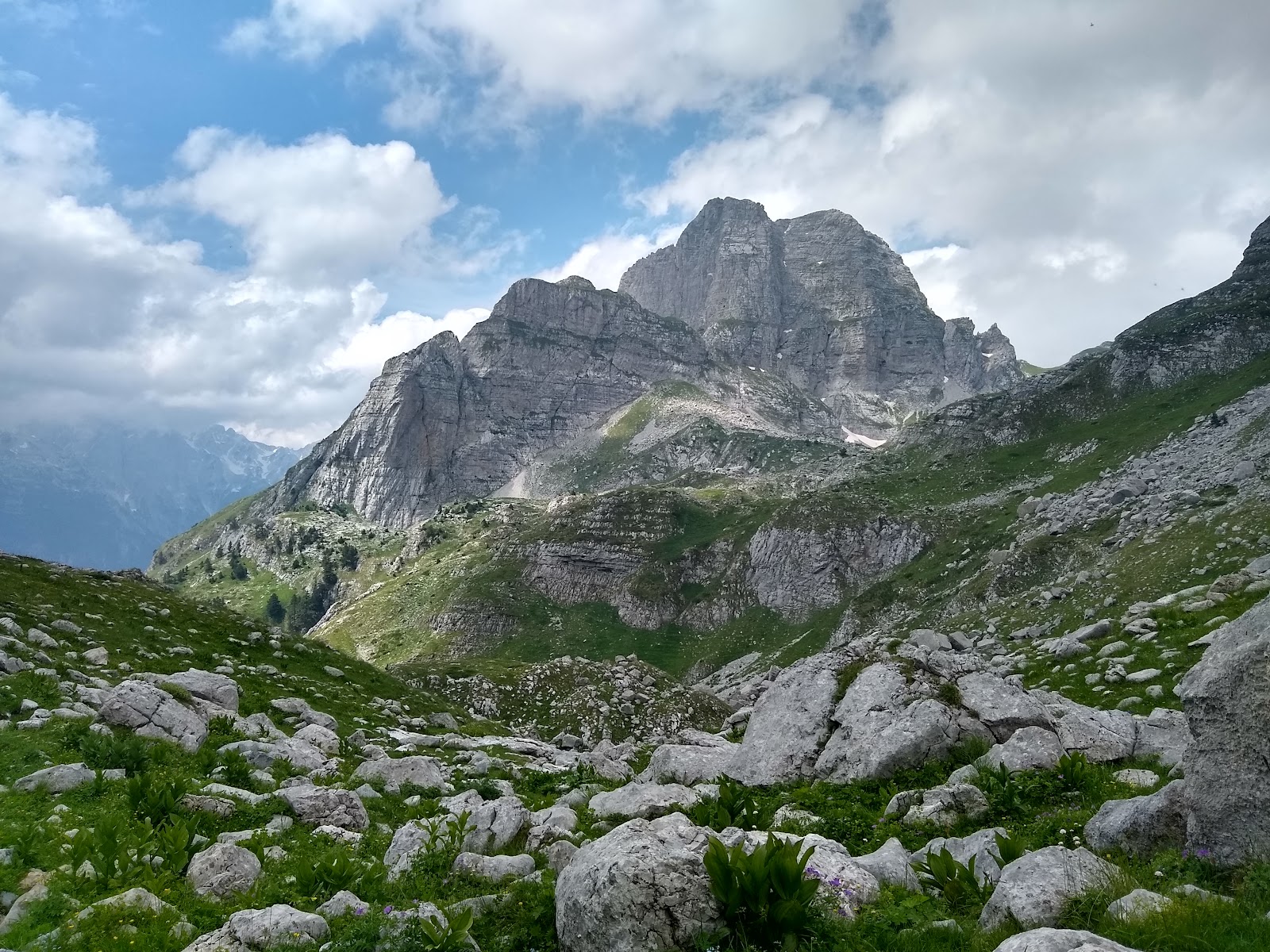
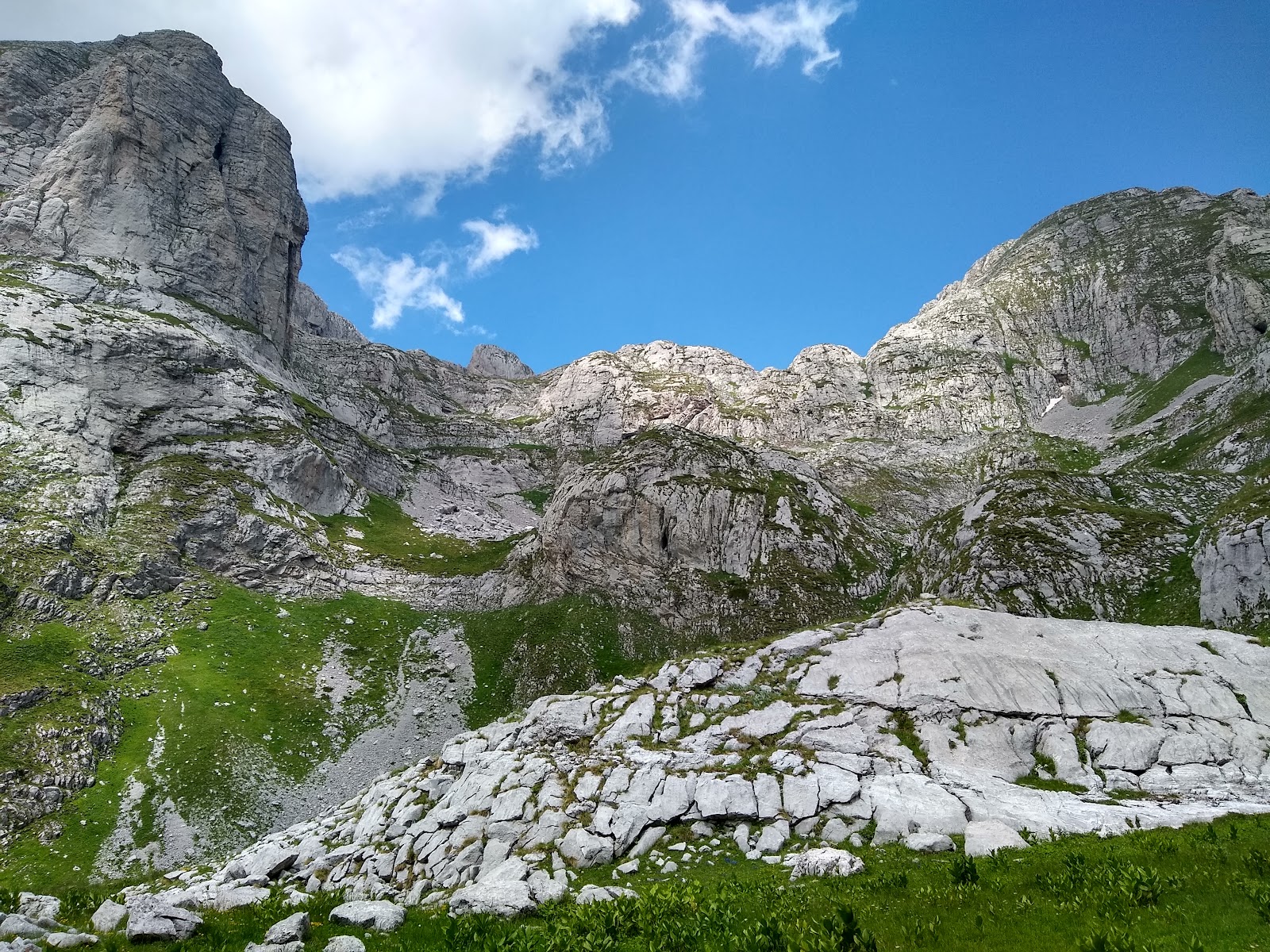
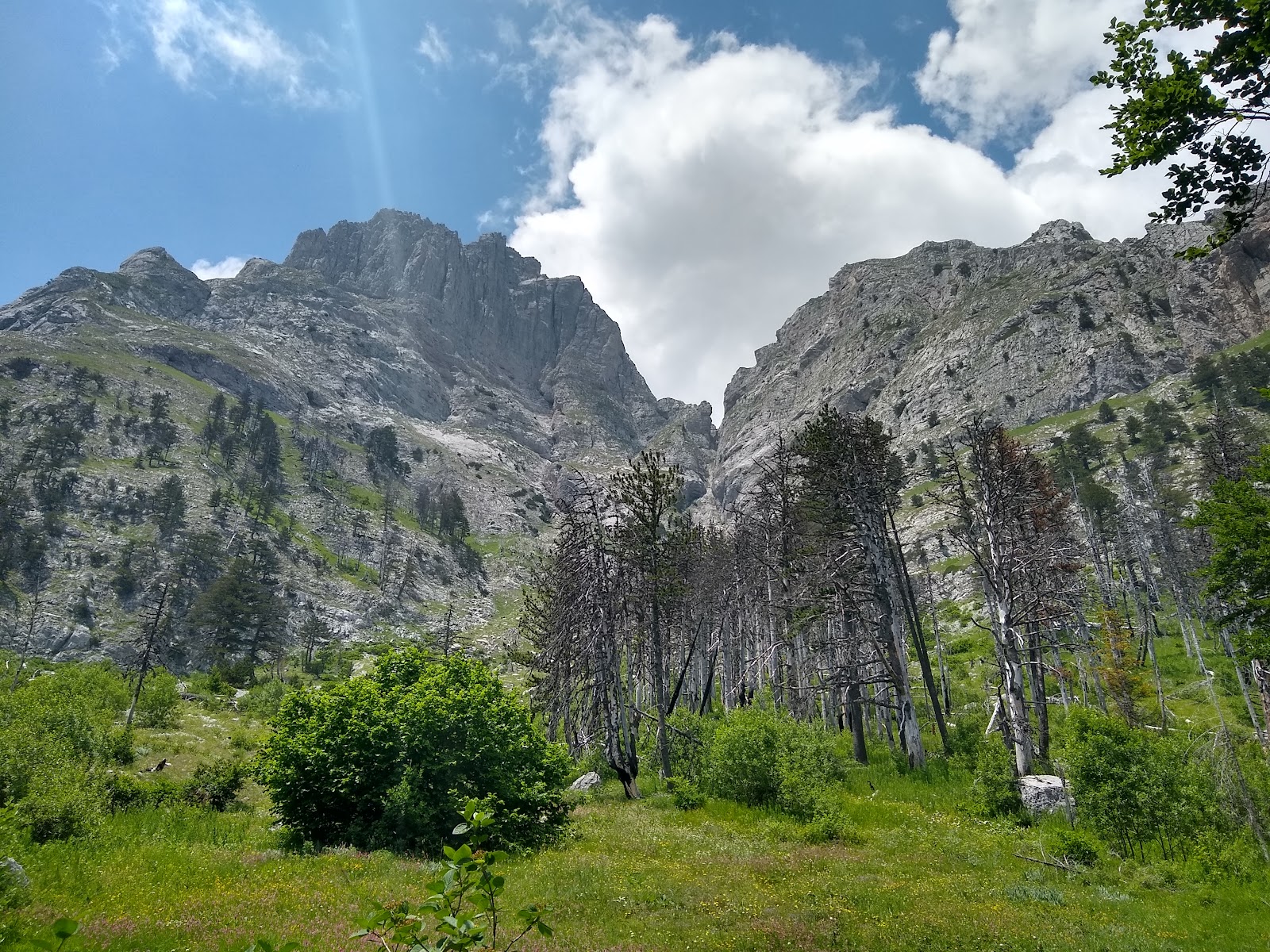
Valbona and its surrounding mountains are one of the best hiking destinations I've ever been to.  The mountains are big, rugged and in early June, still snowcapped. So rugged, in fact, that the most obvious comparison that popped into my mind was to the famous Torres del Paine in southern Chile.


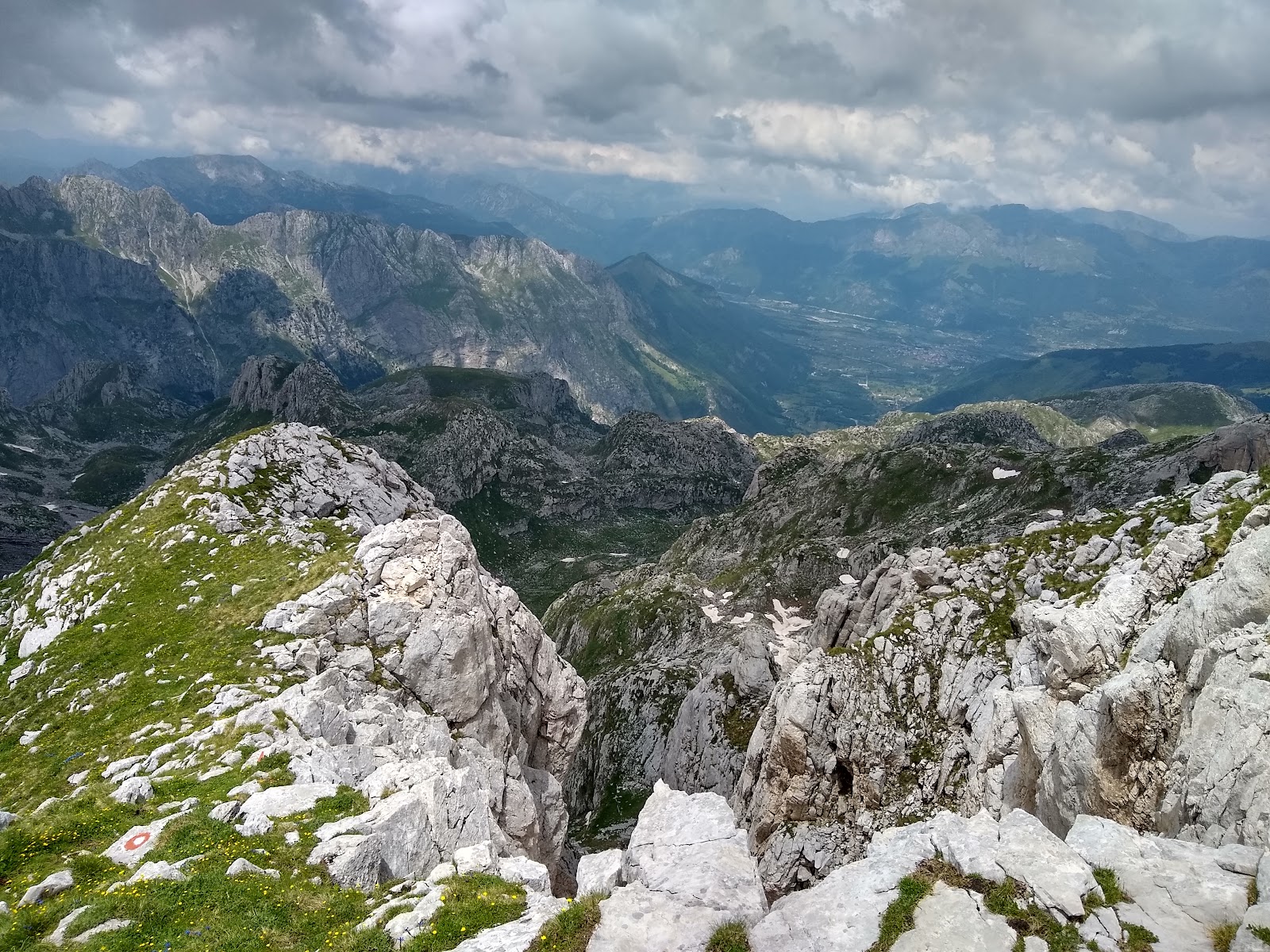
The major peaks of the Accursed mountains are all around 2500m in elevation.  On our second day Sarah and I climbed up to one of several passes that separate Albania from Montenegro.  Sarah sat and waited for me there while I climbed up to the 2525m summit of Maja e Rosit.


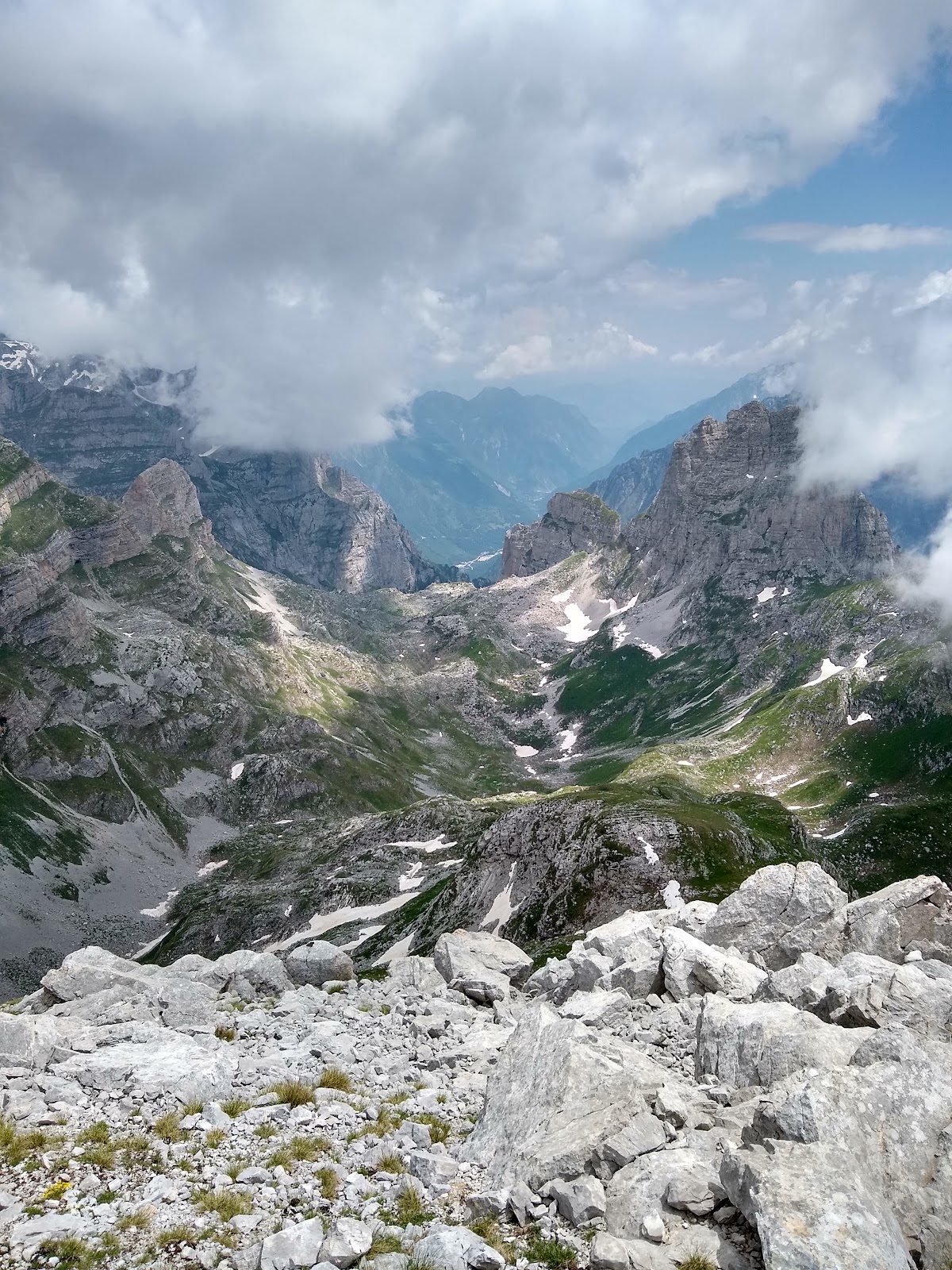
As I climbed clouds started to swirl around the peaks but this did almost nothing to blunt the awesomeness of the scenery.  As I got higher,. more and more spectacular peaks and verdant valleys came into view, culminating with a breathtaking look over a cliffside into the adjacent hanging valley, almost 1000m below.

I'm pretty sure I was the only one to reach the summit that day, as I didn't see another soul until I was on my somewhat steep, slightly slippery way back down and met a Swedish couple and their guide who had just turned back.  When we reached the pass again and the trail levelled out a bit I ran back down to meet Sarah and we had a lovely wee picnic in a beflowered alpine meadow, followed by dessert of wild strawberries plucked from the trailside on our walk home.  (Wild strawberries are an amazing experience… They're tiny, five or ten to make an average sized one that you buy in a plastic punnet at the supermarket, but each one of those is so dense in flavour that it probably has as much strawberryness to it as its much larger, blander cultivated cousins).


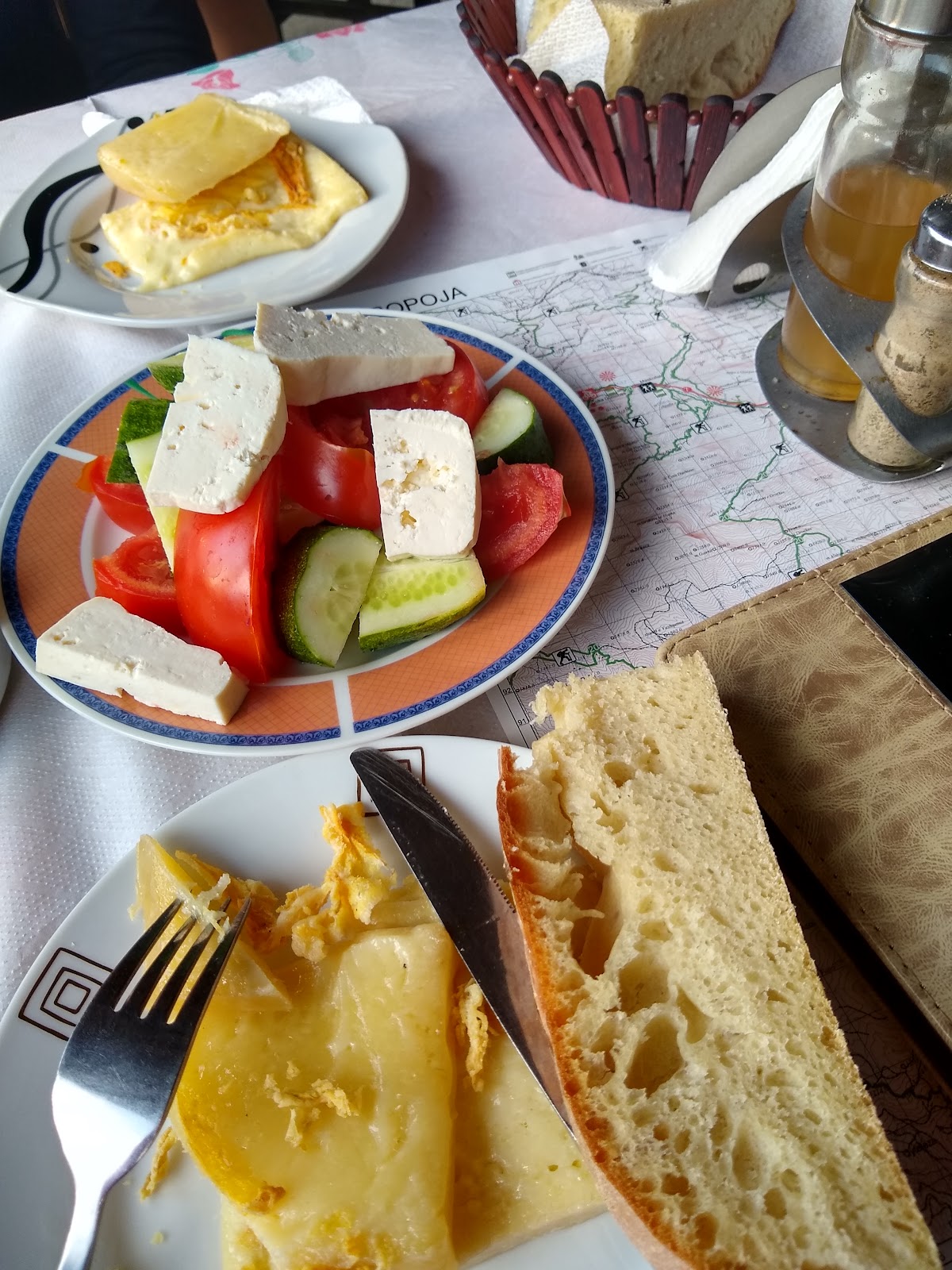
Back down at our guesthouse we had simple but yummy Albanian meals, which included oven baked cheese (rather like an Edam) and a mystery mountain vegetable (might have been nettle?) byrek.  Byrek is a baked pie made with filo pastry and is pretty much the national dish of every country in the southern Balkans. We had a few beers as well, though I'm sad to report that Albanian macro lager is not up to much.  Of the two big national brands, both were a bit too sweet, one had a healthy dose of DMS and one had light, but clearly noticeable diacetyl.  


Tourism is clearly a big and growing part of the local economy.  As we walked along the main road through the valley the next generation of guesthouse owners (quite cute and with surprisingly good English skills to a one) would invite us back to their parents place.  And each afternoon following our walks, we'd sit and enjoy (or not) the aforementioned beers or coffees and counting the dozens (small single digit numbers of dozens, but multiple dozens still) of other tourists passing by.  Valbona in 2019 seems to be at a sweet spot in its development where it's easy to visit, but still a looooong way from overcrowded with visitors. And while tourism is a big part of the economy, so too is agriculture still. In addition to the tourists and local kids walking up the road, every day at 17:00 or so a parade of cows would stroll by, entirely unattended but also entirely certain about where they were headed home to (if occasionally distracted by nice grass to munch on at neighbours' places along the way).  Sarah was a particularly big fan of group of three that we saw each day who always walked in order from biggest and shortest-haired in the front to smallest and floofiest in the rear.

On our second day I heaved myself up the very steep (but still very well marked) trail into the hanging valley I'd looked down on from Mara e Rosit.  This trail was proper New Zealand steep, climbing perhaps 600m in less than 3km. The end of the valley felt fabulously wild and remote. Except for the irritating dumbass who had camped right up at the top of the pass and who was flying a drone around, seemingly (to my engrumpened mind) with actual intent to spoil the sense of solitude and wonder of the place.  I usually like talking to other trampers out in the wild, but I pointedly avoided getting anywhere near this guy. Grrr.


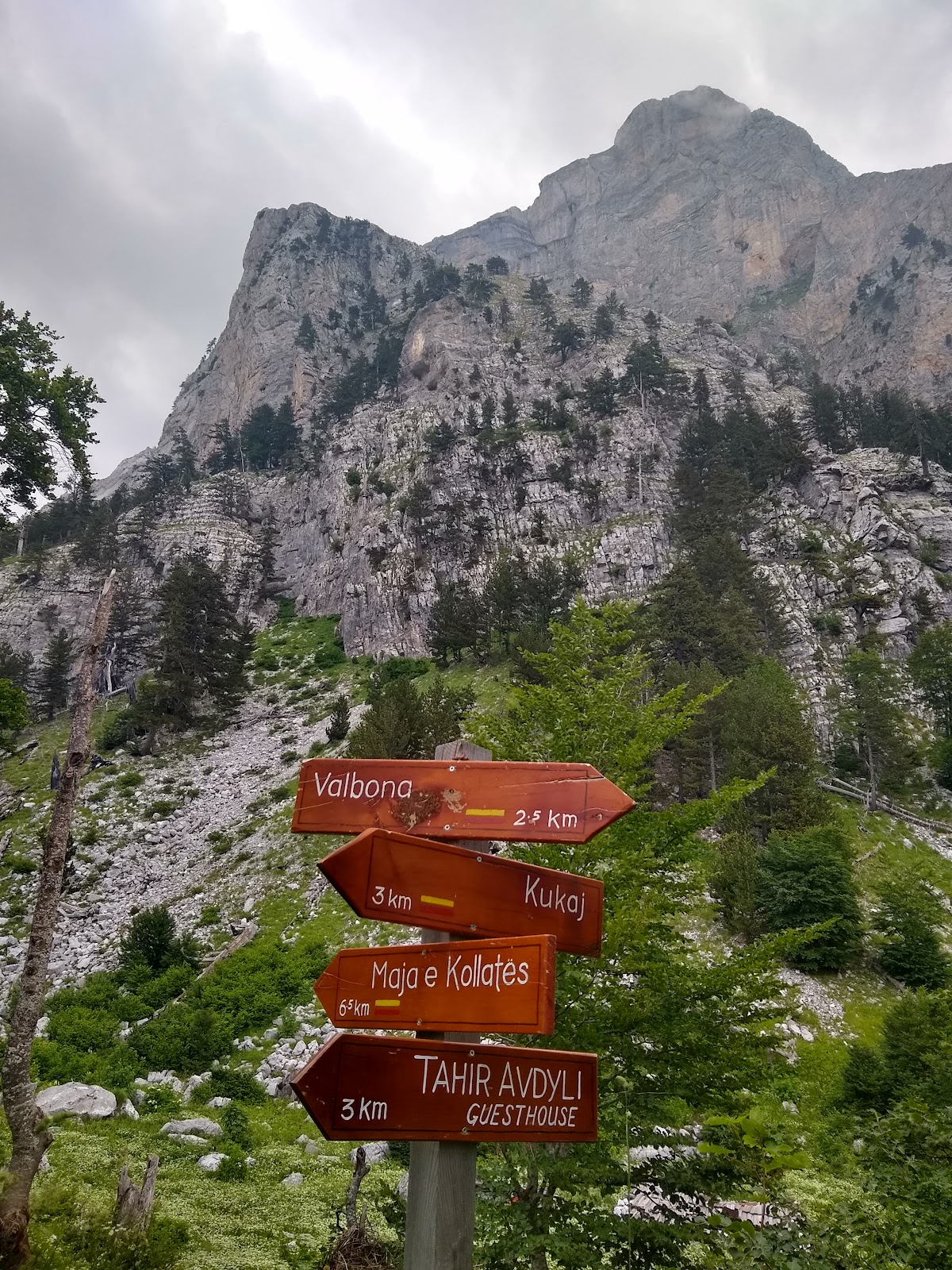
I could have spent several more days like this in Valbona, but both available cash and available time in Albania were starting to run short.  Fortunately, our final day in the Accursed Mountains was one more gorgeous hike. We set out eaaaaarly, out the door at 05:15 in an effort to get our 900m of climbing done before the day got hot, and to try and catch the noon minibus back to Shkoder from the valllage of Thethi, 23km away.  Part one was easily accomplished, despite wandering up a pathway towards someone's stables around 07:30 and stopping to take lots and lots of photos.  


I'd thought that Thethi and it's valley couldn't possibly be prettier or more spectacular than Valbona, but it certainly gave it the old college try.  

The route down from the top of the pass had glorious views, but was steep in places and as the hours ticked by, I (very unfairly) started to get grumpy with Sarah's slow, careful pace and the prospect of missing the bus.  While it's true that Thethi is a relatively expensive place to stay (by Albainian standards) as all the guesthouse owners have settled on a fixed rate of 25€ per person per night for room and board, I realize that I was being very silly, as the absolute worst case scenario there was that we'd have to spend a night in another gorgeous mountain village.


As it turned out "noon departure" is meant pretty casually and Sarah and I snagged the last two seats on the minibus heading to Shkoder.

The road to Valbona had been pretty decent.  Not so the road out of Thethi. The first 20km bumped and wound and climbed its way up, up, up out of the valley.  When we reached the top after forty five minutes the view was stupendous, with Thethi clearly visible down at the bottom.  I checked the GPS on my phone and discovered that, as the crow flew, we'd covered a mere 2.5km in three quarters of an hour.


If you're ever in the region and are considering driving out to Thethi, I'd advise you to think again.  Even after we'd reached the top of valley there were still a further 10km or so of very bumpy, narrow, rocky road with 1000m drops and no guardrails.  Over this we passed a few tourists in regular (non 4WD) cars who looked decidedly out of place and uncomfortable.

Back in Shkoder we might well have had time to continue our travels further south, at least as far as Albania's capital, Tirana, but so pleasant was the Our Way hostel/guesthouse that we decided to spend one more well deserved rest afternoon there, making it a nice breakpoint in our travels and my writing.